
The vast, uninterrupted expanses of asphalt shingles on your roof are incredibly resilient. Barring a catastrophic tree impact or a hyper-violent windstorm snapping them in half, the vast field of shingles almost never leaks. The true vulnerability of any architectural envelope lies in its intersections. Whenever a continuous roof plane is violently interrupted—by a soaring brick chimney, a massive skylight, a plumbing exhaust pipe, or a vertical dormer wall—the primary waterproofing membrane is deliberately severed. To seal these highly vulnerable penetrations, architects rely on a complex, overlapping system of sheet metal known as flashing. In the brutal, highly volatile climate of the Greater Toronto Area, this metal armor is subjected to intense 70°C summer UV radiation followed instantly by the violent, crushing expansion of -20°C solid winter ice. When this metal fails, the resulting water infiltration is catastrophic. The Roof Technician executes hundreds of highly technical, surgical flashing interventions annually. This exhaustive 2026 guide dissects the intricate mechanics of roof flashing repair Toronto homeowners must understand, exploring why caulking is an amateur hack, and how to definitively secure the most critical vulnerabilities on your property.
The Physics of Intersection Failures
To diagnose a severe flashing leak, you must understand the mechanical stress the metal endures. Flashing is typically fabricated from highly malleable aluminum, heavy-gauge galvanized steel, or premium architectural copper. Its singular job is to intercept high-velocity rainwater rushing down the roof and definitively force it away from the structural penetration and back onto the safe, water-shedding surface of the shingles.
The failure occurs because houses are not static structures; they move. Driven by massive temperature swings and powerful wind loads, the wooden framing of the roof flexes and shifts independently from the massive, rigid masonry structure of a brick chimney. If a roofer simply nails a rigid piece of metal to both the moving roof and the static chimney, the immense shearing force will instantly tear the metal apart or rip the nails straight out of the wood. Professional flashing must be highly engineered to allow independent movement while maintaining an absolutely impenetrable, watertight sliding seal.
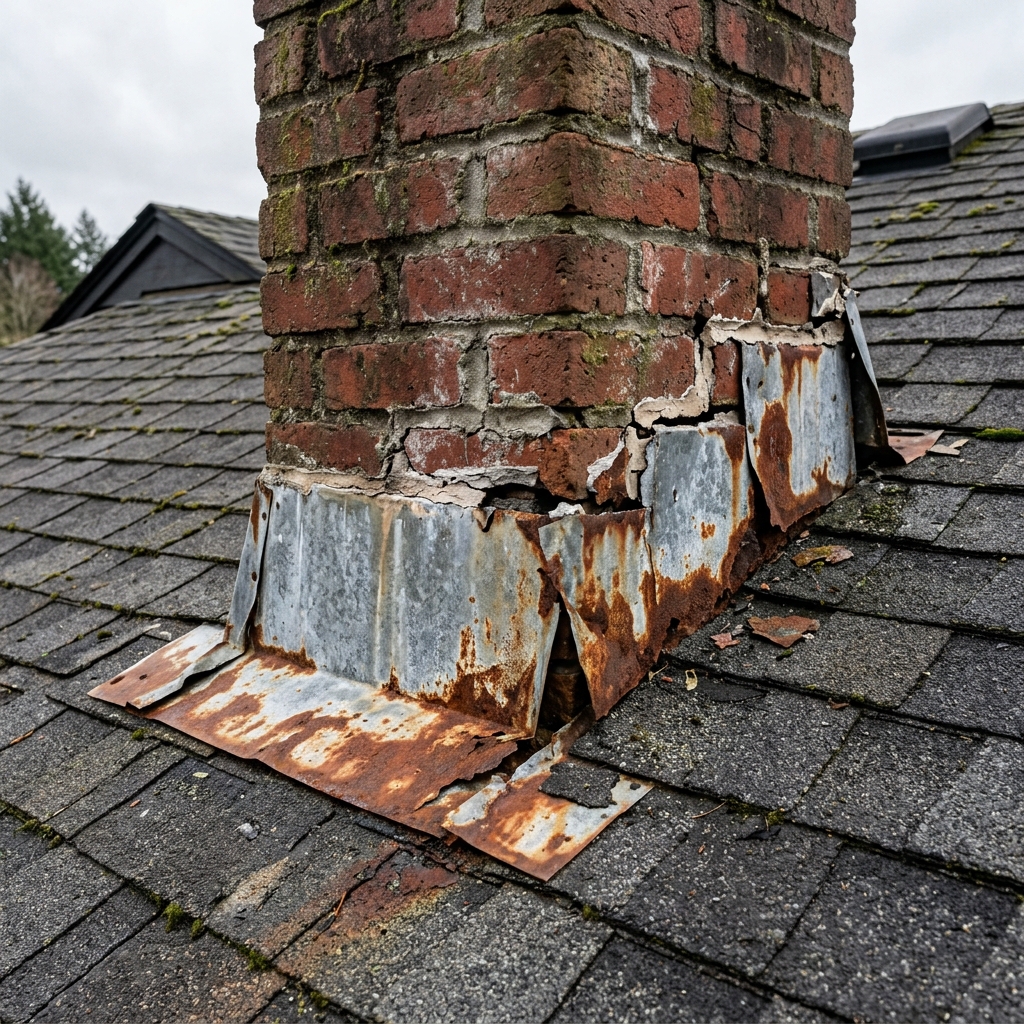
The Chimney: The Ultimate Structural Vulnerability
The masonry chimney is undeniably the most complex, leak-prone penetration on any residential property. Properly flashing a chimney requires advanced, old-world sheet metal artistry that the vast majority of cheap roofing contractors simply do not possess.
The “Step and Counter” Flashing System
A professional chimney seal requires a two-part overlapping system. First, the Step Flashing consists of dozens of small, L-shaped metal plates that intricately weave back and forth between every single overlapping layer of asphalt shingles along the sides of the chimney. This channels the water downward. However, the top edge of this metal simply rests against the flat brick. Water rolling down the brick face would easily slip behind it.
To seal the top edge, the contractor must deploy Counter Flashing. This requires utilizing an aggressive diamond-blade grinder to physically slice a deep, 1-inch horizontal channel (a raggle) directly into the hard mortar joints of the brick chimney. A secondary piece of angled metal is then violently wedged deep into this channel, heavily sealed with industrial polyurethane, and folded downward to overlap the step flashing below it. This creates a highly dynamic, sliding seal. The roof can violently bounce during a storm, the step flashing slides harmlessly beneath the counter flashing, and the seal remains absolutely bulletproof.
The Amateur “Tar Hack”
If you inspect your chimney and see a massive, thick, ugly black mound of roofing tar smeared aggressively around the base, you have been victimized by a lazy amateur. Roofing tar is a horrific temporary patch. Under the intense UV radiation of the July sun, the tar rapidly bakes, dries out, and cracks violently within 6 to 12 months. Water easily bypasses the cracked tar, silently rotting the expensive structural roof decking surrounding the chimney into mush.
| Flashing Penetration Type | The Precise Mechanism of Failure | The Required Professional Intervention |
|---|---|---|
| Brick Chimney Base | Mortar degrades; counter-flashing pulls away from the brick face. | Surgical grinding of mortar joints and installation of a new aluminum Step & Counter system. |
| Plumbing Vent Pipe Boot | The rubberized neoprene gasket violently cracks under extreme UV baking. | Complete removal of the boot and replacement with extreme-weather polyurethane or lead flashing. |
| Roof Valleys (Intersections) | Crushing winter ice dams tear the metal; high-velocity water corrodes it. | Tear off surrounding shingles and install a massive, continuous heavy-gauge W-valley metal pan. |
| Vertical Dormer Walls | Step flashing is improperly nailed directly to the siding instead of the wall sheathing. | Remove siding, weave new step flashing into shingles, apply Ice & Water shield, reinstall siding. |
| Flat Roof Edge (Drip Edge) | Violent freeze-thaw cycles pry the metal edge away from the fascia board. | Heavy flashing repair utilizing industrial screws and heat-welded TPO/Bitumen stripping. |
The Plumbing Vent Boot: The Silent Destroyer
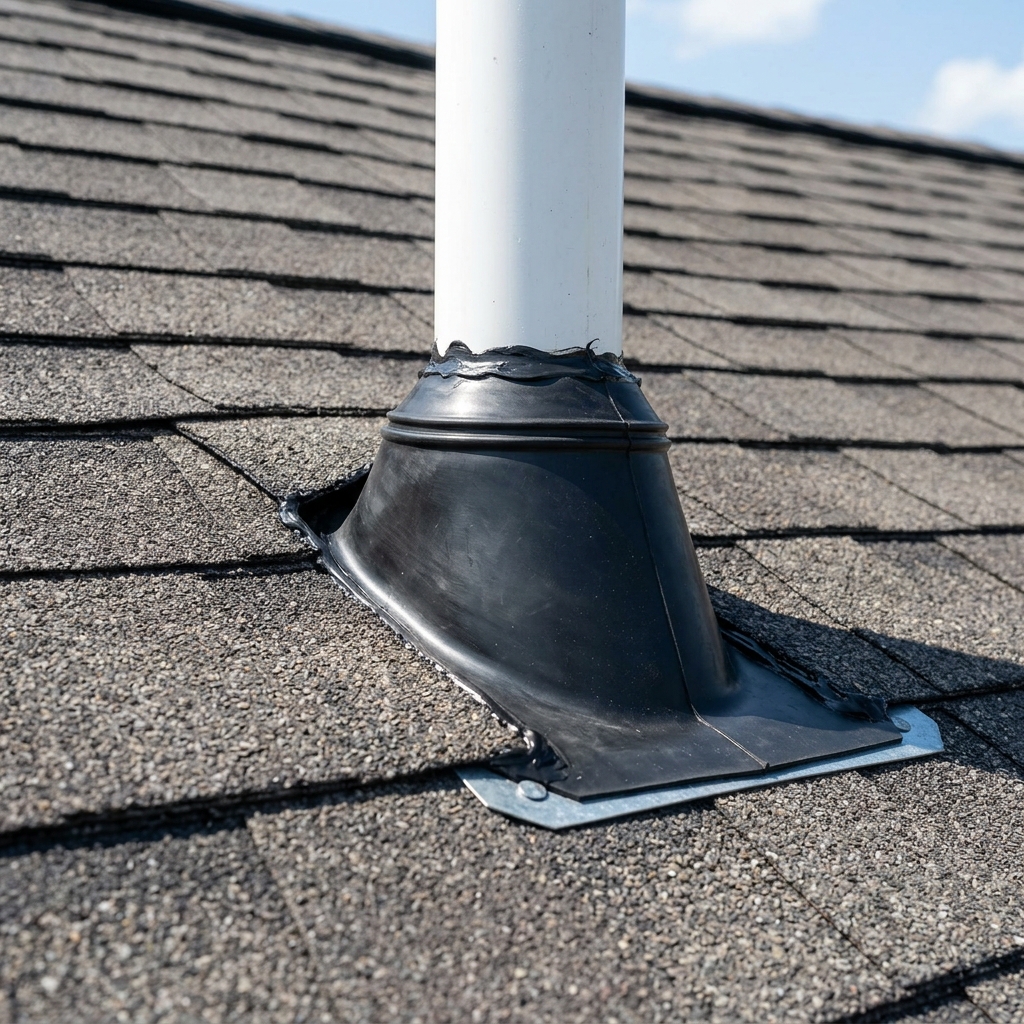
Every home features several white PVC plumbing exhaust pipes protruding vertically through the roof. To seal these highly awkward circular penetrations, roofers utilize a specialized component called a “pipe boot” (or pipe flange). These boots feature a flat aluminum or plastic base that nails to the roof, with a flexible, rubberized neoprene collar that stretches aggressively around the pipe.
These rubber collars are the shortest-lived component on your entire roof. Subjected to the brutal, relentless baking of the Toronto sun, the rubber rapidly dries out, loses its elasticity, and develops massive, vertical cracks. When it rains, water funnels directly down the pipe, slips through the cracked rubber collar, and drips silently into your attic. This leak is often incredibly stealthy, slowly rotting a massive section of plywood decking for years before the water eventually soaks through your bathroom drywall ceiling. A proactive $150 pipe boot replacement prevents a massive $2,000 structural repair.
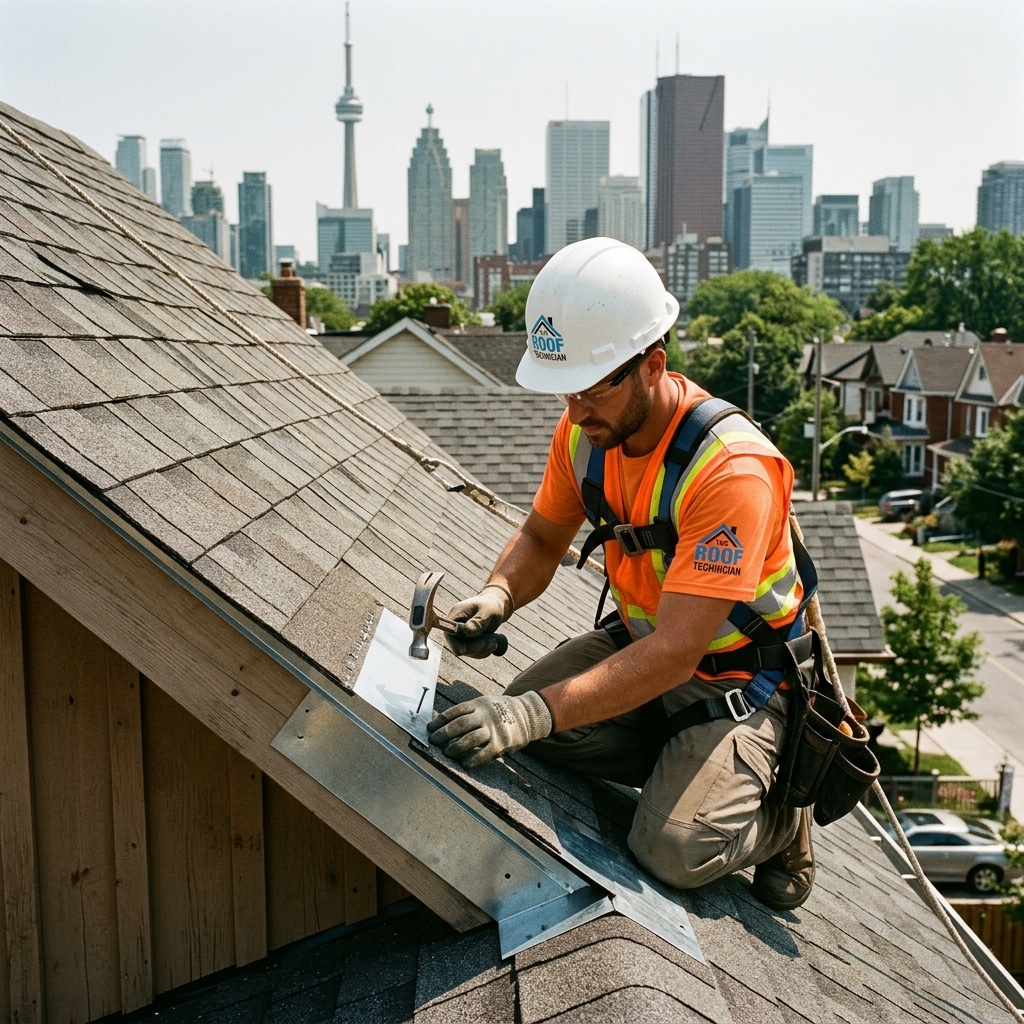
The Valley Flashing: Managing Hydraulic Chaos
A “valley” is the highly critical V-shaped intersection where two downward-sloping roof planes physically collide. This geometric intersection acts as a massive architectural funnel. During a severe summer thunderstorm, thousands of gallons of high-velocity water from both roof planes crash together in the valley and race aggressively downward toward the gutters.
Because the volume and velocity of water are immense, relying solely on asphalt shingles folded into the valley (a “closed valley”) is highly risky in the Toronto climate. The massive friction of the water rapidly scours the protective ceramic granules off the shingles, exposing the raw asphalt and leading to premature cracking. Furthermore, valleys are the primary location where massive, destructive ice dams form in February. The immense expansion pressure of solid ice locked in a valley will easily tear shingles apart.
Elite roofing installations dictate an “open metal valley.” The contractor must install a massive, continuous sheet of heavy-gauge, pre-painted aluminum or galvanized steel running the entire length of the valley. The metal is bent into a highly engineered “W” shape (featuring a raised center splash-guard) that prevents high-velocity water from rushing down one roof plane and violently shooting straight up the opposite side under the shingles. This exposed metal acts as an impenetrable, high-speed aqueduct, dramatically extending the lifespan of the entire roof system.
The Economics of Flashing Intervention
When executing a massive, full-scale roof replacement, replacing every single piece of flashing is a non-negotiable, mandatory requirement. Attempting to save $300 by reusing 20-year-old rusted chimney metal is an engineering catastrophe that will instantly void your brand new 50-year shingle warranty.
However, if your roof is only 12 years old and is generally in excellent condition, but you discover a massive water stain originating from the chimney, you do not need a new roof; you require a highly precise, surgical flashing intervention. A master technician will carefully strip the shingles surrounding the penetration in a 3-foot radius, extract all the compromised metal, aggressively install premium Ice and Water Shield membrane directly to the bare wood, install a flawless new flashing system, and expertly weave new, color-matched shingles back into the existing roofline. This highly technical procedure typically costs between $600 and $1,500, securing the vulnerability and buying you another decade of roof life.
| Flashing Material Choice | Durability in the Toronto Climate | Expected Longevity |
|---|---|---|
| Heavy-Gauge Aluminum | Excellent. Highly malleable, refuses to rust, and available in factory-painted colors to match shingles perfectly. | 25 to 35 Years |
| Copper (Architectural) | The undisputed apex standard. Requires complex soldering but develops a stunning, highly protective green patina. | 50 to 100+ Years |
| Galvanized Steel | Very strong and rigid, but the protective zinc coating inevitably scratches, leading to aggressive, bleeding rust stains. | 15 to 20 Years |
| Lead Flashing (For Pipes) | Highly malleable and incredibly durable. The absolute best choice for sealing highly irregular plumbing pipe penetrations. | 40 to 50 Years |
| Roofing Tar (Mastic) | A horrific, temporary amateur band-aid. Dries out, cracks violently, and provides zero structural flexibility. | 6 to 12 Months |
| Intervention Type | The Scenario | Estimated 2026 Cost Bracket |
|---|---|---|
| Surgical Chimney Repair | Roof is relatively new, but the mortar failed. Requires targeted grinding and new Step/Counter flashing. | $800 – $1,800 |
| Pipe Boot Replacement | Rubber collar cracked. Minor surrounding shingle removal required. | $150 – $350 (per boot) |
| Full Flashing Replacement | Done simultaneously during a full roof replacement. All metal is stripped and renewed. | Included in the $15,000+ full roof quote |
| Valley Rebuilding | Aggressive ice dam tore the valley. Requires 4-foot wide strip out and new continuous metal pan installation. | $1,200 – $2,500+ |
Why Immediate Action is Mandatory
A flashing leak is profoundly deceptive. Because the water enters the structure slowly and trickles down along complex rafter pathways, it often bypasses your living room ceiling entirely for years. It runs down the interior of the wall framing, silently rotting the structural two-by-fours, completely destroying the fiberglass wall insulation, and breeding massive colonies of toxic black mold in the dark, damp cavities of your home.
By the time you finally see the paint bubbling heavily above your baseboards, the structural damage is staggering. At The Roof Technician, we deploy highly advanced thermal imaging cameras to aggressively track the invisible path of water originating from compromised flashing. We do not guess where the leak is; we isolate it mathematically and eradicate it permanently. We supply this elite diagnostic and repair capability across Vaughan, Markham, Oakville, and the vast entirety of the GTA.
Why did the roofing contractor explicitly tell me that 90% of all Toronto roof leaks start at the flashing?
What is the exact financial cost to properly replace the massive metal flashing around a brick chimney?
Can I save money by simply smearing a thick layer of roofing tar heavily around my leaking chimney base?
What exactly is a “plumbing pipe boot,” and why do they fail so rapidly on residential roofs?
Why do elite roofing contractors always aggressively demand the installation of an “open metal valley”?
Is it legally mandatory to completely replace all the metal flashing during a full roof replacement project?
Schedule Your Surgical Roof Diagnostic Today
Do not allow a microscopic crack in a piece of aging metal to systematically rot the massive structural framing of your property. If you observe water staining near a chimney or an exterior wall, you require an immediate, mathematically precise intervention before the mold spreads.
Call us today at (416) 826-0040 or request a comprehensive thermal diagnostic to locate and eradicate your complex flashing leaks.
The Roof Technician has been the elite authority for complex architectural flashing and massive residential roof replacements across Toronto, Ajax, Pickering, and the entire GTA for over two decades. From precision metal fabrication to aggressive structural repair, our master technicians deliver uncompromising quality backed by verifiable, industry-leading warranties.