
Toronto’s climate subjects residential roofs to one of the most punishing weather cycles in North America — a full spectrum of temperature extremes, precipitation types, and severe weather events that test every component of your roofing system throughout the year. Understanding exactly how weather affects your roof toronto homeowners need to know empowers you to recognize damage early, schedule preventive maintenance at the right time, and make informed decisions about materials and repairs that will maximize your roof’s lifespan against the specific threats of the GTA’s four-season climate. This comprehensive seasonal guide explains what each weather pattern does to your roof and what you should do about it.
Winter: The Most Destructive Season for Toronto Roofs
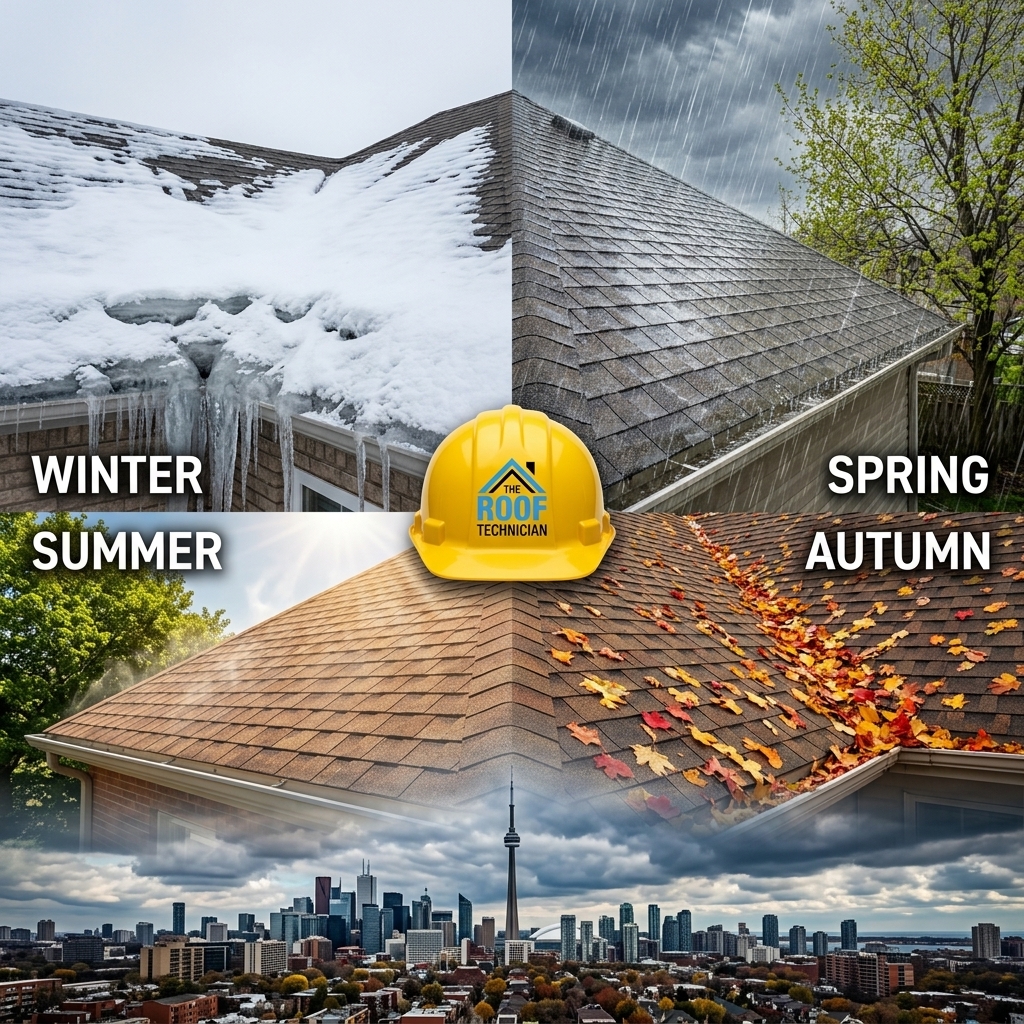
Freeze-Thaw Cycling
Toronto experiences an average of 40 to 60 freeze-thaw cycles per winter — days where the temperature crosses the zero-degree threshold in both directions. Each cycle causes water that has penetrated micro-cracks in shingles, flashing sealant, and caulking to expand as it freezes and contract as it thaws. This repetitive expansion and contraction progressively widens these cracks and gaps, creating larger water entry points with each cycle. Over a 20 to 25-year roof lifespan, this cumulative freeze-thaw damage is the single largest contributor to the deterioration of flashing seals, vent boot gaskets, and shingle adhesive strips — components that may appear intact from ground level but have been mechanically destroyed by thousands of freeze-thaw cycles.
Ice Dams
Ice dams form when heat escaping through an inadequately insulated attic melts snow on the upper roof surface. The meltwater flows down to the colder eave edge where it refreezes, creating a growing dam of ice that forces subsequent meltwater under the shingle edge and into the roof deck. Ice dams cause interior water damage, destroy insulation, promote mould growth, and can tear eavestroughs from the fascia under the weight of accumulated ice. Prevention requires adequate attic insulation (R-60) and proper ventilation — not surface-level treatments.
Snow Loading
Ontario Building Code requires residential roofs to support a minimum snow load of 1.5 kPa (approximately 30 pounds per square foot). While typical Toronto snowfall rarely approaches this structural limit, localized snow accumulation behind dormers, in valleys, and on flat roof sections can significantly exceed average loading. Wet, heavy snow in late winter is particularly dangerous — weighing 5 to 10 times more per cubic foot than fresh powder. Use a roof rake to clear snow from the first 3 to 4 feet of the eaves after significant snowfall to prevent ice dam formation and reduce loading on the most vulnerable roof sections.
Spring: Assessment and Recovery Season
Post-Winter Damage Assessment
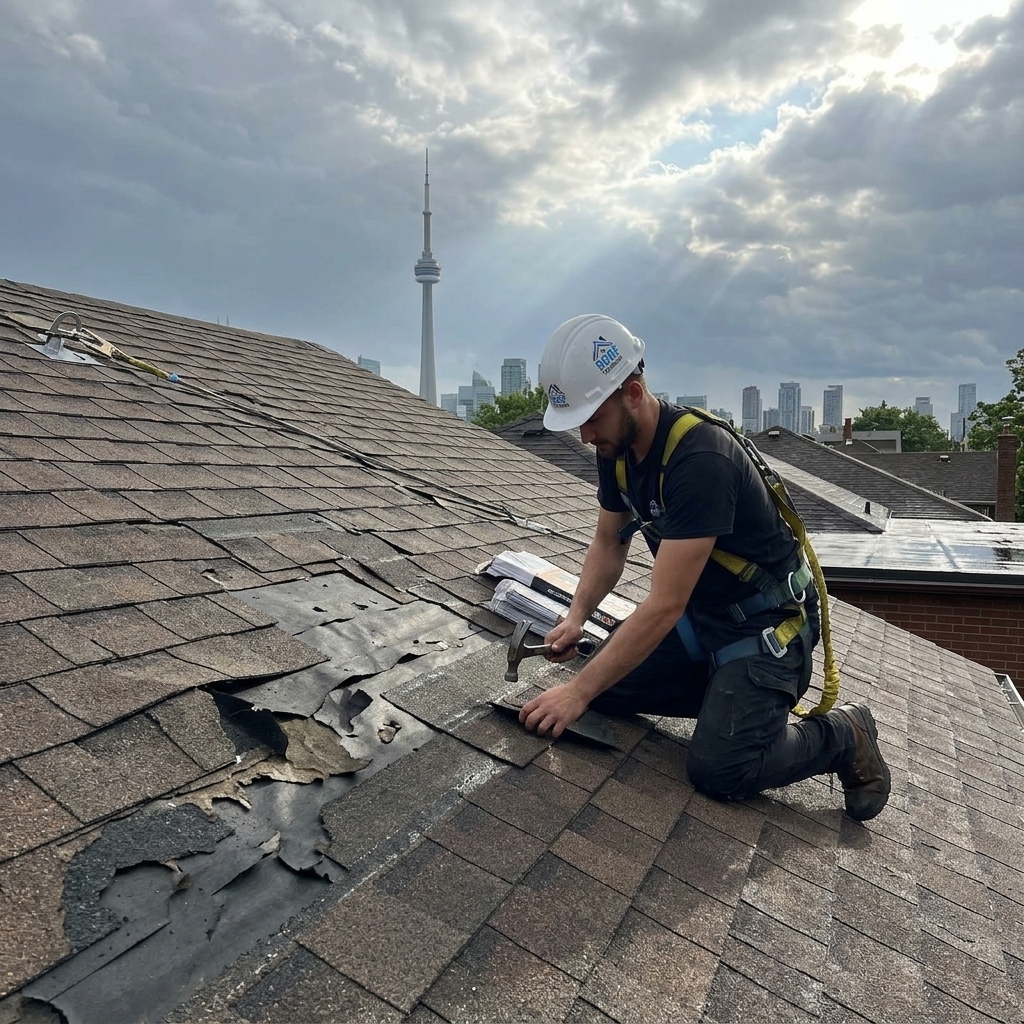
Spring is the critical window for identifying and repairing winter damage before the heavy rain season arrives in May and June. Schedule a professional roof inspection in March or April to assess damage from the winter season. Common spring findings include cracked and displaced flashing from ice expansion, missing or lifted shingles from winter wind events, vent boot gaskets that have cracked in the cold, and eavestrough damage from ice loading. Addressing these issues promptly prevents the spring and summer rain from exploiting winter-created vulnerabilities and causing secondary water damage.
Spring Rain and Wind
Toronto receives significant rainfall in April through June — averaging 70 to 80 mm per month — combined with frequent windstorms as weather systems transition from winter to summer patterns. Wind-driven rain is particularly damaging because it forces water horizontally under shingle edges and into gaps that would not leak under vertical rainfall alone. Shingles with broken adhesive seals (a common result of winter freeze-thaw damage) are especially vulnerable to spring wind events that can lift and tear them from the roof surface.
Summer: Heat, UV, and Severe Storms
UV Degradation
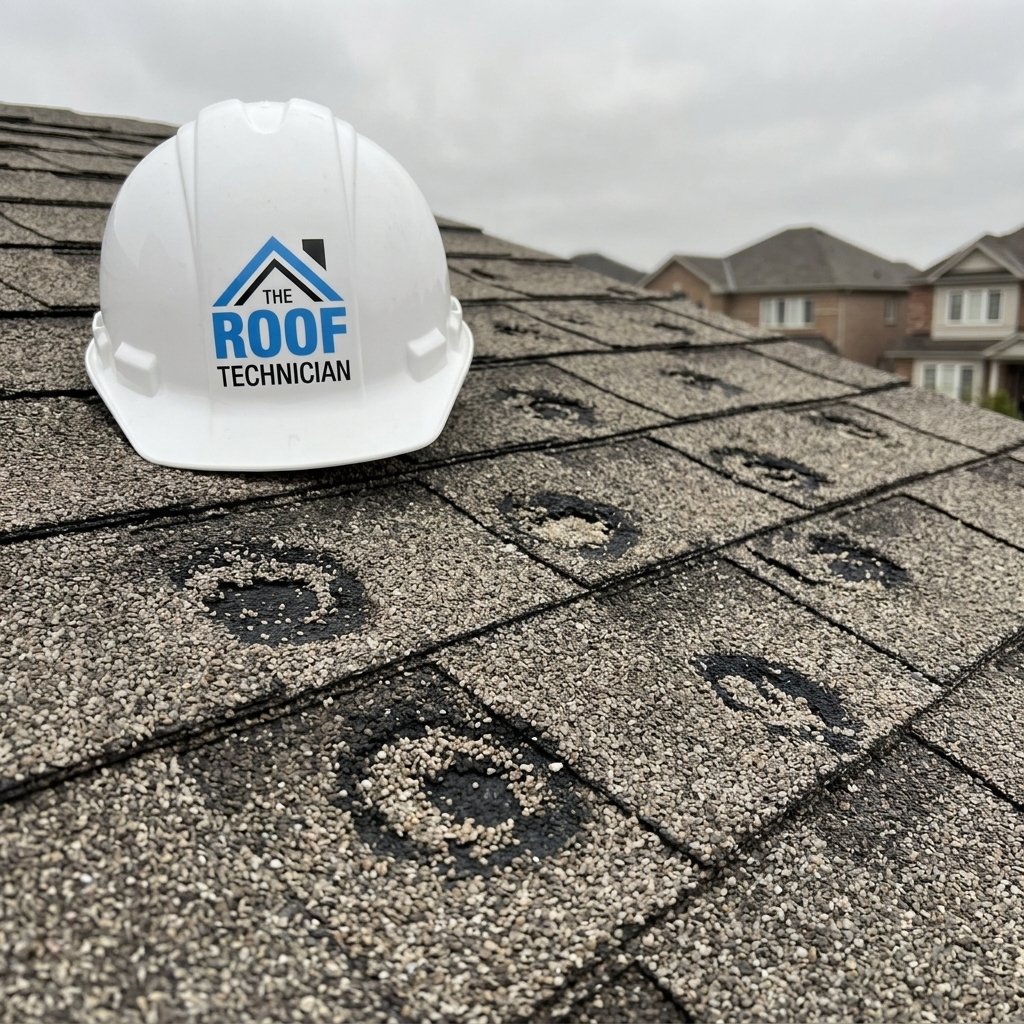
Extended summer UV exposure is the primary cause of shingle aging and granule loss. The protective ceramic granules embedded in asphalt shingles gradually erode under continuous UV bombardment, exposing the asphalt substrate to direct sunlight that accelerates chemical breakdown and physical deterioration. South and west-facing roof slopes receive the most intense UV exposure and typically show signs of aging 3 to 5 years before north and east-facing slopes on the same roof. This differential aging is one reason why a professional inspection examines all roof faces — not just the most visible one from the street.
Hail Damage
Toronto experiences hail events primarily during May through September, with severe hail capable of causing immediate, catastrophic damage to asphalt shingle roofs. Hail impacts bruise the shingle surface, cracking the granule layer and creating circular impact marks that expose the underlying asphalt. Unlike wind damage (which is often visible from the ground), hail damage is frequently invisible except upon close physical inspection — which is why a professional assessment after any significant hail event is essential for identifying damage before it leads to leaks. Hail damage is covered under most Ontario homeowner insurance policies as a sudden and accidental peril.
Severe Thunderstorms and Wind
Summer thunderstorms bring the highest wind speeds of any season in Toronto, with gusts frequently exceeding 90 km/h during severe storms. These wind events lift and tear shingles, detach flashing, break tree branches onto the roof surface, and can create negative pressure uplift that pulls entire shingle sections from the roof deck. Architectural laminate shingles (rated for 130+ km/h winds) significantly outperform three-tab shingles (rated for 60-90 km/h) in wind resistance — one of the strongest arguments for upgrading material quality during a roof replacement.
Autumn: Preparation Season
Leaf and Debris Accumulation
Toronto’s heavy tree canopy drops enormous volumes of leaves, seed pods, and small branches onto roofs and into eavestroughs during October and November. Debris that accumulates in valleys, behind dormers, and in eavestroughs traps moisture against the roof surface, promotes moss and algae growth, and blocks drainage pathways that must be clear before winter freeze-up. A thorough eavestrough cleaning and roof debris removal in late November — after the majority of leaf fall is complete — is the single most impactful autumn maintenance task.
Pre-Winter Repairs
Any roofing repairs identified during the fall should be completed before mid-November, when temperatures consistently drop below 5 degrees Celsius. Below this temperature, shingle adhesive strips cannot properly bond, sealants and caulking do not cure correctly, and working conditions on the roof become increasingly hazardous. The Roof Technician’s complete winter preparation checklist provides a detailed month-by-month timeline for ensuring your roof enters winter in optimal condition.
Weather-Resistant Materials: Choosing Roofing for Toronto Climate
When selecting roofing materials for a Toronto home, weather resistance should be the primary consideration alongside aesthetics and budget. Not all shingles perform equally against the specific threats of the GTA climate. Impact-resistant shingles (Class 3 or Class 4 rated) are engineered to withstand hail strikes without cracking or losing granules — a significant advantage for homes in areas that experience periodic hail events. Wind-rated architectural laminate shingles with 130+ km/h wind warranties provide dramatically better performance during summer thunderstorms compared to standard three-tab shingles rated for only 60 to 90 km/h. Algae-resistant (AR) shingles containing copper granules prevent the unsightly dark streaking that Toronto’s humid summers promote on standard shingles, maintaining curb appeal throughout the roof’s lifespan.
For homeowners seeking maximum weather resistance and longevity, metal roofing is virtually immune to hail damage, wind uplift, and UV degradation — and its 40 to 60-year lifespan means it outlasts multiple cycles of asphalt shingle replacement. While the upfront cost is higher, the total cost of ownership over 50 years is often lower than replacing asphalt shingles twice or three times over the same period. The Roof Technician helps homeowners evaluate material options against their specific weather exposure, budget constraints, and aesthetic preferences to identify the optimal roofing solution for their home and neighbourhood.
Emergency Weather Damage Response
When severe weather causes immediate roof damage — missing shingles, fallen tree branches, active leaks — the priority sequence is clear. First, protect the interior by placing containers under active leaks and moving valuables away from water. Second, document the damage with timestamped photographs from multiple angles before any cleanup. Third, prevent further damage with temporary tarps secured over exposed areas — your insurance policy requires you to mitigate additional damage, and emergency tarping costs are reimbursable as part of your claim. Fourth, contact your insurance company within 24 to 48 hours to report the damage and initiate the claims process. Fifth, schedule a professional damage assessment with The Roof Technician before the insurance adjuster visits to ensure the full scope of damage is identified and documented.
Toronto Climate Data: What Your Roof Endures Annually
| Climate Factor | Toronto Annual Average | Impact on Roof |
|---|---|---|
| Total precipitation | 831 mm (rain + snow equivalent) | Continuous water exposure testing waterproofing integrity |
| Total snowfall | 108 cm | Snow loading, ice dam formation, freeze-thaw damage |
| Freeze-thaw cycles | 40-60 per winter | Progressive cracking of sealants, flashing, and adhesive strips |
| Days above 30°C | 15-25 | UV degradation, thermal expansion of materials |
| Wind events 90+ km/h | 5-10 per year | Shingle uplift, flashing displacement, debris impact |
| Hail events | 2-5 per year | Granule displacement, shingle mat cracking |
Seasonal Maintenance Calendar
| Season | Key Threat | Homeowner Action | Professional Service |
|---|---|---|---|
| Winter (Dec-Mar) | Ice dams, snow load, freeze-thaw | Rake eaves after heavy snow; monitor for icicles and leaks | Emergency repair only — schedule spring assessment |
| Spring (Apr-May) | Wind-driven rain exploiting winter damage | Ground-level visual inspection for damage | Professional post-winter inspection and repairs |
| Summer (Jun-Aug) | UV degradation, hail, severe storms | Post-storm visual check; document hail events | Hail damage assessment; storm damage insurance support |
| Autumn (Sep-Nov) | Leaf debris, moisture trapping | Clear debris from roof and eavestroughs | Pre-winter inspection; repairs before freeze-up |
What weather causes the most roof damage in Toronto?
Should I inspect my roof after every storm?
How many freeze-thaw cycles does Toronto get per winter?
When is the best time to replace a roof in Toronto?
Does hail damage require a full roof replacement?
How does UV damage affect my roof?
Weather-Proof Your Roof — Call The Roof Technician
Toronto weather is relentless, but your roof does not have to be its victim. Proactive seasonal maintenance, timely repairs, and quality materials matched to the specific threats of each season extend your roof’s lifespan and prevent the emergency failures that cost thousands of dollars.
Call us today at (416) 826-0040 or book your free seasonal roof assessment online.
The Roof Technician provides professional seasonal roofing maintenance and weather damage repair across Toronto, Mississauga, Brampton, Oakville, Burlington, Vaughan, Markham, Richmond Hill, and the entire Greater Toronto Area.