
In the architectural hierarchy of a Toronto home, the roof membrane receives the glory, but the eavestrough system performs the most critical heavy lifting. It is the unsung, mechanical water-management system tasked with instantly capturing and diverting thousands of gallons of high-velocity rainwater away from the foundation of your property. When this continuous perimeter system fails—whether due to devastating winter ice expansion, aggressive biological clogging from oak leaves, or simply age-related sagging—the consequences are immediate and catastrophic. Water bypasses the system, actively rotting your wooden roof fascia, pouring directly down your brick walls, and ultimately flooding your expensive finished basement. The Roof Technician executes high-performance, seamless aluminum water management systems engineered specifically to survive the brutal Toronto climate. This exhaustive 2026 technical guide explores the exacting standards of gutter eavestrough installation Toronto homes demand, comparing material costs, dissecting advanced leaf-guard technologies, and explaining why your gutters are the ultimate defense for your foundation.
The Physics of Perimeter Water Management
To understand the immense mechanical stress placed on a gutter, you must grasp the volume of water it processes. A standard 2,000-square-foot Toronto roof during a severe summer thunderstorm can shed over 1,200 gallons of water in a single hour. The eavestrough must intercept this massive sheet of water racing down the steep pitch of the shingles and smoothly redirect it horizontally toward the vertical downspouts.
If the gutters are too small (standard 4-inch builder grade), the water physically overshoots the trough, creating a waterfall effect that destroys your landscaping and pools aggressively against your basement foundation walls. If the pitch of the gutter (the slight downward angle) is miscalculated by even a quarter of an inch, standing water pools inside the trough. In November, that stagnant water freezes solid, expanding violently and tearing the entire aluminum structure off the wooden fascia board. Precision engineering is not optional; it is mandatory.
2026 Eavestrough Installation Costs in the GTA
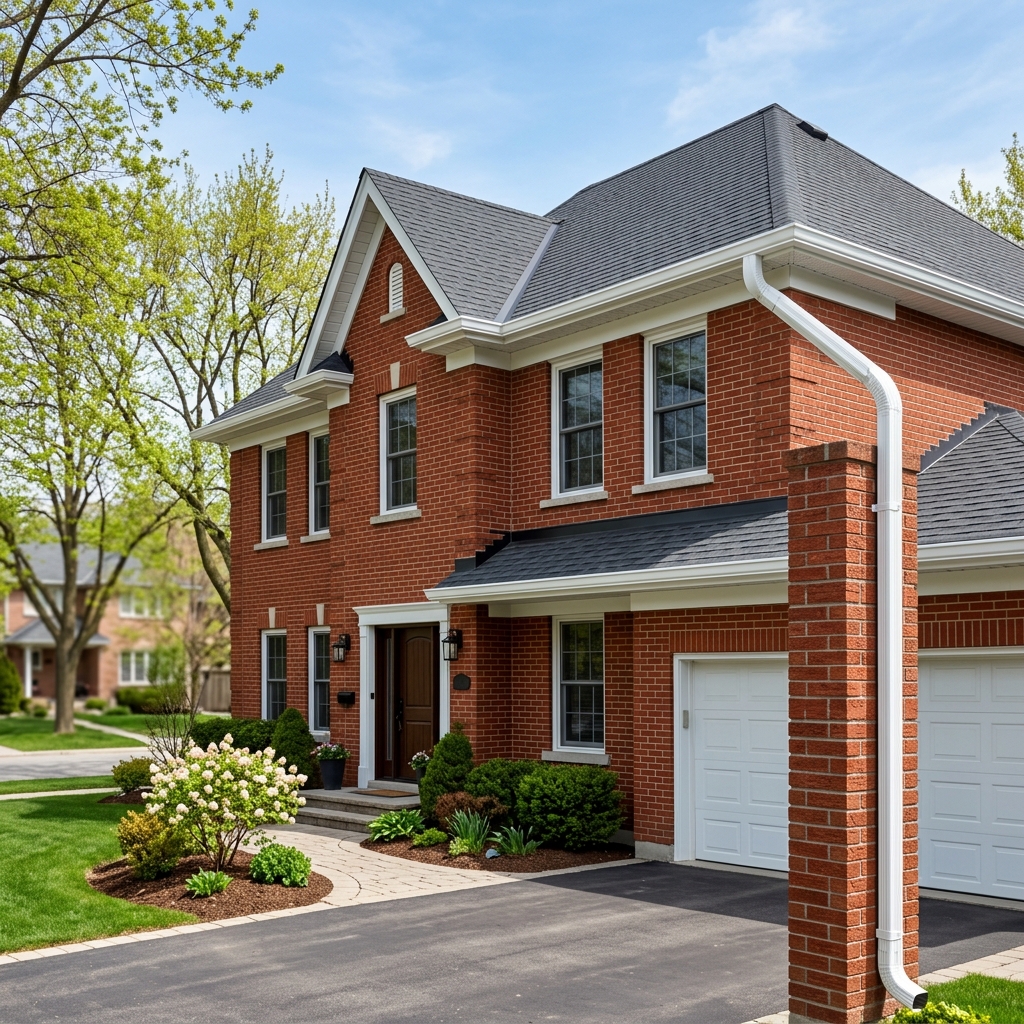
The cost of a new gutter system is dictated by the linear footage of the roof perimeter, the complexity of the corners (miters), and the vertical drop of the downspouts. However, the most profound variable is the material selected.
| Gutter Material Type | Estimated 2026 Cost (Per Linear Foot) | Expected Lifespan | Toronto Climate Resilience |
|---|---|---|---|
| Vinyl / PVC (Sectional) | $5.00 – $8.00 | 10 – 15 Years | Poor. Becomes incredibly brittle and shatters in -20°C winter temperatures. |
| Seamless Aluminum (Standard Gauge) | $9.00 – $14.00 | 20 – 25 Years | Excellent. Will not rust; seamless design prevents 90% of joint leaks. |
| Heavy-Gauge Seamless Aluminum (0.032″) | $15.00 – $22.00 | 30+ Years | Superior. Easily supports massive winter ice dams without bending or sagging. |
| Galvanized Steel | $12.00 – $18.00 | 15 – 20 Years | Strong, but ultimately prone to aggressive rust once the zinc coating scratches. |
| Pure Copper (Architectural) | $35.00 – $50.00+ | 50 – 100 Years | Elite. Stunning aesthetic that patinas beautifully. Requires specialized soldering. |
*Note: Downspouts are typically calculated separately or bundled into a total package price based on the number of vertical drops required to handle the roof’s square footage.
The Superiority of Seamless Aluminum
In modern Toronto residential architecture, the seamless aluminum machine is the undisputed industry standard. Unlike cheap vinyl gutters purchased in 10-foot sections from a big-box hardware store, seamless gutters are physically manufactured on-site in your driveway.
A massive coil of flat aluminum is fed through a precision roll-forming machine mounted inside the contractor’s truck. The machine continuously extrudes a perfectly shaped, rigid gutter that can be 40, 50, or 60 feet long without a single seam. The only seams exist at the 90-degree corners of the house. Why is this critical? Because every single seam in a gutter is an eventual point of failure. The polyurethane caulking sealing those seams will inevitably dry out and crack after 5 years of intense UV exposure and thermal expansion, causing aggressive dripping. Eliminating the seams eliminates the leaks.
Gutter Guards: The End of Ladder Climbing?
If your Toronto property is surrounded by towering, century-old Oak, Maple, or Pine trees, your gutters will clog rapidly. A clogged gutter is entirely useless; it instantly overflows. To combat this, the industry has developed highly advanced “Gutter Guards” (or leaf screens).
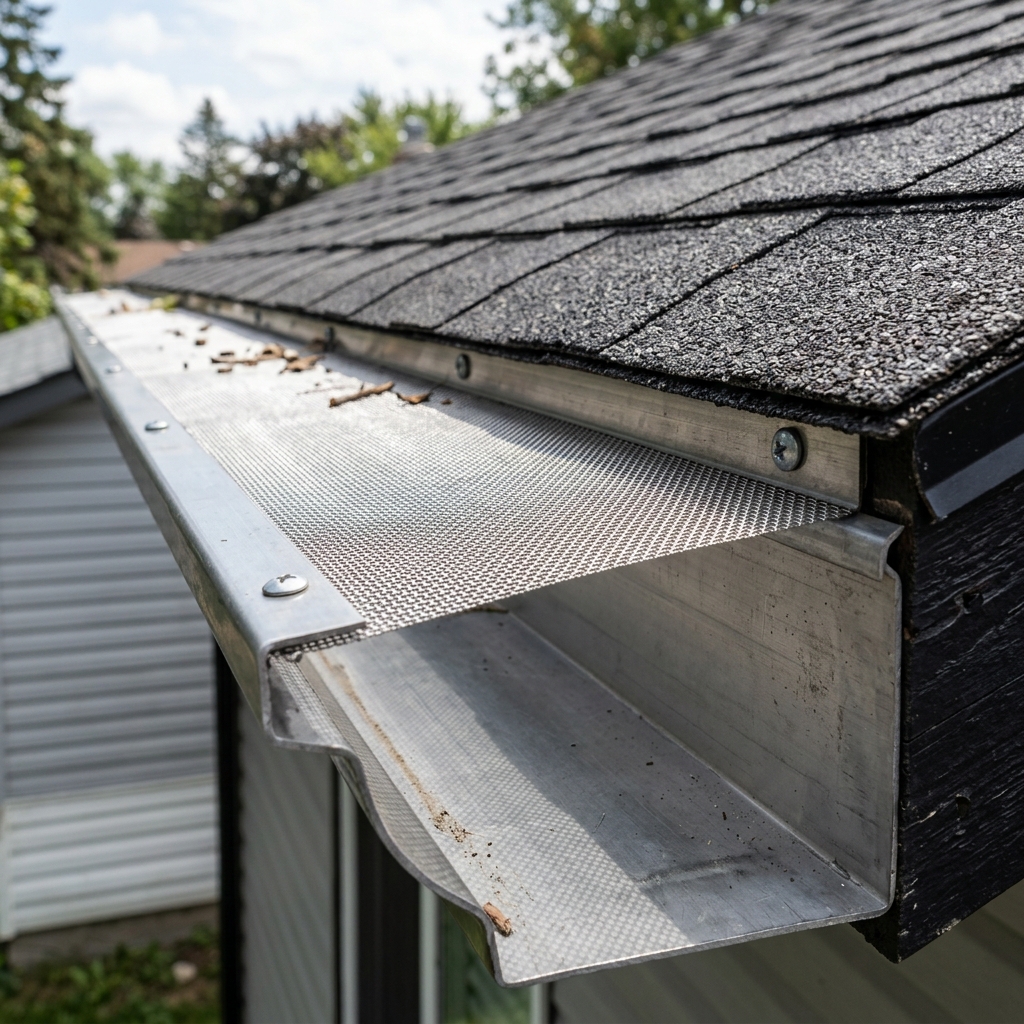
The Mesh Screen System
These are micro-perforated surgical steel or heavy aluminum screens that sit flush over the top of the gutter. They act as a massive filter. Rainwater flows effortlessly through the micro-pores, while leaves, pine needles, and even asphalt shingle granules are suspended on top until the wind blows them off. High-end mesh systems (like Alu-Rex or Gutterglove) are incredibly effective, but they must be professionally screwed securely into the fascia to prevent heavy snow loads from crushing them inward.
The Surface Tension (Helmet) System
These systems feature a solid metal dome that covers the entire gutter, leaving only a tiny horizontal slit at the front edge. Water flows rapidly down the dome, uses liquid surface tension to wrap around the curved lip, and drops backward into the gutter, while leaves shoot straight off the edge onto the ground. While excellent at deflecting massive maple leaves, they can occasionally be overwhelmed by sheer water volume during a torrential downpour, causing temporary overshoot.
| Gutter Protection System | Primary Advantage | Potential Disadvantage |
|---|---|---|
| Plastic Drop-in Screens | Extremely cheap and DIY friendly. | Brittle. Frequently warp in the summer sun or collapse under heavy winter ice. |
| Micro-Mesh Aluminum/Steel | Blocks everything, including tiny pine needles and roofing shingle grit. | Can occasionally freeze over, creating a solid sheet of ice in deep winter. |
| Solid Surface Tension Hoods | Handles massive debris volumes effortlessly; highly durable. | Expensive. Visible from the street, altering the architectural roofline aesthetic. |
| Sponge / Foam Inserts | Very fast installation. | Acts like a sponge, holding moisture, growing mold, and decomposing rapidly. |
The Fascia Board: The Hidden Anchor
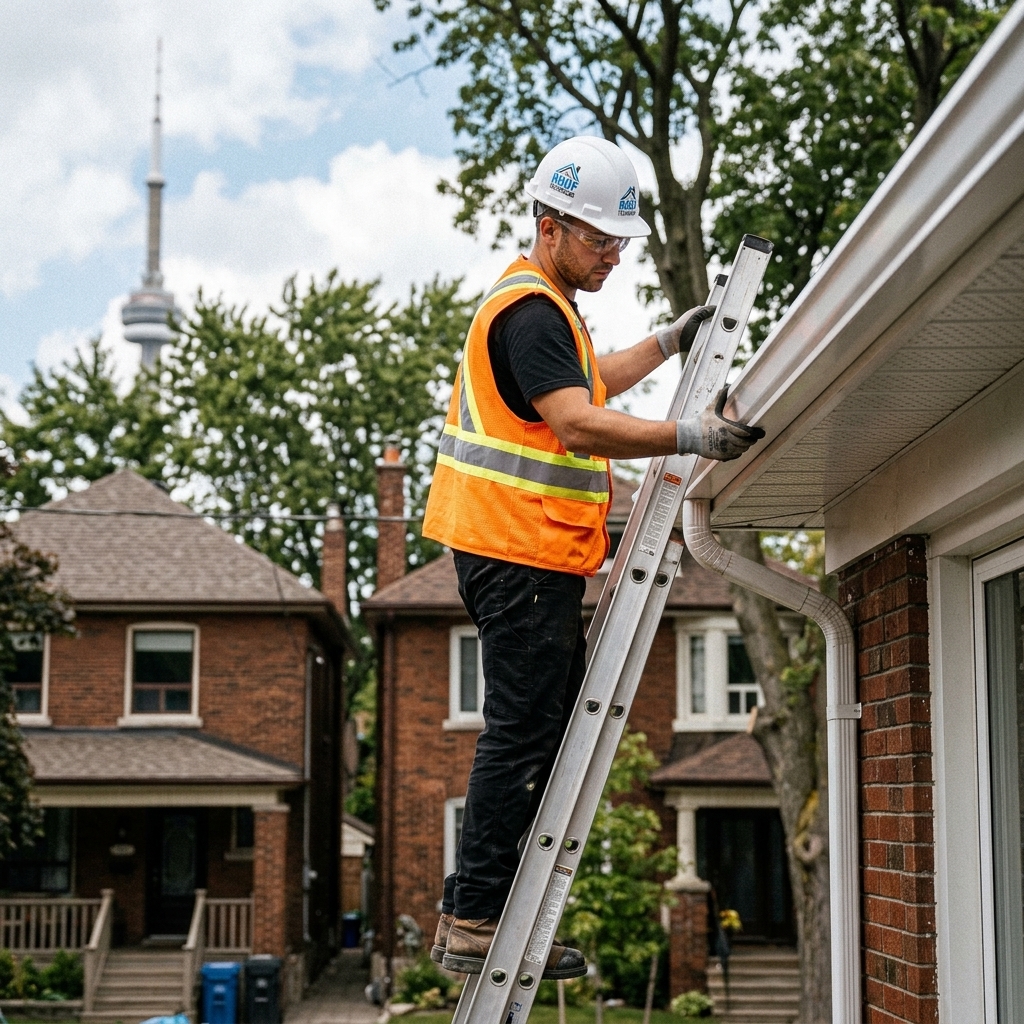
The entire weight of the eavestrough system—which can easily exceed 500 pounds when packed with solid winter ice—is suspended entirely by the wooden fascia board. The fascia is the long, horizontal wooden plank nailed directly to the exposed ends of your roof rafters. If your existing gutters have been leaking for years, water has likely wicked aggressively into that wooden board, rotting it completely soft.
It is a profound gutter eavestrough installation Toronto error to screw brand new, heavy-gauge aluminum gutters into rotten wood. The screws will simply pull out under the weight of the first major snowstorm, causing the entire system to collapse into your driveway. A professional installation firm will aggressively audit the structural integrity of the fascia. If rot is discovered, the crew must perform a complete fascia tear-off and replacement with fresh, solid spruce lumber before a single inch of new aluminum is hung.
The Hidden Connection: Roof Decking and Drip Edge
The transition zone where the roof meets the gutter is a highly vulnerable architectural weak point. To ensure water physically cannot bypass the gutter and run down the fascia board, a specialized piece of angled sheet metal called a Drip Edge must be installed. The drip edge slips directly underneath the bottom row of asphalt shingles, extends outward, and bends aggressively downward into the actual gutter trough.
If this critical component is missing (a frequent hallmark of cheap, amateur roofing), water will use capillary action to wick backward up the underside of the shingles, soaking the plywood roof decking and rotting the eaves. If your roof replacement did not include a perimeter drip edge, your new gutters will never function flawlessly.
Why Sizing Matters: The Move to 5-Inch and 6-Inch Systems
As climate volatility increases, Toronto is experiencing significantly heavier, more concentrated burst rainfall events. The standard 4-inch “builder grade” gutters installed on homes in the 1990s are mathematically incapable of processing these massive volumes of water, resulting in immediate overflow and flooded basements.
The modern industry standard for residential properties has shifted decisively to the deep-profile 5-inch seamless trough. For massive custom homes in Vaughan or Oakville featuring incredibly steep roof pitches or sprawling square footage, upgrading to massive commercial-grade 6-inch eavestroughs with oversized 3×4-inch downspouts is an absolute necessity to prevent catastrophic water overshoot.
Furthermore, the number and strategic placement of downspouts is an incredibly critical engineering calculation that amateur installers consistently miscalculate. A single, undersized 2×3-inch downspout physically cannot evacuate the volume of water being channeled from a massive 60-foot run of eavestrough during a severe thunderstorm. The water backs up in the trough, spills over the edge, and aggressively erodes the landscaping and saturates the foundation. Elite installation firms calculate the exact drainage capacity required based on the total square footage of the roof plane feeding into each specific section of gutter, ensuring every downspout is precisely sized to handle the maximum anticipated water volume.
| Gutter System Size | Maximum Roof Drainage Area | Optimal Deployment Scenario |
|---|---|---|
| 4-Inch Standard (Builder Grade) | 600 sq. ft. of roof area per downspout. | Extremely small, single-story homes with minimal roof square footage. |
| 5-Inch Seamless (Residential Standard) | 1,200 sq. ft. of roof area per downspout. | The modern standard for all 2-story detached homes in the GTA. |
| 6-Inch Commercial (Heavy Duty) | 2,400+ sq. ft. of roof area per downspout. | Custom estates with massive steep-pitch roofs, dormers, and multiple complex valleys. |
| Half-Round Copper (Architectural) | 800 sq. ft. of roof area per downspout. | Ultra-luxury heritage restorations where aesthetic authenticity is the absolute priority. |
How frequently should standard Toronto eavestroughs be professionally cleaned?
What is the exact cost per foot for professional gutter eavestrough installation Toronto homeowners pay?
Why is water violently overshooting my gutters during heavy summer rainstorms?
Are seamless aluminum gutters genuinely superior to the sectional vinyl gutters sold at hardware stores?
What is a roof drip edge, and why is it legally required?
Can I easily install premium gutter guards on my existing, aging eavestrough system?
Secure Your Foundation with Flawless Water Management
The eavestrough system is the absolute final line of defense protecting the structural foundation of your multi-million dollar property. Do not trust this critical hydraulic engineering to cheap materials or amateur installers. You require seamless, heavy-gauge aluminum designed to conquer the harshest winter ice loads.
Call us today at (416) 826-0040 or request a free consultation to schedule a comprehensive audit of your roof’s perimeter drainage system.
The Roof Technician has provided elite water management solutions across Toronto, Markham, Brampton, and the surrounding GTA for decades. Whether executing a massive roof replacement or installing custom seamless gutters, our master technicians deliver uncompromising durability backed by industry-leading warranties.