
Every house with indoor plumbing has at least one vent stack poking through the roof, and every one of those pipes is sealed with a flashing that most people never think about. The plumbing vent boot is a small piece of metal and rubber, yet it is one of the most common sources of roof leaks we trace in Toronto-area homes. It is often the first component on a roof to wear out, sometimes years before the shingles around it.
This guide explains how pipe flashings are built, why they fail, what the leak looks like from inside the house, how a roofer replaces one properly, and why a tube of caulking is not a real fix.
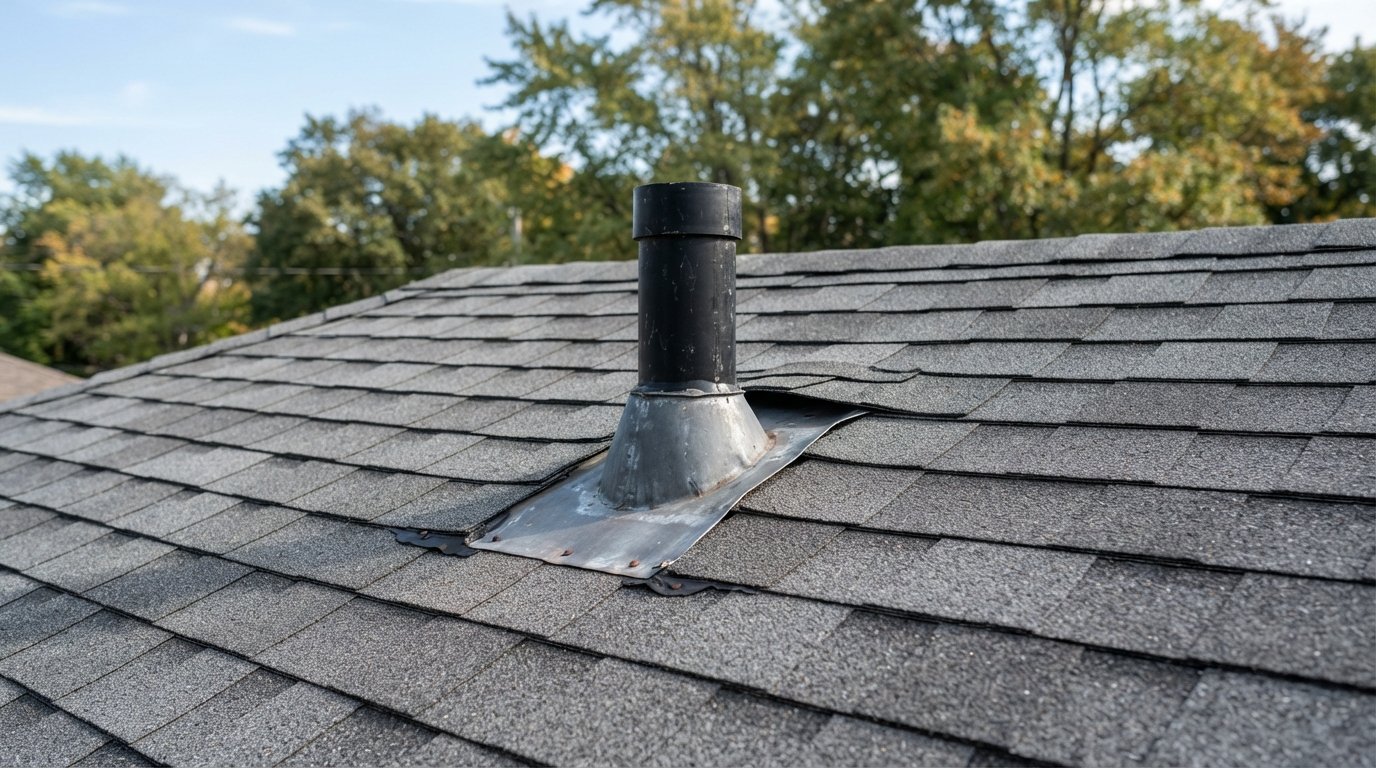
How A Plumbing Vent Boot Works
The vent stack is part of the drainage system. It lets sewer gases escape above the roof and lets air into the pipes so drains flow smoothly. Where that pipe passes through the roof deck, there is a hole slightly larger than the pipe, and something has to seal the gap against rain and melting snow.
A plumbing vent boot does that in two ways:
- The base flange is a flat plate that lies on the roof. Its upper part slides under the shingles above the pipe, and its lower part sits on top of the shingles below. Water running down the roof passes over the flange rather than under it.
- The collar is the raised part that wraps around the pipe. It keeps water from running down the outside of the pipe and into the hole in the deck.
When both parts are intact and installed in the right order, the boot needs no sealant at all to shed water. That is important to remember when we get to why caulking fails.
Types Of Pipe Flashing And How Each One Fails
Not all boots are the same. The type on your roof affects how long it lasts and what typically goes wrong.
| Type | How it is built | Typical failure | Notes |
|---|---|---|---|
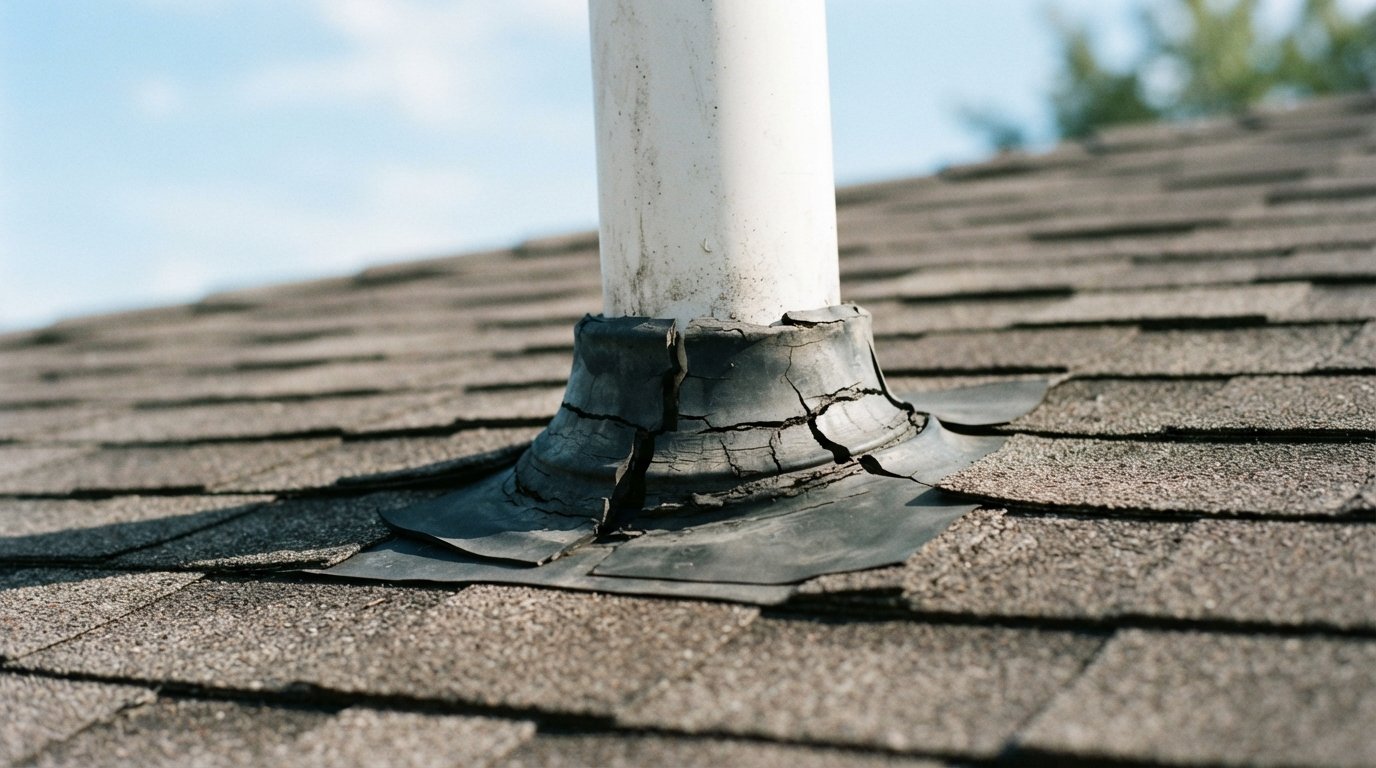
| Neoprene collar on metal base | Galvanized steel or aluminum base with a rubber-like collar that grips the pipe | Collar cracks and splits from UV and cold, pulls away from the pipe | The most common type on GTA homes; collar often fails before the shingles |
| All-plastic or thermoplastic boot | Moulded plastic base with an integrated collar | Base can crack in cold; collar hardens | Seen on some newer and budget installations |
| Lead boot | Soft lead sleeve formed over the pipe and folded down inside the top | Chewed by squirrels, split by settlement, torn by foot traffic | Long-lasting material, but vulnerable to pests |
| Multi-piece flashing | Metal base flashing plus a separate storm collar or rubber gasket | Gasket or collar deteriorates; sealant joints fail | Common with larger pipes or unusual pipe materials |
| Split or retrofit boot | Boot that opens and wraps around the pipe without removing it | Seam can open if not sealed and clamped as specified | Useful when the pipe cannot be cut or removed |
Neoprene collars cracking
Most homes in the GTA have neoprene-style boots. The collar is exposed to direct sun all day, heat on dark shingles in summer, and repeated freezing in winter. Over time the rubber hardens, shrinks and cracks, usually starting where it grips the pipe. Once the collar splits, water runs down the pipe and straight through the deck.
It is common for these collars to fail well before the rest of the roof is worn out. A roof that is otherwise sound can leak purely because of one tired boot.
Lead boots and pests
Lead flashings are soft, durable and easy to form. They also attract squirrels, which chew the lead where it folds over the top of the pipe. Chewed lead leaves gaps and jagged holes. Settlement or foot traffic can also split the lead where it bends.
Multi-piece flashings
Larger or unusual pipes sometimes use a separate base flashing with a storm collar or a clamped gasket. These systems depend on more joints, and each joint is a place for sealant to crack or a clamp to loosen.
What A Leaking Plumbing Vent Boot Looks Like From Inside
You should never go onto the roof to look at a boot. The good news is that vent boot leaks leave recognizable patterns inside the house, and they help a roofer diagnose quickly.
| What you see inside | Likely cause | What the roofer checks |
|---|---|---|
| Round or oval ceiling stain near a bathroom, directly below where the stack runs | Water running down the pipe through a cracked collar | Collar condition, fit around the pipe |
| Stain that grows only during heavy or wind-driven rain | Base flange installed in the wrong order, or shingles lifted around the boot | Flange integration with shingle courses |
| Drips appearing during a thaw rather than rain | Snow melting around the warm pipe and running into a damaged collar | Collar, pipe height, snow build-up area |
| Water on the pipe surface or damp insulation around the stack seen from the attic hatch | Leak at the boot tracking down the pipe | Wet sheathing and insulation around the penetration |
| Sounds of animals in the attic and new stains | Chewed lead or damaged boot | Pest damage and entry points |
A useful clue: stains from a plumbing vent boot often appear on the ceiling of a bathroom or hallway in line with the plumbing below, rather than near an exterior wall. Stains close to the walls more often point to eave, gutter or ice dam issues. If you see one, have it checked before the autumn rains get heavier. Our roof leak repair team can confirm the source.
Because leaks at the boot run down the pipe, they are sometimes mistaken for plumbing leaks. A plumber will find the pipe intact; the water is actually coming from above.
Why Caulk Alone Fails
The most common “repair” we see on vent boots is a thick bead of caulking or roofing tar smeared around the top of a cracked collar. It rarely lasts, and here is why:
- Movement. The pipe expands and contracts with temperature, and the roof moves slightly with the seasons. Rigid or aged sealant cracks away from the pipe.
- UV exposure. Sealants exposed to full sun break down, much like the collar they are covering.
- Poor adhesion. Sealant applied over a dirty, cracked, sun-damaged collar or a plastic pipe does not bond reliably.
- It hides the problem. Caulk over a failed boot covers the damage, delaying proper repair while water may still be getting in.
- It can trap water. Sealant smeared on the base flange or under shingles can dam water and direct it where it should not go.
Sealant has a role in roofing, for example sealing exposed nail heads on a new boot flange where the manufacturer calls for it. It is not a substitute for replacing a failed component.
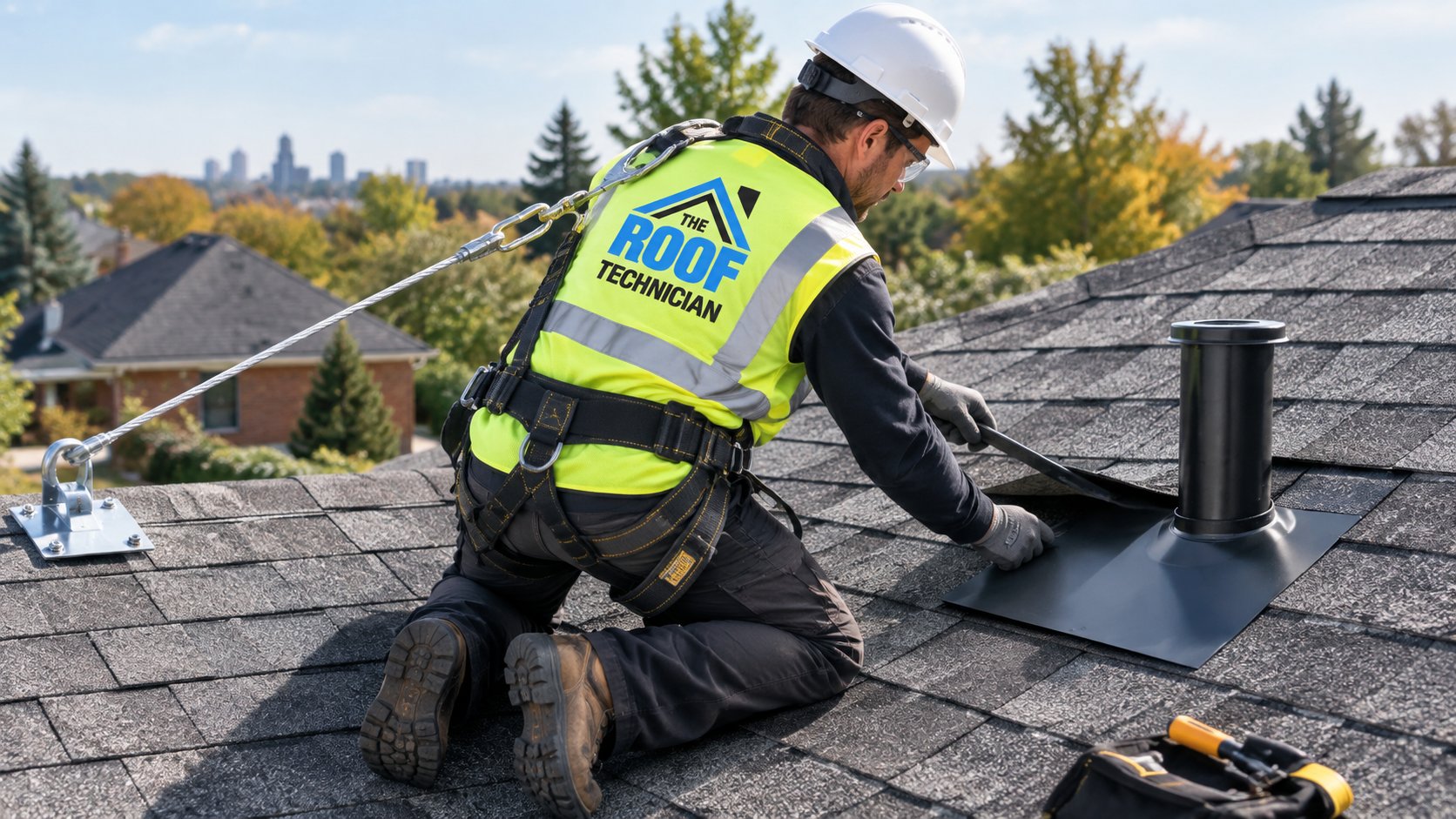
How A Roofer Replaces A Plumbing Vent Boot
Replacing a boot properly takes a bit more than swapping one piece for another. The key is integrating the new flange with the shingles so water always runs over it.
- Assess the area. The roofer checks the shingles around the pipe, the height of the pipe above the roof, and whether the deck around the hole feels soft.
- Release the shingles above. The shingles above the boot are carefully unsealed and their nails removed so the old flange can be slid out. This is best done in mild weather when shingles are pliable.
- Remove the old boot. The old flange is removed along with any old sealant. The roofer looks at the deck around the pipe and replaces any rotten wood.
- Check the underlayment. Any damaged underlayment around the pipe is patched, often with a piece of self-adhered membrane cut to fit.
- Fit the new boot. The new boot slides down over the pipe. Its upper half goes under the shingles above, and its lower half sits over the shingles below.
- Fasten correctly. The flange is nailed along its upper edge and sides where the shingles above will cover the nails. Any exposed fasteners are sealed as the manufacturer directs.
- Re-lay and seal the shingles. The shingles above are nailed back and hand-sealed so they lie flat over the flange.
- Check the collar. The collar should grip the pipe firmly without being torn. Many roofers also add a storm collar or a protective cap over the top of the boot, depending on the product.
When the pipe itself is a problem
Sometimes the pipe is cracked, too short to extend properly above the roof, or out of plumb. In that case the pipe may need attention, which can involve a plumber. A pipe that is too short can be buried by snow, letting melting snow reach the collar more easily. Where a pipe cannot be removed or lifted, a split boot designed for retrofit use can be the right choice.
Repair Options Compared
| Option | When it fits | Durability | Rough cost (estimate only) |
|---|---|---|---|
| Caulk over the collar | Never as a permanent fix | Short-lived | Low, but repeat visits add up |
| Collar cover or rubber sleeve over the old boot | Base flange is sound and properly integrated, collar only cracked | Moderate; depends on product and base condition | Often in the lower hundreds of dollars, varying with access |
| Full boot replacement | Cracked collar, damaged base, pest damage or poor integration | Long-lasting when shingles are woven correctly | Commonly a few hundred dollars per boot, depending on height, pitch and access |
| Boot replacement with deck repair | Rot around the pipe hole | Long-lasting | Higher, depending on the amount of wood to replace |
| New boots during reroofing | Any roof replacement | Matched to the new roof’s life | Usually included in the replacement scope |
These figures are broad estimates only and vary with the house, roof pitch, height, access and extent of any damage. On a full reroof, new boots should always be installed; reusing old ones on a new roof is a false economy. If a roof replacement is on the horizon, it makes sense to replace every plumbing vent boot, exhaust vent and flashing at the same time.
How Long Do Pipe Flashings Last?
There is no fixed lifespan. Neoprene collars on a sunny, south-facing slope age faster than those on a shaded north slope. Lead lasts well unless pests get to it. Better-quality boots with UV-stable collars, and designs with a protective cap over the collar, generally hold up longer. What we see in practice is that on many roofs, the boots show wear before the shingles do. That is why a roofer checks every penetration on routine inspections, and why a single leak at a boot is not in itself a sign that the whole roof needs replacing.
Questions To Ask When A Roofer Quotes A Boot Repair
A plumbing vent boot repair is a small job, which is exactly why it is worth asking a few questions. The answers tell you whether the repair will be done properly or simply patched.
- Will you replace the whole plumbing vent boot, or only cover the collar? Why?
- How will the new flange be tucked under the shingles above the pipe?
- Will you check the deck and underlayment around the pipe hole while the boot is off?
- Is the pipe tall enough and in good condition, or does it need a plumber’s attention?
- Are the other penetrations on the roof, such as exhaust vents and other stacks, in similar condition?
- Can you send photos of the old boot and the finished repair?
It is also worth asking the roofer to look at every other pipe on the roof while they are there. Houses often have two or three stacks installed at the same time, and when one boot has cracked, the others are usually not far behind. Replacing them together saves a second visit and a second set of ceiling stains.
Prevention And Maintenance
- Book periodic roof inspections. A roofer can spot a hardening or cracked collar before it leaks.
- Replace boots when reroofing. Always install new flashings with a new roof.
- Deal with pests. If squirrels are active on your roof, address them and consider boots less attractive to chewing, or protective caps.
- Do not let other trades step on boots. Satellite, solar or HVAC installers should avoid damaging the flashings.
- Watch the ceilings below vent stacks. A stain in the right place is the earliest indoor warning.
More general roofing questions are answered on our FAQ page.
How do I know if my plumbing vent boot is leaking?
Can I just caulk a cracked boot?
Why do squirrels chew lead flashings?
Does a leaking boot mean I need a new roof?
Should boots be replaced when the roof is replaced?
Can a boot be replaced in autumn?
Fix Your Plumbing Vent Boot Before The Heavy Rains
A small, worn flashing can cause a surprising amount of damage. At The Roof Technician, our roofers trace leaks to their source, replace failed boots properly and weave them into the shingles so they stay dry for years.
Call us today at (416) 826-0040 or request a free estimate.
Protecting roofs and ceilings across Toronto and the GTA.