Attic insulation in Vaughan is the highest return improvement available to most homeowners in the city, and it is also the one most likely to have been done badly. Heat rises, and in a typical detached home a substantial share of winter heat loss goes straight up through the ceiling into the attic and out through the roof. If that insulation is thin, uneven, compressed or interrupted, the furnace spends the winter heating the sky.
What Attic Insulation In Vaughan Should Actually Achieve
Insulation is measured in R value, which expresses resistance to heat flow. Higher numbers mean better performance, and the values are cumulative, so adding a layer over an existing one adds their R values together. Current Ontario practice for new construction targets roughly R60 in the attic, which corresponds to around fifty to sixty centimetres of blown insulation depending on the material.
Most Vaughan housing was built between the late 1980s and the mid 2000s, when the prevailing target was substantially lower, commonly in the R28 to R40 range. Insulation also settles over time, losing depth and therefore R value, and it gets displaced by anyone who has ever been into the attic to run a cable or service a fan. It is entirely normal to find a twenty year old attic performing well below what it was originally built to.
Coverage matters as much as depth. Insulation only works where it exists, and a single uninsulated area is a continuous heat leak. Common gaps include the attic hatch, the area above pot lights, the top plates of interior walls, the space above a dropped ceiling or bulkhead, and the transition where an addition meets the original structure. In many Vaughan homes the area above the garage ceiling is a separate space that was insulated to a different, lower standard.
The other half of the equation is air sealing. Insulation resists heat conduction, but it does not stop air movement. Warm, humid indoor air escaping through gaps around plumbing stacks, wiring penetrations, the attic hatch and recessed lights carries both heat and moisture into the attic. Sealing those penetrations before adding insulation is what turns a top up from a modest improvement into a substantial one.
Comparing Insulation Materials For Ontario Attics
Four materials cover almost every residential attic in the region, and each has a genuine place.
Blown fibreglass is the most common choice for top ups. It is light, does not settle as much as older products, is non combustible and is inexpensive to install over an existing layer. Its main weakness is that it performs less well in very cold conditions and is easily disturbed by foot traffic.
Blown cellulose is made from recycled paper treated with fire retardant. It is denser, fills irregular cavities more completely and resists air movement better than fibreglass. It settles more over time, so installers compensate by blowing to a greater initial depth, and it is heavier, which matters on older framing.
Batt insulation is used mainly where an attic is being insulated from scratch or where the space is too tight to blow into. It is only as good as its fit, and gaps at the edges of poorly cut batts undermine the whole installation.
Spray foam is applied where air sealing and insulation need to happen together, typically at rim joists, tricky transitions or in unvented roof assemblies such as cathedral ceilings. It is by far the most expensive per unit of R value and is not the sensible choice for a standard vented attic floor.
| Material | R value per 25 mm | Depth for R60 | 2026 installed cost per square metre | Best use |
|---|---|---|---|---|
| Blown fibreglass | R2.2 to R2.7 | 55 to 68 cm | $22 to $38 | Standard attic top ups |
| Blown cellulose | R3.2 to R3.8 | 40 to 47 cm | $26 to $45 | Irregular cavities, better air resistance |
| Fibreglass batt | R2.9 to R3.3 | 45 to 52 cm | $30 to $50 | New or fully stripped attics |
| Open cell spray foam | R3.5 to R3.9 | 39 to 43 cm | $70 to $110 | Air sealing at transitions |
| Closed cell spray foam | R6.0 to R7.0 | 22 to 25 cm | $110 to $180 | Cathedral ceilings, rim joists |
Why Insulation And Ventilation Must Be Done Together
This is the part that goes wrong most often, and it is the reason a badly executed insulation top up can leave a house worse off than before.
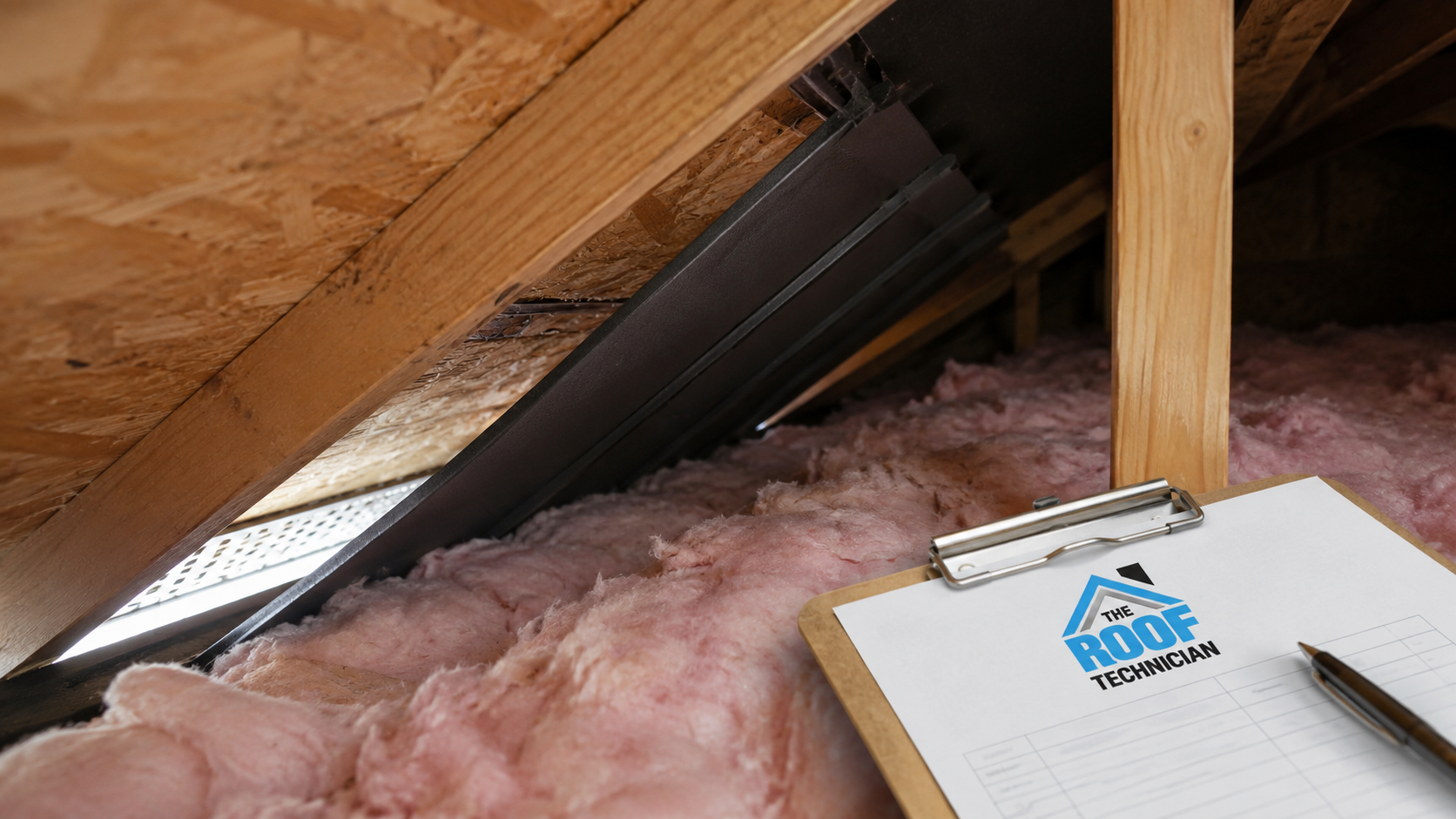
A vented attic works by drawing outside air in at the soffits, across the underside of the roof deck, and out at the ridge. That airflow removes the water vapour that inevitably reaches the attic. When blown insulation is added without rigid baffles at each rafter bay, the material drifts into the eave space and packs the intake path solid. The homeowner now has more insulation and no airflow.
The consequences arrive the following winter. Vapour that used to be carried away now condenses on cold sheathing, producing frost, staining and eventually mould and delamination. Meanwhile, the exhaust vents at the ridge still try to draw air, and with the soffits blocked they pull it from the house through ceiling penetrations, dragging even more moisture upward.
The correct sequence is straightforward and non negotiable. Seal the ceiling penetrations first. Install or verify a rigid baffle at every rafter bay so the intake channel is protected. Confirm that intake and exhaust are roughly balanced. Only then blow the new insulation. Any contractor who proposes to add insulation without discussing the intake path is planning to create a problem, which is why insulation work belongs in the same conversation as attic ventilation rather than being treated separately.
What Attic Insulation In Vaughan Costs In 2026
Pricing depends on the attic floor area, the existing depth, how accessible the space is and how much preparation work is needed before blowing.
| Scope of work | What is included | 2026 price range |
|---|---|---|
| Attic assessment | Depth measurement, ventilation check, written report | $200 to $400 |
| Air sealing ceiling penetrations | Hatch, pot lights, plumbing stacks, wiring | $700 to $2,200 |
| Baffle installation | Rigid baffles at each rafter bay along the eaves | $600 to $1,800 |
| Top up to R60, typical semi or townhome | Blown insulation over prepared attic | $1,800 to $3,200 |
| Top up to R60, detached two storey | Blown insulation over prepared attic | $2,600 to $5,000 |
| Full removal and replacement | Vacuum out contaminated material, then reinsulate | $5,500 to $11,000 |
Full removal is only warranted where the existing material is contaminated by mould, rodent activity or significant water damage, or where the attic needs to be emptied for extensive air sealing. Removing sound insulation to replace it with the same product is an unnecessary expense that some contractors propose because it is profitable.
What A Proper Attic Assessment Looks Like
Before any quote is meaningful, someone needs to get into the attic and measure. A drive by estimate based on the age of the house tells you nothing, because two identical homes on the same street can have completely different attic conditions depending on what has been done to them over the years.
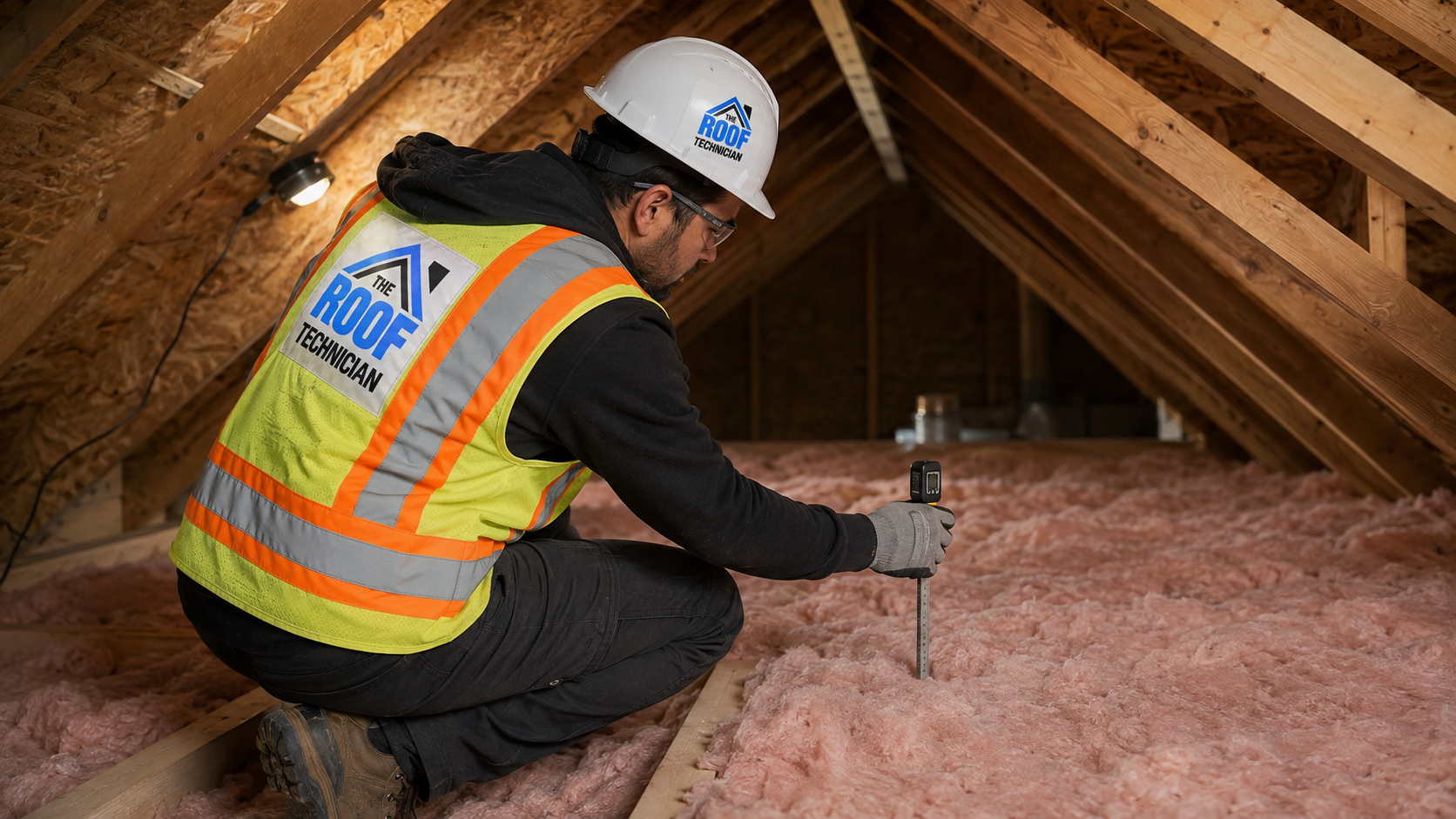
The assessment starts with depth measurements taken at several points across the attic floor, not one. Insulation settles unevenly and is displaced wherever anyone has crawled through, so an average across multiple readings is the only honest figure. The material is identified, since fibreglass and cellulose have different R values per centimetre, and its condition is noted: dry and loose is good, matted, damp or crusted is not.
Next comes the ventilation check. Each rafter bay at the eaves is examined for a clear intake path and the presence of a baffle. The exhaust vents are counted and identified by type, and any mixing of ridge, box and gable venting on the same space is flagged. The underside of the sheathing is inspected for staining, frost residue, mould and rusted nails, all of which indicate how long any moisture problem has been running.
Then the leakage points. The attic hatch, recessed light housings, plumbing stacks, wiring penetrations, bathroom and kitchen fan ducts and the top plates of interior walls are all located and assessed. Any duct that terminates inside the attic rather than at a roof or wall cap is recorded, because that single fault can undo an otherwise good insulation job.
Finally, separate attic spaces are assessed individually. Many Vaughan homes have distinct spaces above the garage, above an addition or over a bonus room, and those spaces frequently received less attention during construction than the main attic did. A report that treats the attic as one uniform area has probably missed the worst of it.
Realistic Energy Savings And Payback
It is worth being honest about savings, because the numbers quoted in marketing are frequently inflated.
Upgrading an attic from a genuine R30 to R60 typically reduces the heat lost through the ceiling by roughly half. Because the ceiling is only one part of the building envelope, the effect on the total heating bill is smaller than that: for most Vaughan detached homes the reduction lands somewhere between ten and twenty percent of annual heating costs, with the larger figures applying where air sealing was also poor and is being corrected at the same time.
Air sealing often delivers more than the insulation itself in older homes, because uncontrolled air movement carries heat far more efficiently than conduction through insulation does. The pairing is what produces the result.
There are non financial benefits that homeowners consistently rate highly. Upper floor bedrooms become noticeably less cold in winter and less hot in summer, temperature differences between floors shrink, and draughts from ceiling fixtures disappear. Ice damming at the eaves generally stops, which prevents a category of expensive winter water damage entirely.
| Starting condition | Typical existing R value | Upgrade | Expected heating reduction |
|---|---|---|---|
| Original 1980s attic, settled | R20 to R28 | Air seal plus top up to R60 | 15 to 25 percent |
| 1990s or 2000s attic, settled | R28 to R40 | Air seal plus top up to R60 | 10 to 18 percent |
| Recent build, near current standard | R50 to R60 | Air sealing only | 3 to 8 percent |
| Attic with blocked intake | Any | Baffles and ventilation correction | Prevents moisture damage rather than saving energy |
| Attic with fan ducts discharging inside | Any | Reroute ducts to roof caps | Removes a major moisture source |
Why Early Autumn Is The Right Time
September and October are the natural window for this work, and the reasoning is practical rather than promotional.
The benefit is a heating season benefit, so completing the work before the furnace starts running regularly means you capture a full winter of savings rather than a partial one. Attic conditions also matter: summer attics in this region reach temperatures that make sustained work genuinely unsafe, which limits how thoroughly anyone can air seal in July. In autumn the space is comfortable and the detailed sealing work gets done properly.
There is a sequencing argument too. If the roof is also nearing replacement, the ventilation corrections that must accompany an insulation upgrade are far cheaper while the roof is open. Doing insulation now and discovering next spring that the roof needs replacing means paying twice for overlapping work. A single autumn assessment covering the roof, the ventilation and the insulation avoids that, and homeowners exploring roofing services across Vaughan generally find the combined scope costs less than the separate ones.
What R value should attic insulation in Vaughan reach?
How much does attic insulation in Vaughan cost?
Can new insulation simply go over the old material?
Will more insulation cause condensation problems?
How much will I actually save on heating?
Does better insulation stop ice dams?
Book Your Attic Insulation In Vaughan Before The Heating Season
An attic upgrade done in the right order, with air sealing and ventilation handled before the insulation goes in, pays back every winter for the life of the house. The Roof Technician is a Toronto based roofing company serving homeowners across Vaughan and York Region, and our attic assessments measure existing depth, check the intake and exhaust balance and set out the work in the sequence that actually delivers results.
Call us today at (416) 826-0040 or request a free consultation to have your attic assessed before the furnace starts running.
The Roof Technician serves Vaughan, including Woodbridge, Maple, Concord, Thornhill and Kleinburg, along with the wider York Region and Greater Toronto Area.