When Toronto homeowners invest in a home addition — whether a rear bump-out, a second-storey expansion, or a new garage — one question rises to the top of every contractor’s punch list: how do you achieve a seamless match between the new roof and the existing structure? Matching roof to home addition Toronto projects is one of the more technically demanding roofing tasks in the GTA, blending aesthetic precision with structural integrity and building-code compliance. Get it wrong, and the visual mismatch can shave thousands off your home’s resale value. Get it right, and the addition looks as though it was part of the original build.
In 2026, Toronto’s housing market continues to push homeowners toward additions rather than moves, and demand for skilled matching work has never been higher. From Markham to Mississauga, from Vaughan to Oakville, GTA roofing crews are navigating a unique set of challenges: ageing asphalt shingles whose colour has weathered over fifteen or twenty years, new Ontario Building Code requirements for insulation and ventilation, and a growing range of premium roofing materials that simply did not exist when the original house was built. This guide covers everything a GTA homeowner or general contractor needs to know before the first nail is driven.
Whether your project is a modest sunroom addition in Brampton or a full two-storey rear extension in Burlington, The Roof Technician has the expertise to make the new roofline disappear seamlessly into the existing structure. Read on for the complete 2026 playbook on matching roof to home addition Toronto projects.
Why Matching Roof to Home Addition Toronto Projects Is More Complex Than It Looks
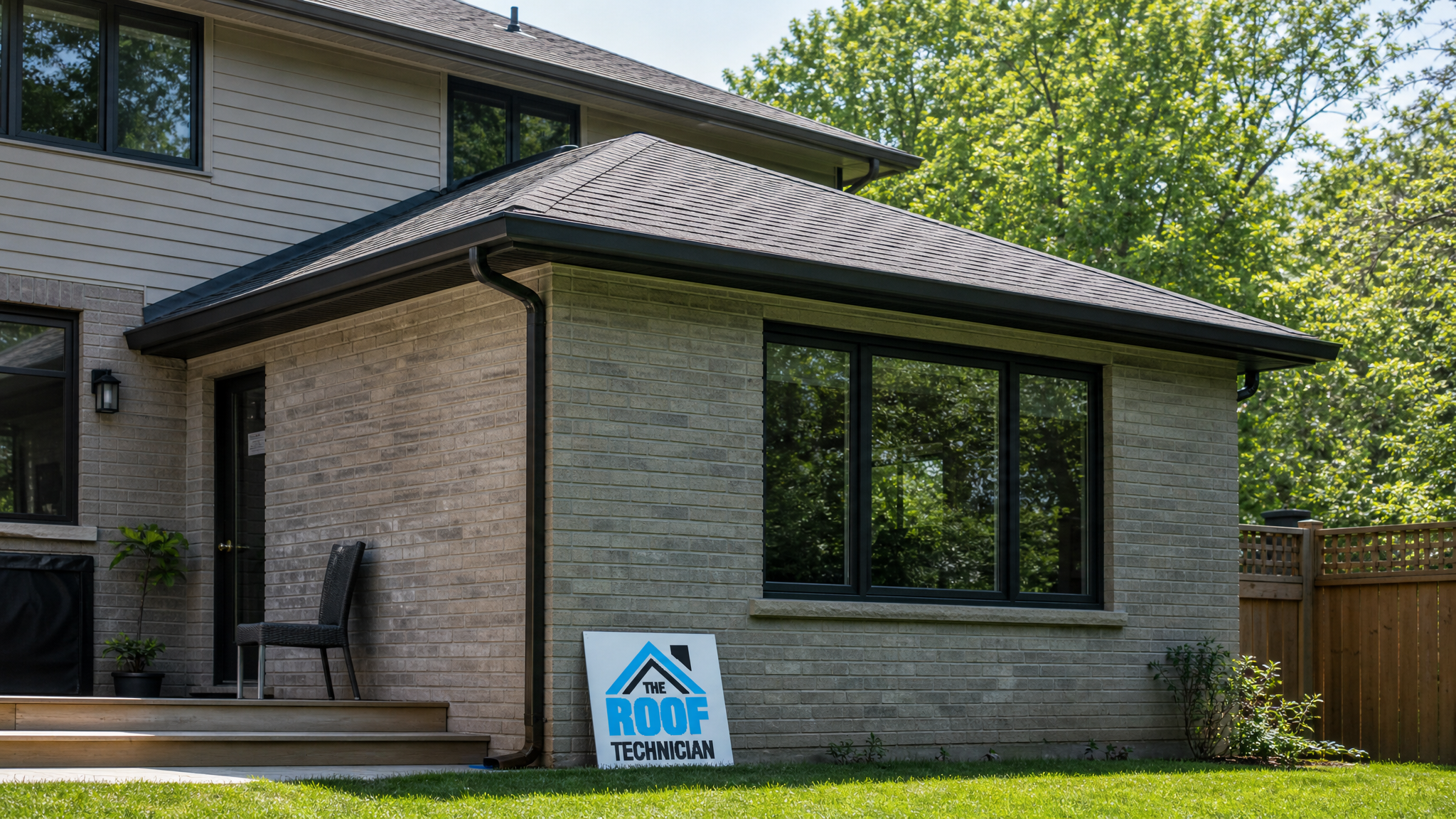
At first glance, matching a new roof section to an existing one seems straightforward: buy the same shingle product, nail it down, and move on. In practice, however, there are at least five distinct layers of complexity that every Toronto roofing professional must navigate.
Weathering and colour drift top the list. Asphalt shingles fade and develop a natural patina over time, driven by Toronto’s intense UV summers and repeated freeze-thaw cycles in spring and autumn. A shingle that left the factory as “Pewter Grey” may have drifted significantly toward a muted blue-brown after a decade on your roof. No freshly manufactured shingle will match that weathered tone exactly, which is why experienced crews often recommend replacing the entire visible slope of the existing roof at the same time as the addition — a strategy known as a blended replacement.
Discontinued product lines create a second obstacle. Shingle manufacturers retire colour lines every three to seven years. If your original roof was installed in 2010 or 2012, there is a reasonable chance the exact product no longer exists. Your roofing contractor will need to source the closest available match, document the choice for the homeowner, and in some cases blend two adjacent colours across the roof plane to minimise visible transitions.
Structural tie-ins present their own challenges. The addition’s roof must connect to the existing structure at a valley, a hip, or a butt joint, and each connection type demands specific flashing details, step-flashing sequences, and waterproofing membranes. Ontario Building Code 2024 mandates Ice and Water Shield membrane at all eaves, valleys, and penetrations — a requirement that must be followed on both old and new sections wherever work is performed.
Pitch changes add further complexity. Many Toronto additions involve a lower-pitch roof tying into a steeper existing slope, or vice versa. Different pitches can require entirely different roofing products (for example, a flat or low-slope addition may need TPO or modified bitumen membrane rather than asphalt shingles), and the transition between pitch zones is a common leak point if not detailed correctly.
Finally, attic ventilation continuity must be maintained or improved across the combined structure. Adding roof area without adding proportional intake and exhaust ventilation can lead to heat build-up in summer, premature shingle degradation, and moisture accumulation in the attic cavity. Our team always reviews the full ventilation picture before quoting any addition roofing project. You can read more about ventilation requirements on our attic ventilation page.
Shingle Selection: Finding the Closest Match in 2026
Shingle selection is the most visible decision in any matching roof to home addition Toronto project, and it deserves careful attention. The GTA market in 2026 is dominated by three main shingle types: three-tab (increasingly rare on new work), architectural/laminate, and luxury or designer shingles. Each has different visual texture, shadow lines, and weathering characteristics.
The first step is to identify the existing product. Pull back a section of flashing at a low-visibility edge, and you will usually find the manufacturer’s label on an unexposed shingle. That label tells you the brand, the product line, and sometimes the colour code. Cross-reference that code with the manufacturer’s current catalogue to find the closest active equivalent.
Where an exact match is unavailable, experienced contractors use a technique called diagonal blending: new shingles are mixed with a proportion of aged shingles removed from a low-visibility slope (such as a rear or side face not visible from the street), and the aged shingles are repositioned where the visual match matters most. This labour-intensive process can add a day of work but produces dramatically better results.
Premium shingle brands available in the GTA in 2026 include IKO Cambridge, BP Weatherwood, GAF Timberline HDZ, Owens Corning Duration, and CertainTeed Landmark. Each brand has a slightly different granule texture that affects how closely a new installation will match an aged roof, so the choice of brand matters as much as the choice of colour.
| Shingle Brand | Popular GTA Colour | Typical Warranty | Approx. Cost per Square (Installed) | Weathering Consistency |
|---|---|---|---|---|
| IKO Cambridge | Charcoal, Weatherwood | 30 years limited | $340–$420 CAD | Good — granule colour holds well in GTA UV |
| BP Weatherwood | Slate, Shadow Grey | 30 years limited | $350–$430 CAD | Very good — Canadian-engineered for local climate |
| GAF Timberline HDZ | Charcoal, Shakewood | Lifetime limited | $380–$470 CAD | Excellent — StainGuard Plus reduces colour drift |
| Owens Corning Duration | Driftwood, Onyx Black | Lifetime limited | $390–$480 CAD | Very good — SureNail technology improves adhesion |
| CertainTeed Landmark | Heather Blend, Moire Black | Lifetime limited | $400–$490 CAD | Excellent — StreakFighter granules resist UV shift |
The Role of Flashing, Valleys, and Waterproofing in Addition Tie-Ins
The junction between a new addition roof and the existing structure is where matching roof to home addition Toronto work gets highly technical. Even if the shingles match perfectly on the surface, a failed flashing detail will allow water infiltration within a few seasons. Toronto’s summer rain events — increasingly intense due to climate patterns — put heavy hydraulic load on every valley and step-flashing sequence.
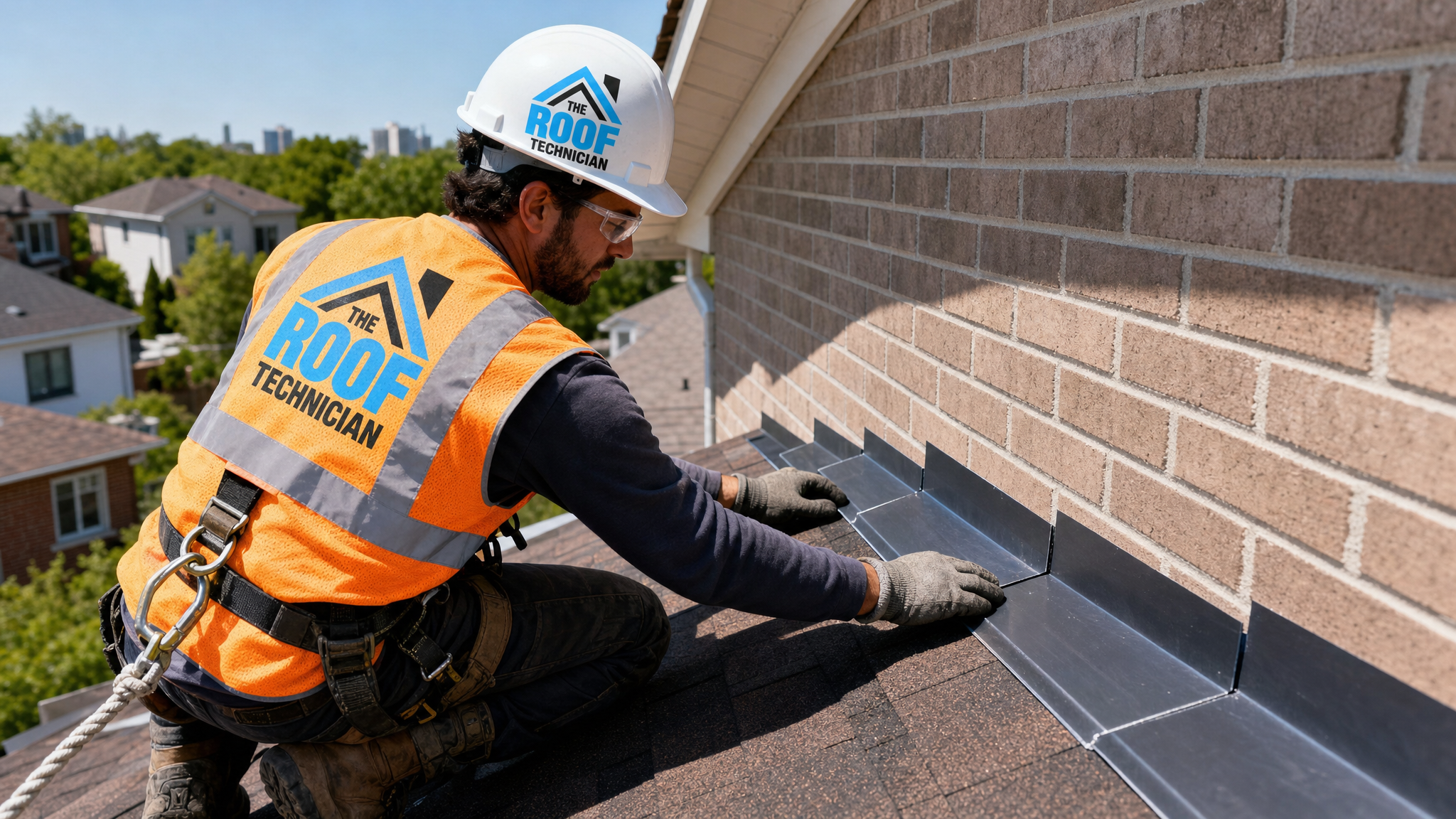
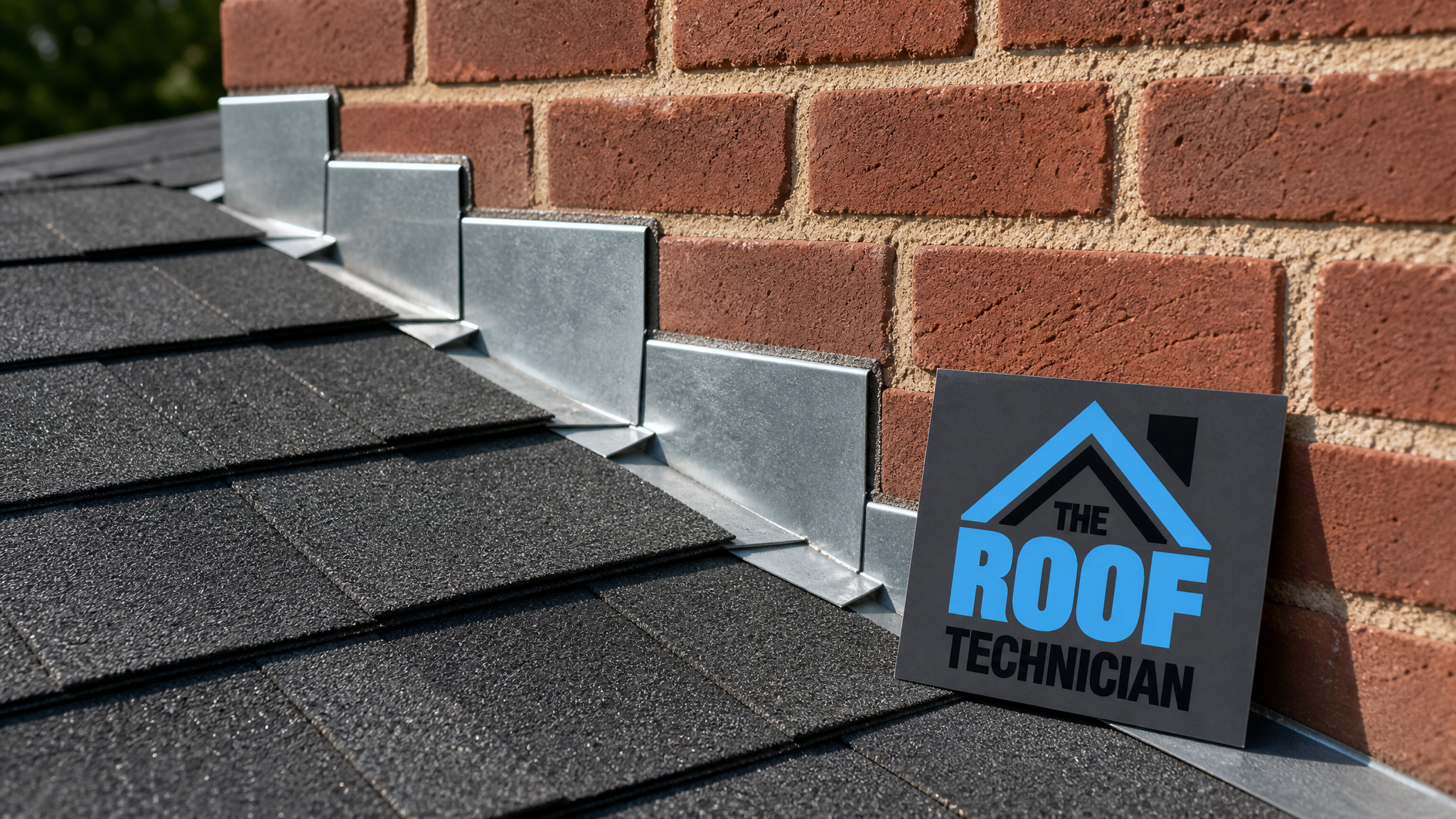
Step flashing is the most common tie-in method along a wall-to-roof junction. Each step-flash piece is an L-shaped piece of galvanised steel or aluminium that alternates with each course of shingles, directing water away from the wall. When tying a new addition roof into an existing wall, every old step-flash piece must be inspected and replaced if corroded. Hidden corrosion at these junctions is a leading cause of interior water damage in Toronto homes that have had additions added over the years.
Valley flashings — where two roof planes meet at a descending angle — require particular care. There are three valley types: open metal valleys (using painted steel or aluminium), closed-cut valleys (where shingles from one plane overlay the other), and woven valleys. Open metal valleys generally provide the best long-term performance in the GTA climate and are our recommended approach for addition tie-ins, as they are easier to inspect and re-seal if minor movement occurs between the original structure and the addition as the new framing settles.
Ice and Water Shield membrane must extend a minimum of 600 mm (approximately two feet) up the roof plane from all eaves and 300 mm up each side of all valleys, as required by the Ontario Building Code. On a June installation like many 2026 summer projects, the warm roof deck temperature actually helps the self-adhering membrane bond more completely, which is one reason summer is the preferred season for this work. We explore additional roof repair and maintenance scenarios on our dedicated service page.
Chimney flashings and skylights also need review any time a significant portion of an existing roof is altered. Our skylights page covers the specific flashing requirements for skylight tie-ins, which are a common addition feature in Toronto homes seeking more natural light.
Low-Slope and Flat Roof Additions: When You Need a Different Product Entirely
Not every Toronto home addition gets a pitched roof. Rear one-storey extensions, garage additions, and sunroom add-ons are frequently built with a low-slope or flat roof profile — either by choice (to preserve sightlines from upper windows) or by structural necessity. These situations require a fundamentally different approach to matching roof to home addition Toronto planning, because asphalt shingles are not rated for slopes below 2:12 and perform poorly below 4:12.
For flat and low-slope additions, the GTA standard in 2026 is TPO (thermoplastic polyolefin) membrane or modified bitumen (mod-bit) applied in two-ply systems. TPO is heat-welded at seams and is highly resistant to UV degradation — a significant advantage for south-facing Toronto additions that receive intense June and July sun. Mod-bit torch-down systems remain popular for their proven track record and repairability.
Where a flat addition abuts a pitched main roof, the transition detail is critical. A properly designed cricket (a small saddle structure) diverts water around the uphill edge of the addition and prevents ponding at the junction. Without a cricket, water backs up against the addition’s parapet or flashing, accelerating deterioration and eventually causing leaks into the living space below.
You can read more about the flat roofing systems we install across the GTA on our flat roofing page. We serve flat roofing clients from our central Toronto base out to Mississauga and Brampton, covering all major GTA municipalities.
| Roof Type | Minimum Slope | Best For | Typical Lifespan in GTA | Approx. Cost per Square (Installed) |
|---|---|---|---|---|
| Asphalt Architectural Shingles | 4:12 and above | Matched pitched additions | 25–35 years | $340–$490 CAD |
| TPO Single-Ply Membrane | 0:12 to 3:12 | Flat/low-slope additions | 20–30 years | $480–$620 CAD |
| Modified Bitumen (2-ply) | 0:12 to 3:12 | Flat additions, reroofs | 15–25 years | $420–$560 CAD |
| Metal Standing Seam | 1:12 and above | Contemporary, premium additions | 40–60 years | $700–$1,100 CAD |
| EPDM Rubber | 0:12 to 3:12 | Flat additions, low traffic | 20–25 years | $380–$500 CAD |
Toronto Permit Requirements and Building Code Considerations in 2026
Any home addition in Toronto, Mississauga, Markham, Vaughan, or other GTA municipalities requires a building permit, and the roofing component is explicitly reviewed as part of that permit process. When planning a matching roof to home addition Toronto project, the roofing contractor must coordinate with the general contractor and the city’s building department on several key requirements.
The Ontario Building Code 2024 sets minimum requirements for roof assembly R-values that have increased over previous editions. Additions must achieve a minimum effective R-value of R-31 for the roof assembly in Climate Zone 6, which covers the entire GTA. This often means installing additional rigid insulation above the roof deck of the addition — a detail that affects the finished height of the roof plane and must be accounted for when designing the tie-in to the existing structure.
Ventilation ratios are codified at a minimum of 1:300 net free area when both intake and exhaust vents are provided, or 1:150 when only one type is present. Inspectors in Toronto and Mississauga have become increasingly rigorous in enforcing these ratios, particularly on additions where the new attic space may be isolated from the main attic by framing.
Structural loading documentation is required for any roof that changes the load path of the original building. If the addition’s ridge connects to the main roof structure, an engineer’s stamp may be required demonstrating that the existing structure can handle the combined load. Experienced GTA roofing contractors flag this requirement early to avoid permit delays.
Homeowners who plan to use a full roof replacement approach — replacing the entire existing roof at the same time as the addition — sometimes find the permit process simpler because there are fewer transition details to document and inspect. This approach also produces the best visual and performance result.
Cost Planning: What to Budget for Matching Roof Work in the GTA
Budgeting for matching roof to home addition Toronto projects requires separating the cost into three distinct buckets: the new addition roof itself, the tie-in and flashing work, and any remediation required on the existing roof to create a clean connection.
The addition roof cost is the most predictable component — it is essentially a mini roof replacement priced by square footage. A typical 400-square-foot rear addition with a moderately pitched roof will require approximately 5 to 6 roofing squares (one square = 100 sq ft), plus waste factor, bringing the shingle cost to around $2,200–$3,000 CAD installed with architectural shingles.
The tie-in and flashing work is where costs can escalate, particularly on older homes where existing flashings are corroded, the decking near the junction is rotted, or significant step-flashing sequences need to be rebuilt. Expect to budget $800–$2,500 for a typical tie-in, with the higher end applying to chimney-adjacent tie-ins or complex multi-plane junctions.
Existing roof remediation depends on condition. If the existing roof is more than 12–15 years old, many contractors (and many insurers) will strongly recommend a full replacement rather than a partial patch, because patching into a degraded field creates mismatched warranty coverage and visible colour transitions. A full replacement at the time of the addition, when the crew is already mobilised and staging equipment, often reduces the per-square cost of the combined project.
| Cost Component | Typical Range (CAD) | Notes | Peak Summer Timing |
|---|---|---|---|
| New addition roof (asphalt shingles, per square) | $340–$490 | Depends on product tier chosen | Prices stable June–August 2026 |
| New addition roof (flat/low-slope, per square) | $420–$620 | TPO or mod-bit membrane | Best installation window: June–September |
| Tie-in flashing and step-flash work | $800–$2,500 | Increases with complexity of junction | No seasonal premium |
| Existing roof remediation / partial replacement | $1,500–$5,000+ | Varies widely by existing roof age and area | Full replacement recommended if >12 yrs old |
| Permit and inspection fees (Toronto) | $300–$800 | Covered under addition permit in most cases | Processing times 4–8 weeks |
| Attic insulation upgrade (if required by code) | $1,200–$3,500 | Often required to meet R-31 in new addition attic | Summer ideal for open-attic work |
Choosing the Right Roofing Contractor for Addition Work in Toronto
Not every roofing contractor has experience with addition tie-in work. Standard re-roofing is a relatively straightforward proposition; matching roof to home addition Toronto work requires a contractor who understands structural connections, colour matching techniques, building code intersections with the addition permit, and coordination with the general contractor managing the overall build.
When interviewing roofing contractors for an addition project in the GTA, ask the following questions: Have they completed similar tie-in work on homes of similar age and construction in your neighbourhood? Can they provide references or photos of completed addition roofing projects? Do they carry Workplace Safety and Insurance Board (WSIB) clearance and a minimum $2 million in commercial general liability coverage? Will they be present for the building inspection, or do they leave that to the general contractor?
Checking online reviews is a valuable first step. Our reviews page features verified feedback from GTA homeowners who have used our services for addition roofing, re-roofs, and repair work. Reading real project descriptions gives you a realistic picture of what the process looks like from the homeowner’s side.
It is also worth confirming that the contractor is familiar with the specific requirements of your municipality. Toronto, Mississauga, and Markham each have slightly different permit application requirements and inspection protocols. A local GTA contractor with established relationships with municipal building departments can often resolve inspection issues faster than an out-of-area crew unfamiliar with local practice. Our service areas page lists every GTA municipality we cover, from Vaughan and Markham in York Region to Oakville and Burlington in Halton Region.
Finally, get at least three written quotes that itemise all components separately: addition roof, tie-in flashing, membrane work, and any existing roof remediation. A single lump-sum quote makes it impossible to compare contractors fairly or to make informed decisions about which remediation work to include.
Summer 2026 Advantages: Why June and July Are Ideal for Addition Roofing
If your home addition is under construction now or scheduled to be dried-in this summer, you are working in the best possible window for matching roof to home addition Toronto work. Several factors make June through August the optimal season for this type of project in the GTA.
Asphalt shingle adhesion strips require ambient temperatures above 10°C to seal properly, and most manufacturers specify installation temperatures above 7°C. In June and July, Toronto’s daytime temperatures typically range from 22°C to 32°C, ensuring that the self-sealing strips activate fully within a day or two of installation — dramatically reducing the risk of shingles lifting in wind events.
Ice and Water Shield membrane, as noted earlier, bonds significantly better to warm roof decking than to cold or frost-covered surfaces. A June installation produces a more complete self-adhesion and reduces the risk of membrane edge lifting over time.
Long summer daylight hours mean that roofing crews can work a full ten-hour day with good light and without the heat-related slow-down that can affect late August and early September projects. This increases the pace of work and reduces mobilisation costs for complex multi-day tie-in projects.
For flat and low-slope additions, the warm summer temperatures accelerate the cure time of torch-applied modified bitumen and reduce the viscosity of cold-applied adhesives, both of which improve the quality of the finished membrane. TPO heat-welded seams also perform better when the membrane is warm and supple rather than stiff from cooler temperatures.
UV exposure is a consideration as well. In summer, any gaps or thin spots in the roof membrane are quickly revealed by the intense solar radiation hitting the GTA, meaning that any issues can be identified and corrected before the project is closed out — rather than discovered during the first autumn rainstorm. For common questions about the process, visit our FAQ page where we address many homeowner concerns about timing and project expectations.
What is the best approach for matching roof to home addition Toronto projects when the original shingles are discontinued?
How much does matching roof to home addition Toronto typically cost in 2026?
Do I need a separate permit for the roofing component of a home addition in Toronto?
What flashing types are used when tying a new addition roof into an existing structure?
How long does matching roof to home addition toronto work typically take?
Is summer really the best time for matching roof to home addition Toronto work?
Schedule Your Matching Roof to Home Addition Consultation Today
Whether your Toronto home addition is already framed and awaiting a roof or still in the planning stage, the right time to engage your roofing contractor is now. The Roof Technician specialises in precision addition tie-in work across the Greater Toronto Area, bringing meticulous flashing techniques, colour-matching expertise, and full Ontario Building Code compliance to every project we touch. Our team has completed addition roofing projects on homes ranging from 1960s bungalows in Etobicoke to new-build infill projects in Vaughan and Markham, and we bring that breadth of experience to every new consultation.
Call us today at (416) 826-0040 or request a free consultation to get started.
The Roof Technician proudly serves Toronto, Mississauga, Brampton, Markham, Vaughan, Oakville, Burlington, and Richmond Hill.