When embarking on a massive custom home build or executing a sweeping structural renovation in the Greater Toronto Area, the architectural geometry of the roof dictates far more than the aesthetic curb appeal of the property. The battle between the sleek, modernist aesthetic of a flat roof and the traditional, gravity-driven reliability of a sloped roof represents a profound choice in structural engineering, lifetime maintenance costs, and climatic resilience. In Toronto’s punishing environment—featuring 50+ aggressive freeze-thaw cycles per winter, heavy, wet snow loads, and blistering UV radiation in July—the roof you choose will either protect your investment flawlessly or become a relentless financial nightmare. The Roof Technician maintains specialized, elite divisions dedicated exclusively to both steep-slope architectural asphalt and complex commercial-grade flat roof membranes. This exhaustive 2026 technical guide provides a ruthless, empirical comparison of flat roof vs sloped roof Toronto homeowners must understand before finalizing their architectural blueprints.
The Physics of Water Management: Gravity vs. Engineering
The fundamental divergence between these two roofing philosophies is how they interact with liquid water and solid ice.
The Sloped Roof (Pitched Roof)
A sloped roof relies entirely on the oldest, most reliable force in the universe: gravity. Whether it is pitched at a gentle 4:12 ratio or a massive, towering 12:12 Victorian steep pitch, water hits the asphalt shingles or steel panels and immediately accelerates downward. It is instantly evacuated into the gutter system and channeled safely away from the foundation. Because water is in constant, rapid motion, standard sloped roofs utilize highly layered, overlapping materials (like shingles) that do not technically need to be entirely seamless or waterproof, but merely “water-shedding.”
The Flat Roof (Low-Slope Roof)
A “flat” roof is an architectural deception; if a roof were perfectly flat, it would hold water endlessly until it collapsed. All flat roofs are structurally engineered with a very slight, almost imperceptible slope (typically 1/4 inch of drop for every 12 inches of run) to direct water toward massive internal drains or edge scuppers. Because gravity provides very little assistance, water moves incredibly slowly. Therefore, a flat roof cannot use overlapping shingles; it must utilize a massive, continuous, 100% impenetrable, welded waterproof membrane. It must function identically to a high-performance swimming pool liner, stretched aggressively across the top of your building, capable of holding standing water without a microscopic failure.
The 2026 Cost Comparison: Installation and Materials
The initial financial outlay for these systems varies wildly based on the exact materials chosen and the massive differences in structural engineering required to support them.
| Roofing System & Material | Estimated Installation Cost (Per Sq. Ft.) | Structural Framing Complexity | Typical Lifespan in Toronto |
|---|---|---|---|
| Sloped: Architectural Asphalt Shingles | $4.50 – $7.50 / sq. ft. | Standard truss framing. Very affordable and fast to erect. | 25 – 35 Years |
| Sloped: Standing Seam Metal | $14.00 – $22.00 / sq. ft. | Standard truss framing. Highly specialized labor required. | 50 – 70 Years |
| Flat: Modified Bitumen (Torch-Down 2-Ply) | $8.00 – $14.00 / sq. ft. | Requires massive, reinforced joists to hold heavy snow loads and heavy insulation decking. | 15 – 25 Years |
| Flat: TPO or EPDM Membrane (Commercial Grade) | $10.00 – $18.00 / sq. ft. | Requires complex tapered insulation boards to engineer artificial drainage slopes. | 20 – 30+ Years |
While the actual membrane of a flat roof might appear cheaper than a premium metal roof, the hidden costs are massive. Flat roofs require incredibly expensive, thick, rigid Polyiso insulation boards to be installed directly on top of the roof deck beneath the membrane. Furthermore, the wooden structural joists supporting a flat roof must be significantly thicker and closer together than a sloped roof to prevent the roof from violently collapsing under the immense dead weight of a heavy Toronto blizzard, since the snow cannot slide off.
The Brutal Maintenance Reality
If you desire an architectural system that you can essentially ignore for two decades, a flat roof is absolutely not the correct choice for your home.
Maintaining the Sloped Roof
Sloped roofs are remarkably resilient to neglect. Maintenance primarily consists of aggressively cleaning the gutters every November, ensuring nearby tree branches are trimmed back 6 feet to prevent physical abrasion, and executing a quick binocular inspection in the spring to verify no shingles were ripped off by winter winds. If attic ventilation is mathematically balanced, the roof will quietly perform its duty for 30 years.
Maintaining the Flat Roof
A flat roof demands rigorous, highly scheduled, military-grade stewardship. Because the roof is nearly flat, debris (oak leaves, pine needles, plastic bags) does not slide off; it accumulates aggressively around the vital drain points. If a single drain becomes clogged by a wet cluster of autumn leaves, the next heavy rainstorm will create a massive, deep pond on your roof. This standing water accelerates the UV degradation of the membrane, creates immense, crushing hydrostatic pressure, and will aggressively exploit any microscopic pinhole in a welded seam, funneling hundreds of gallons of water directly into your living room.
Flat roofs require physical, on-roof professional inspections twice a year (Spring and Fall) to clear drains, aggressively hunt for “alligator cracking” in the bitumen, and instantly patch any failing caulking around HVAC units or skylights before the freeze-thaw cycle destroys them.
The Impact of the Toronto Climate on Roof Selection
The GTA environment uniquely stresses both architectural styles in different ways, dictating exactly how they must be engineered to survive.
- The Heavy Snow Load Factor: When a massive January blizzard dumps 40 centimeters of heavy, wet snow, a steeply sloped metal roof will effortlessly shed the entire load via a localized avalanche into the yard. A flat roof, however, is forced to bear that entire crushing weight (thousands of pounds) for weeks until it physically melts. If the underlying structural joists were not aggressively over-engineered by the architect, the ceiling will sag dangerously.
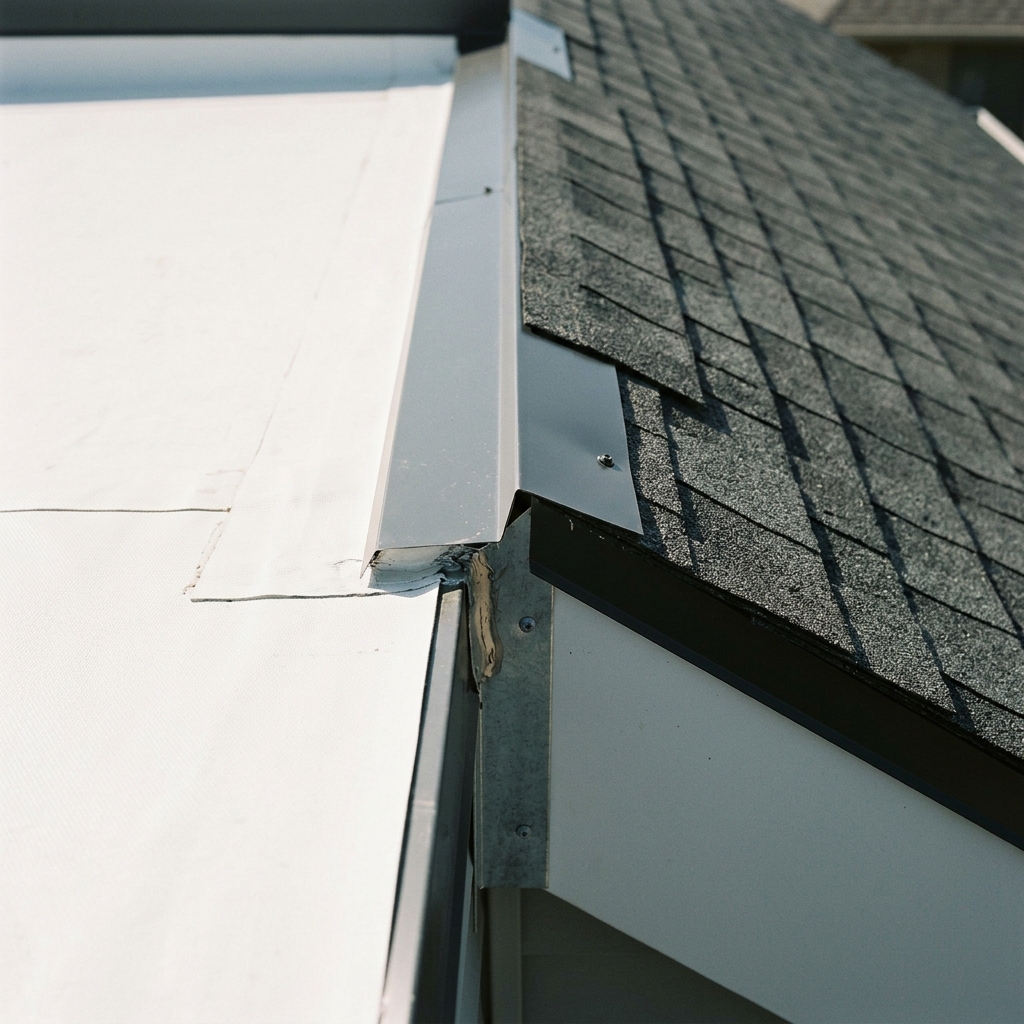
- The Freeze-Thaw Vacuum: During a standard Toronto winter day, the sun melts the top layer of snow on a flat roof. At night, the temperature plummets, and that water freezes solid. This constant expanding and contracting violently stresses the perimeter flashing (the metal where the roof meets the wall). If this flashing tears, the next melt cycle will pour water straight down the interior walls.
- Wind Uplift Resistance: Here, flat roofs hold a distinct advantage. A massive sloped roof acts like a giant sail during a violent summer thunderstorm, catching the wind and risking massive shingle tear-off. A fully adhered, low-profile flat roof allows extreme high-velocity winds to sweep cleanly over the building with minimal aerodynamic resistance, making it highly stable in severe squalls.
The Space Utilization Advantage of Flat Roofs
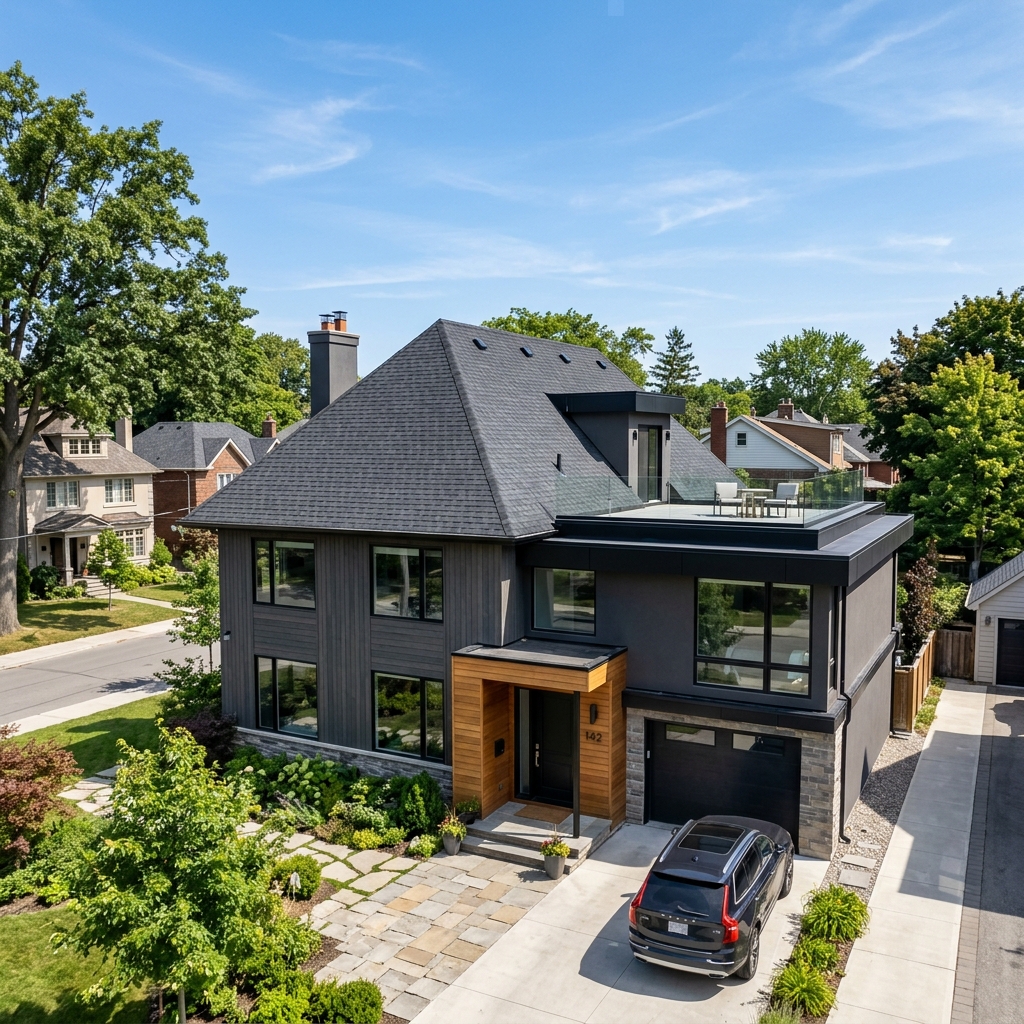
The primary reason architects and homeowners aggressively pursue flat roofs in dense urban centers like downtown Toronto is the massive utilization of space. A sloped roof creates a large, dark, unusable triangular attic space that exists purely to house insulation and air. A flat roof allows the homeowner to utilize 100% of the maximum allowable height limit dictated by municipal zoning bylaws for actual, usable living space. Rooms on the top floor feature soaring, flat ceilings with massive volume. Furthermore, heavily reinforced flat roofs can be transformed into stunning, highly lucrative rooftop patios, complete with glass railings, outdoor kitchens, and green-roof gardens—a feature completely impossible on a standard 6:12 asphalt pitch.
| Climate Factor | How Sloped Roofs Respond | How Flat Roofs Respond |
|---|---|---|
| Heavy Wet Snowfall (40cm+) | Gravity instantly sheds the massive load into the yard. | Must bear the full crushing weight for weeks until it melts. |
| 50+ Freeze-Thaw Cycles | Ice dams form at the eaves if ventilation is poor. | Standing meltwater refreezes, violently tearing membrane seams apart. |
| Extreme Wind (100+ km/h) | Acts as a sail; vulnerable to massive shingle tear-off. | Low profile offers minimal wind resistance; highly stable. |
| Blistering July UV Radiation | Granules protect asphalt; minimal maintenance required. | White TPO reflects heat aggressively, slashing commercial HVAC costs. |
| Architectural Priority | The Undisputed Winner | The Engineering Rationale |
|---|---|---|
| Lowest Upfront Installation Cost | Sloped Roof (Asphalt) | Requires significantly less structural framing lumber, basic insulation, and utilizes highly affordable, mass-produced shingle materials. |
| Lowest Lifetime Maintenance | Sloped Roof (Metal or Premium Asphalt) | Gravity flawlessly removes water and debris instantly; zero risk of standing water pooling over the living space. |
| Maximizing Usable Interior Volume | Flat Roof | Eliminates the dead, unusable triangular attic space entirely, allowing for massive, soaring flat ceilings on the uppermost floor. |
| Creating Rooftop Entertainment Patios | Flat Roof | Provides a massive, stable geometric platform that can be heavily reinforced to support walking decks, heavy planters, and outdoor furniture. |
| Fastest Emergency Leak Detection | Sloped Roof | Leaks are generally highly localized and travel straight down the rafter, making pinpointing the exact compromised shingle fast and economical. |
The Verdict: Choosing the Right Contractor is Everything
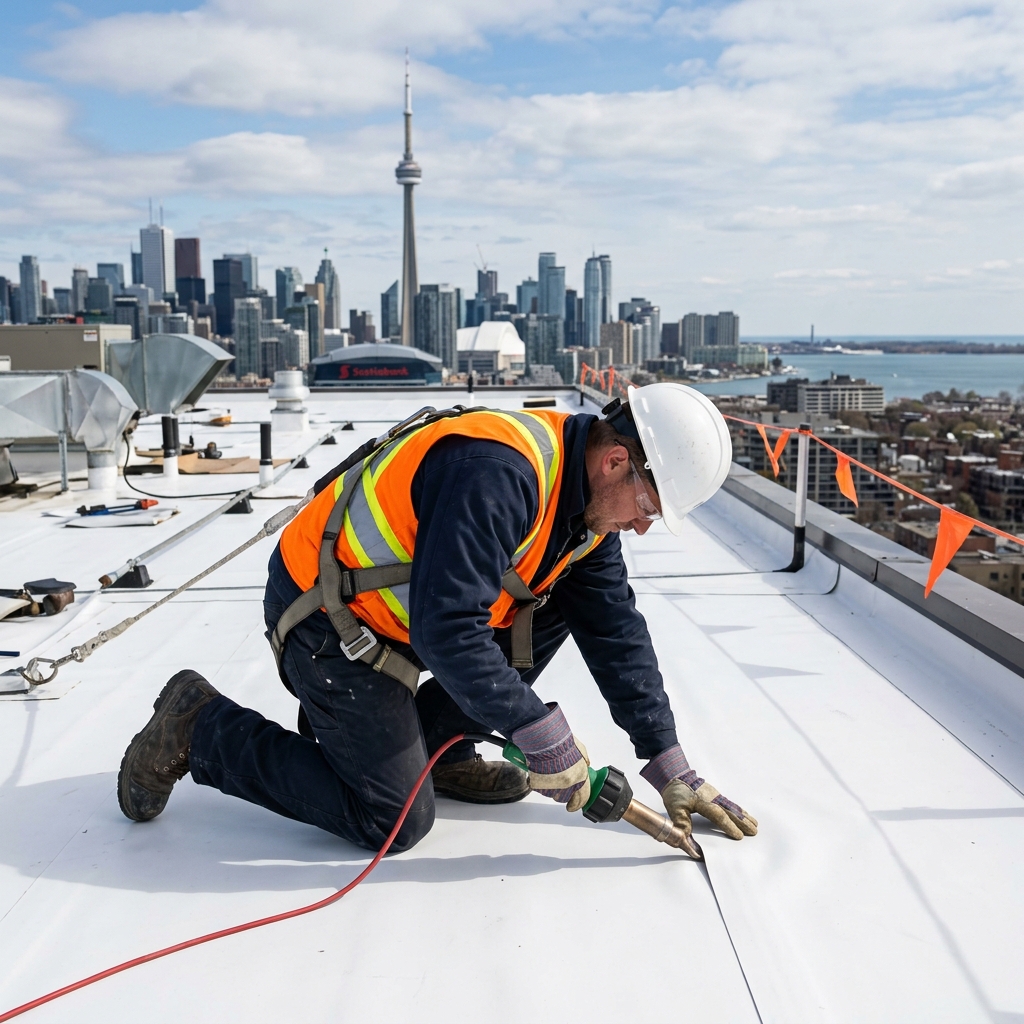
Ultimately, a perfectly engineered sloped roof and a flawlessly welded flat roof will both protect your home for decades. The catastrophic failures occur when contractors attempt to cross disciplines. An excellent shingle installer is almost universally a terrible flat roofer. Flat roofing is a highly specialized, commercial-grade discipline requiring massive heat-welding tools, complex liquid adhesives, and a profound understanding of hydrostatic pressure.
At The Roof Technician, we maintain completely separate, highly specialized divisions. Our sloped roofing crews are masters of steep-pitch architectural shingles and complex ridge ventilation, while our flat roofing division consists of elite, commercially certified membrane technicians capable of executing flawless TPO and Modified Bitumen installations. We serve custom home builds and historic renovations across Vaughan, Brampton, Oakville, and the entire GTA.
What is the most definitive advantage of choosing a sloped roof over a flat roof in Toronto?
Is it significantly more expensive to aggressively replace a flat roof compared to an asphalt sloped roof?
Can I easily convert my aging flat roof into a traditional pitched sloped roof?
Why do flat roofs frequently experience catastrophic leaks during the winter freeze-thaw cycles?
What is the absolute best, most durable material currently available for a residential flat roof in 2026?
Do I have to aggressively shovel the heavy snow off my flat roof during a massive Toronto blizzard?
Schedule Your Architectural Roof Consultation Today
Choosing the correct geometric and structural roofing system is the most consequential decision in protecting the massive financial investment of your custom home. You require ruthless honesty, empirical engineering data, and flawless execution.
Call us today at (416) 826-0040 or request a comprehensive consultation to discuss your architectural blueprints with our elite technical team.
The Roof Technician has been the trusted authority for both complex commercial flat roofs and premium residential steep-slope systems across Toronto, Markham, Richmond Hill, and the entire GTA. Whether executing a massive roof replacement or diagnosing a highly complex flat roof leak, our specialized divisions deliver unmatched durability.