If you are planning a roofing project this year, timing matters more than most homeowners realise. Choosing the best time to replace roof Toronto can affect the quality of the installation, the cost you pay, and how long your new roof lasts. Toronto’s climate is notoriously variable — cold winters, wet springs, and warm, dry summers all play a role in how roofing materials perform during and after installation. For 2026, the window from late May through August represents the single strongest opportunity for GTA homeowners to get a roof replacement done right.
This guide explains exactly why summer is the prime season, what risks come with other times of year, how to prepare for a replacement, and what you can expect to spend. Whether your shingles are curling at the edges, your attic is showing daylight, or you simply want to get ahead of the next rainy season, understanding when to act is the first step toward a longer-lasting, better-sealed roof over your head.
At The Roof Technician, we have helped thousands of homeowners across the Greater Toronto Area plan and complete roof replacements that hold up through every season. Here is everything you need to know about timing your project for maximum value.
Why Summer Is the Best Time to Replace Roof Toronto Has to Offer
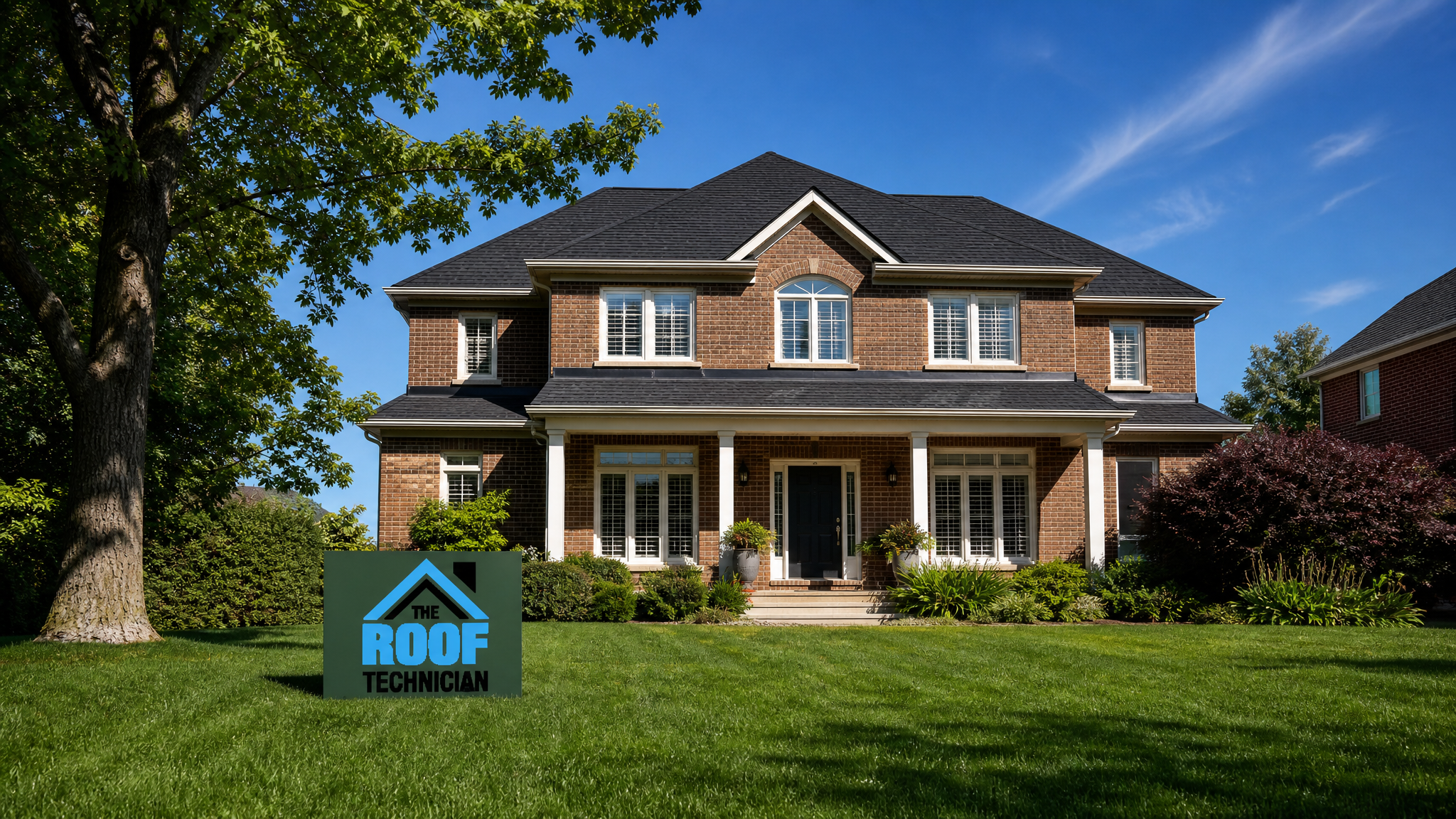
The best time to replace roof Toronto homeowners can count on is consistently the summer season — specifically June, July, and into mid-August. There are several concrete, technical reasons for this, and they apply equally whether you have a steep-slope asphalt shingle roof or a low-slope membrane system.
Asphalt shingles rely on a heat-activated sealant strip along their lower edge. When shingles are installed in warm temperatures, that strip softens and bonds to the shingle below within days, creating a tight, wind-resistant seal across the entire roof surface. Ontario’s summer daytime temperatures — typically ranging from 22°C to 32°C — are close to ideal for this process. Roofers can nail shingles into place knowing that thermal bonding will complete itself naturally within 24 to 72 hours of installation.
Cold-weather installation presents a genuine risk: when ambient temperatures drop below 7°C, most shingle manufacturers recommend hand-sealing each strip with roofing cement because passive thermal bonding will not occur. Hand-sealing adds time, labour cost, and the risk of missed spots. In summer, none of that extra work is required.
Beyond shingle adhesion, summer scheduling gives you practical advantages. Daylight hours in Toronto peak near the summer solstice, with more than 15 hours of usable working light. Longer days mean crews can complete larger sections of a roof in a single shift without needing to wrap and protect an unfinished deck overnight. Fewer weather-related delays also mean a more predictable completion timeline, which matters when you are coordinating around your family’s schedule.
| Season | Avg Temperature (°C) | Shingle Sealing Outcome | Delay Risk | Crew Availability |
|---|---|---|---|---|
| Spring (Mar–May) | 4–17 | Marginal — hand-sealing often required early in season | High (rain, late frost) | Moderate |
| Summer (Jun–Aug) | 22–32 | Excellent — passive thermal bonding within 24–72 hours | Low | High — book early |
| Early Fall (Sep–Oct) | 10–20 | Good in September, declining in October | Moderate (rain events) | High |
| Late Fall (Nov) | 2–8 | Poor — hand-sealing required, adhesion inconsistent | High | Moderate |
| Winter (Dec–Feb) | -10–2 | Very poor — materials brittle, adhesion fails | Very High | Low |
Signs That Now Is the Right Time for a Replacement
Knowing the best time to replace roof Toronto is only half the equation. You also need to know whether your specific roof has reached the point where a full replacement is more economical than continued repairs. Here are the most reliable indicators that a replacement is overdue.
Age of the roof. Standard three-tab asphalt shingles in Toronto last 15 to 20 years, while architectural (dimensional) shingles carry a 25 to 30-year lifespan. If your roof was installed before 2000, the likelihood of reaching the end of its useful life is very high. Even if it is not actively leaking, the underlayment and flashings beneath the shingles degrade on a similar timeline.
Granule loss. Asphalt shingles shed granules naturally as they age, but accelerated granule loss — visible in your gutters after rain — exposes the asphalt mat to UV radiation. Once that mat begins to crack and blister, the structural integrity of the shingle is compromised. Summer’s UV intensity actually accelerates visible granule loss on aged shingles, making inspections this time of year especially revealing.
Curling or cupping shingles. Shingles that curl upward at the edges (cupping) or fold back at the tabs (clawing) indicate that the asphalt layer has dried out and lost its flexibility. These cannot be re-secured; the entire shingle needs replacement.
Multiple layers already present. Ontario’s building code permits a maximum of two layers of asphalt shingles. If your home already has two layers, the next replacement must be a full tear-off. This is actually an advantage: a tear-off allows the installer to inspect the decking for rot, replace damaged sheathing, and apply new self-adhering ice-and-water shield before the fresh shingles go down.
Interior moisture evidence. Stains on attic sheathing, mould growth in the attic, or watermarks on upper-floor ceilings after rainfall are all signs that the roof envelope has failed. These issues worsen over time, and delaying replacement risks damage to attic insulation, ceiling drywall, and structural framing.
If you are unsure whether repair or replacement makes more sense for your situation, our roof repair Toronto page outlines the factors that separate a patchable problem from one that warrants a full replacement.
How Toronto’s Summer Heat Affects Roofing Materials
Summer installation is advantageous, but Toronto’s heat also imposes some practical considerations on roofing crews and on the long-term performance of new roofing materials. Understanding these dynamics helps you have more informed conversations with your contractor.
Asphalt shingles are petroleum-based products, and they soften in very high temperatures. When ambient temperatures exceed 35°C and direct sun is beating down on a dark roof surface, deck temperatures can reach 60°C or higher. Installers working in these conditions must avoid walking on newly laid shingles where possible, since heat-softened shingles scuff and dent more easily underfoot. Experienced crews plan their daily workflow to install on sections of the deck that are not yet in direct sun.
For flat and low-slope roofs using TPO or modified bitumen membranes, summer heat is similarly beneficial. TPO seams are heat-welded with hot-air tools; warmer ambient temperatures mean faster weld times and cleaner seams. Modified bitumen applied with a torch has better flow and adhesion in warm weather. Our flat roofing services take full advantage of summer’s conditions to deliver tight, water-resistant membrane installations across commercial and residential properties.
One summer-specific consideration is UV exposure. Light-coloured or reflective roofing materials — including cool-roof TPO membranes and lighter-grade shingles — benefit from summer installation because their reflectivity is immediately put to work reducing heat gain in the home. If your home currently lacks adequate attic ventilation, a summer replacement is an excellent time to address that too. Poor ventilation traps heat in the attic, driving up air-conditioning costs and shortening shingle lifespan from underneath. Our attic ventilation specialists often work alongside the roofing crew to install ridge vents or power ventilators as part of the same project.
Planning Your Summer Roof Replacement: Timelines and Budgets
Understanding the best time to replace roof Toronto also means planning ahead, because summer booking calendars fill up fast. Reputable roofing contractors in the GTA typically begin receiving summer booking requests in March and April. By late May, the best crews are often fully committed through July. If you are reading this in June 2026, you still have time to secure a quality installer for July or August — but waiting until August to start looking will likely push you into September.
Here is how a typical summer replacement project unfolds from first contact to final inspection.
| Project Phase | Typical Timeline | What Happens |
|---|---|---|
| Initial inspection and quote | Day 1–5 | Contractor assesses current roof, measures square footage, identifies underlayment and decking condition |
| Material ordering | Days 5–10 | Shingles, underlayment, flashing, ventilation components ordered; most in-stock for summer delivery |
| Scheduling confirmation | Days 10–14 | Start date locked in; permit pulled if required by municipality |
| Tear-off day | Day 1 of work | Old shingles stripped, decking inspected and repaired, ice-and-water shield applied |
| Installation day(s) | Days 1–2 of work | Felt or synthetic underlayment, starter strip, shingles, ridge cap installed |
| Flashing and trim | Same or following day | Step flashing, valley flashing, drip edge, pipe boots sealed |
| Cleanup and inspection | Final day | Magnetic sweep for nails, debris removal, final walkthrough with homeowner |
Most residential replacements in Toronto — average bungalow or two-storey in the 1,500 to 2,500 square foot range — are completed in one to two working days. Larger homes with complex roof geometry, multiple penetrations, or decking repairs may take three days.
Cost is the other major planning factor. Toronto roof replacement pricing in 2026 varies by material choice, roof complexity, and whether a tear-off is required. The table below gives a reliable range for budgeting purposes; always obtain a detailed written quote before committing.
| Material Type | Price per Sq. Ft. (Installed) | Lifespan | Best For |
|---|---|---|---|
| 3-Tab Asphalt Shingle | $4.50–$6.50 | 15–20 years | Budget replacements; flat roof lines |
| Architectural (Dimensional) Shingle | $6.50–$9.50 | 25–30 years | Most GTA residential homes; best value |
| Impact-Resistant Shingle (Class 4) | $9.00–$13.00 | 30+ years | Hail-prone areas; potential insurance savings |
| TPO Membrane (flat roof) | $8.00–$12.00 | 20–25 years | Low-slope roofs; commercial properties |
| Metal Standing Seam | $18.00–$28.00 | 40–60 years | Premium residential; long ownership horizon |
These prices include labour, materials, tear-off of one existing layer, and basic decking repairs. Extensive decking replacement, skylight removal and reinstallation, or chimney rebuilding are quoted separately. If you are considering adding a skylight during your roof replacement, we can coordinate installation through our skylights service, which often reduces total cost since the roof deck is already open.
Summer Roofing in the GTA: Neighbourhood and Municipal Considerations
Toronto and the surrounding municipalities each have their own permitting and noise bylaws that affect when and how a roofing project can proceed. In the City of Toronto proper, roofing work is generally not permitted before 7:00 a.m. on weekdays and 9:00 a.m. on weekends. Brampton, Mississauga, Markham, Vaughan, and other 905-area municipalities have similar bylaws, though the exact hours vary.
Whether a building permit is required for roof replacement depends on the municipality and the scope of work. In Toronto, re-roofing over an existing layer typically does not require a permit, but a full tear-off with structural decking repairs generally does. Your contractor should handle permit applications as part of the service. Always confirm this before work begins.
Homeowners in areas with older housing stock — such as East York, Etobicoke, Scarborough, or parts of Mississauga — sometimes discover that previous owners installed a second layer of shingles at some point. Identifying this in advance (via a pre-quote inspection) prevents surprises on tear-off day and helps you budget accurately.
We serve the full GTA, including Mississauga, Brampton, Oakville, Vaughan, Markham, and Richmond Hill. Our crews are familiar with the specific permitting requirements and housing stock in each of these communities, which reduces administrative delays and keeps your project on schedule.
Choosing the Right Contractor for a Summer Replacement
Finding the best time to replace roof Toronto homeowners can use is only as valuable as the contractor who does the work. Summer demand means there is no shortage of roofing companies advertising in the GTA, but not all deliver the same quality or accountability. Here is what to look for.
Valid WSIB certificate and liability insurance. Any contractor working on your property must carry Workplace Safety and Insurance Board (WSIB) coverage for their workers and a minimum of $2 million in general liability insurance. Ask for both certificates before signing a contract, and verify them directly with the issuing body if in doubt.
Manufacturer certification. Certified installers for major shingle brands — IKO, GAF, CertainTeed, BP — can offer enhanced warranties beyond the standard product warranty. These certifications require documented training and installation volumes, which provide a meaningful signal of technical competence.
Written scope and payment terms. A legitimate roofing contract specifies material brand and product line, estimated start and completion dates, payment schedule (never pay more than 10% to 15% upfront), warranty terms for both materials and labour, and the process for handling unexpected decking damage.
Local reputation and verifiable reviews. Door-to-door canvassers who show up after storms are a well-known pattern in the GTA. They often use high-pressure tactics and out-of-province crews. Check our reviews to see what Toronto-area homeowners say about working with us, and use that same diligence when evaluating any contractor.
For answers to common questions about materials, timelines, and what to expect on installation day, our FAQ page covers the questions we hear most often from homeowners across the GTA.
Maximising the Life of Your New Summer Roof
Once your replacement is complete, summer is also the best season to establish the maintenance habits that extend roof lifespan. A few straightforward tasks performed during the warm months will pay dividends for years.
Gutter cleaning. Gutters that are clogged with debris from spring cause water to back up under shingles at the eaves. Clean gutters in June — before summer thunderstorm season peaks — and again in late September after deciduous trees drop their seeds.
Trimming overhanging branches. Tree limbs that scrape across shingles abrade the granule surface and leave scratches that accelerate weathering. Branches close to the roof surface also deposit debris and create moisture traps. Trim back anything within 1.5 metres of the roof plane.
Attic temperature check. On a hot summer afternoon, a well-ventilated attic should be no more than 8°C to 11°C above the outdoor ambient temperature. If your attic is significantly hotter, it indicates inadequate ridge or soffit ventilation. High attic temperatures cook shingles from below, shortening their effective lifespan by five to eight years.
Annual visual inspection. After each summer season ends, do a visual scan of the roof from ground level or with binoculars. Look for lifted ridge cap shingles, gaps in step flashing around chimneys and dormers, or any areas where granule loss has exposed the darker asphalt mat underneath. Catching small issues before they admit water saves significant money on interior repairs.
Our full roof replacement service page outlines the warranty coverage and post-installation support we provide to every customer, including guidance on what to look for during seasonal inspections.
What is the best time to replace roof Toronto homeowners should plan for?
Can you replace a roof in Toronto during rainy weather?
How long does a roof replacement take in Toronto?
How much does a roof replacement cost in Toronto in 2026?
Is it better to repair or replace my roof this summer?
Why is the best time to replace roof Toronto contractors recommend not the fall?
Schedule Your Roof Replacement Consultation Today
If you are weighing the best time to replace roof Toronto for your home, the answer is clear: summer 2026 is your window. Warm temperatures, longer days, and reliable dry weather all combine to produce the highest quality installations with the fewest delays. The Roof Technician has earned a reputation across the GTA for thorough workmanship, honest pricing, and transparent project management from first inspection to final cleanup.
Call us today at (416) 826-0040 or request a free consultation to get started.
The Roof Technician proudly serves Toronto, Mississauga, Brampton, Markham, Vaughan, Oakville, and Burlington. Check our service areas page to confirm coverage in your neighbourhood.