September is the month when attic work is genuinely pleasant. The space above your ceiling is no longer the oven it was in July, the insulation has not yet been buried under a heating season of condensation, and contractors still have flexible dates. If you have been putting off the attic insulation Mississauga homes of a certain age almost always need, this is the window in which to deal with it properly rather than in a rush once the furnace is running constantly.
This guide explains what R value your attic should reach, how much attic insulation Mississauga properties typically have already, what the various materials cost in 2026, and why adding depth without fixing air leakage and ventilation is money poorly spent. It reflects how The Roof Technician assesses attics across the city before quoting any upgrade.
Why Attic Insulation Mississauga Houses Have Is Usually Short
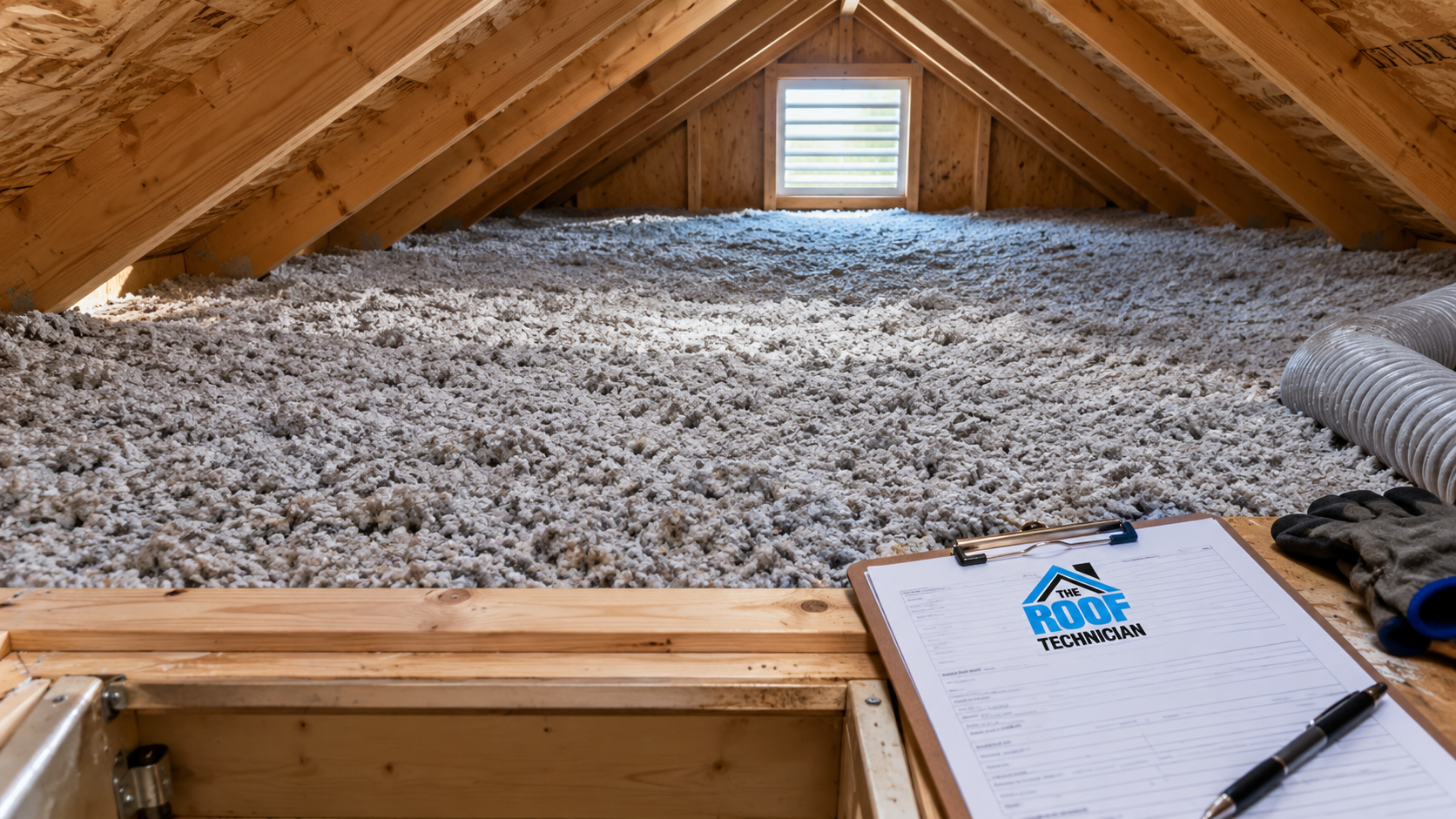
Insulation requirements have risen steadily over the decades, and nobody goes back and upgrades an existing house when the code changes. A postwar bungalow in one of the older established areas of the city was built with a few inches of batt or loose fill, which was normal at the time. A home from the 1970s or 1980s usually has more, but still well below what a house built today would receive. Newer subdivisions in the north and west of the city are generally in good shape, though even there settling, careless trades work and storage boxes pressed into the insulation create thin spots.
The target most contractors work to now is roughly R-60 across the attic floor, which is what new construction in Ontario is built to. The gap between that figure and what is actually up there is the whole argument for topping up, and it is why attic insulation Mississauga assessments start with a depth measurement rather than a sales pitch. The table below gives a realistic sense of where the attic insulation Mississauga homeowners already own is likely to sit.
| Era of construction | Typical existing depth | Approximate R value | Recommended top-up |
|---|---|---|---|
| Pre-1960 bungalow or storey and a half | 2 to 4 inches | R-7 to R-12 | Add R-45 or more |
| 1960s and 1970s detached | 4 to 6 inches | R-12 to R-20 | Add R-40 |
| 1980s and 1990s subdivision | 8 to 10 inches | R-24 to R-32 | Add R-28 |
| 2000s build | 10 to 12 inches | R-32 to R-40 | Add R-20 |
| Recent construction | 16 to 20 inches | R-50 to R-60 | Usually none required |
One caution for the oldest homes. If your attic holds a grey or silver pebbly loose fill rather than pink, yellow or grey fibrous material, it may be vermiculite, some of which contains asbestos. Do not disturb it, do not sweep it, and have it tested before anyone works in that space. A responsible contractor will stop and recommend testing rather than blowing new material over the top of it.
Insulation Materials And What They Actually Cost
Most top-ups in the city are blown loose fill, because it flows around framing, wiring and awkward corners in a way batts never do. Batts still have a place in accessible joist bays and at the hatch. Spray foam is used selectively at difficult details rather than across a whole attic floor, where its cost rarely makes sense.
| Material | R value per inch | Installed cost per sq ft | Notes |
|---|---|---|---|
| Blown cellulose | R-3.2 to R-3.8 | $1.80 to $3.00 | Dense coverage, settles slightly, good around obstructions |
| Blown fibreglass | R-2.5 to R-3.0 | $1.70 to $2.80 | Light, resists settling, needs greater depth for the same R |
| Fibreglass batts | R-3.1 to R-3.4 | $1.50 to $2.50 | Only in clean, accessible bays; gaps at edges are common |
| Mineral wool batts | R-4.0 to R-4.3 | $2.50 to $4.00 | Fire and sound benefits, used at party walls and chases |
| Closed cell spray foam | R-6.0 to R-6.5 | $5.50 to $9.00 | Air barrier and insulation combined, used at specific details |
Depth is what you are buying. Reaching R-60 with blown cellulose means somewhere near seventeen inches of settled material; with blown fibreglass it means more. Any quote for attic insulation Mississauga contractors provide should state the target R value and the finished depth, not just a number of bags.
Air Sealing Comes Before Insulation, Always
Insulation slows heat conduction. It does not stop air movement. Warm, humid indoor air escaping through gaps in the ceiling plane carries far more energy than conduction does, and it carries moisture straight into a cold attic where it condenses on the sheathing. Blowing sixteen inches of cellulose over unsealed penetrations buries the problem instead of solving it.
A proper air sealing pass deals with the top plates of interior walls, plumbing and wiring penetrations, chimney and duct chases, recessed light housings, and the attic hatch itself, which is often nothing more than a sheet of plywood resting on trim. Bathroom exhaust fans deserve particular attention, because in older homes they frequently terminate in the attic rather than through the roof or wall. That single defect can put litres of moisture into the space every week, and no amount of attic insulation Mississauga installers add will offset it.
Insulation Without Ventilation Is A Trap
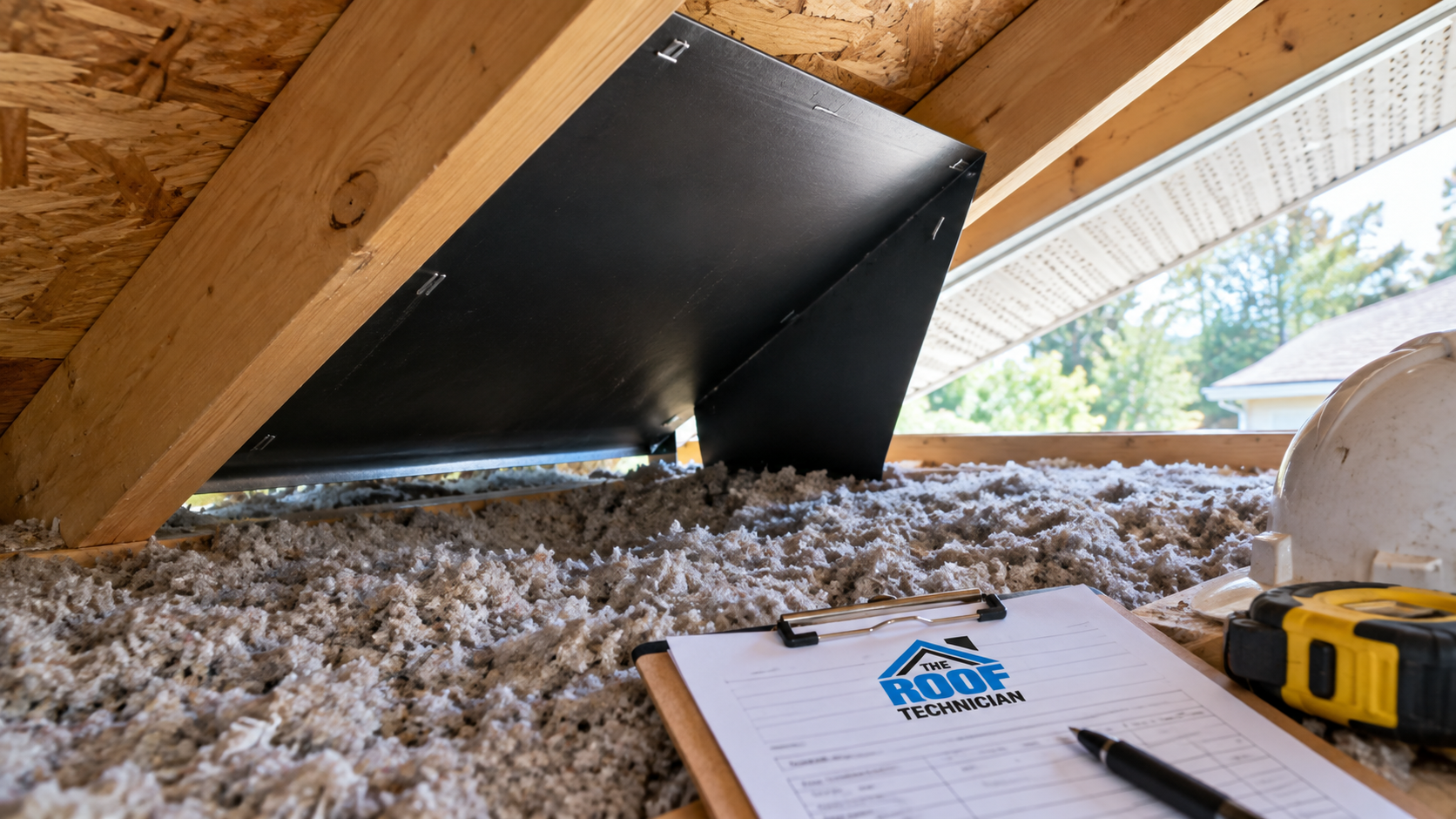
The most common mistake in attic upgrades is burying the soffit intake. Loose fill blown carelessly toward the eaves packs into the space where outside air is supposed to enter, and the attic loses the airflow it depends on. The result is a warm, humid attic, frost on the sheathing in cold weather, mould on the underside of the deck, and shingles ageing prematurely from beneath. More attic insulation Mississauga homes receive every year is undone by this one detail than by any material choice.
The Ontario Building Code calls for unobstructed vent area of not less than one three hundredth of the insulated ceiling area on a typical sloped roof, split roughly evenly between intake at the soffits and exhaust near the ridge. Achieving that after a top-up requires rafter baffles at every bay so the insulation can go full depth at the perimeter without choking the airflow. It also means not mixing exhaust types: a ridge vent combined with powered or box vents can short circuit, pulling air from the nearest opening instead of from the soffits. Pairing any insulation work with a proper attic ventilation assessment is the difference between an upgrade that works and one that creates a moisture problem.
What Attic Insulation Costs In Mississauga In 2026
Pricing is driven by attic footprint, existing depth, access and whether the old material needs to come out. Removal is only necessary where the insulation is contaminated by rodents, saturated by a past leak, or where vermiculite has been confirmed and abated by a qualified firm.
| Attic footprint | Top-up to R-60 | Removal and full replacement |
|---|---|---|
| 800 sq ft, small bungalow or townhouse | $1,600 to $2,900 | $3,200 to $5,200 |
| 1,000 to 1,200 sq ft | $2,200 to $4,000 | $4,200 to $7,000 |
| 1,400 to 1,600 sq ft | $3,000 to $5,400 | $5,800 to $9,500 |
| 1,800 to 2,200 sq ft | $4,000 to $7,000 | $7,500 to $12,500 |
| Air sealing package, any size | $500 to $1,500 | Usually quoted separately |
Rafter baffles typically add $8 to $15 per bay installed, an insulated hatch cover runs $150 to $350, and rerouting a bathroom fan to vent outdoors correctly is usually $250 to $600. Grant and rebate programs for envelope work change from year to year, so ask your contractor what is current rather than assuming last year’s program still exists. The honest arithmetic on attic insulation Mississauga homeowners should expect is a payback measured in years on energy alone, with comfort improving immediately.
Signs Your Attic Needs Attention, Without Going Up There
You can learn most of what matters from inside the house. There is no reason for a homeowner to be climbing onto a roof or balancing on a ladder to work this out, and every reason not to.
- Upstairs bedrooms that stay noticeably colder than the main floor no matter how the thermostat is set.
- Heating bills that have climbed faster than rate increases explain.
- Condensation appearing on upper floor windows when the weather turns cool.
- A draught felt around the attic hatch, pot lights or ceiling fixtures.
- Faint musty odours near the top of the stairs.
- Uneven ceiling temperatures you can feel with a hand on a cold morning.
Any of those is enough to justify a professional attic assessment. A technician will check depth in several places, look at the soffit intake from inside the eaves, inspect the sheathing for staining, and photograph what they find so you are not relying on a verbal description. That inspection is also where the real scope of attic insulation Mississauga work gets established, because depth alone never tells the whole story.
Storey And A Half Homes And Other Awkward Attics
Not every house has a simple open attic floor to blow. Older storey and a half homes, the kind found throughout the city’s earliest residential pockets, have knee walls, sloped ceiling sections and small triangular voids behind the upstairs rooms. Cathedral ceilings, converted attic bedrooms and additions with shallow roof cavities present the same challenge: there is no space to add depth, so the strategy has to change.
In those assemblies the work shifts from blowing depth to sealing and insulating the planes that actually separate heated space from unheated space. That usually means dense packing the sloped cavities, insulating and air sealing the back of knee walls, treating the small floor areas behind them, and using a higher R per inch product where thickness is limited. Closed cell foam earns its cost in exactly these spots, applied selectively rather than across a whole attic.
Access is the other constraint. Some of these voids can only be reached through a small hatch in a closet, and a few require a temporary opening that is patched afterward. Any honest quote for attic insulation Mississauga homes of this type will say plainly what can be reached, what cannot, and what the expected result is. Promising a flat R-60 figure on a storey and a half roof is a sign that whoever wrote the quote has not been in the space. The realistic goal is a continuous, sealed thermal boundary rather than a single headline number, and attic insulation Mississauga contractors who explain that distinction are the ones worth hiring.
Why September Is The Right Month For This Work
Attic temperatures in midsummer make careful work slow and unpleasant, which is the main reason quality suffers on July installs. In September the space is workable all day, the crew can take the time to install baffles properly and seal penetrations, and the upgrade is finished before the heating season begins. Doing it now also means any moisture damage discovered on the sheathing can be repaired while the weather still cooperates, rather than being found in January when nothing can be done about it.
There is a scheduling argument too. Attic and roofing crews across the region are busiest from October onward, once the first cold nights make people notice their draughty rooms. Booking attic insulation Mississauga work in early autumn usually means a choice of dates and a crew that is not rushing to the next call.
What The Installation Day Involves
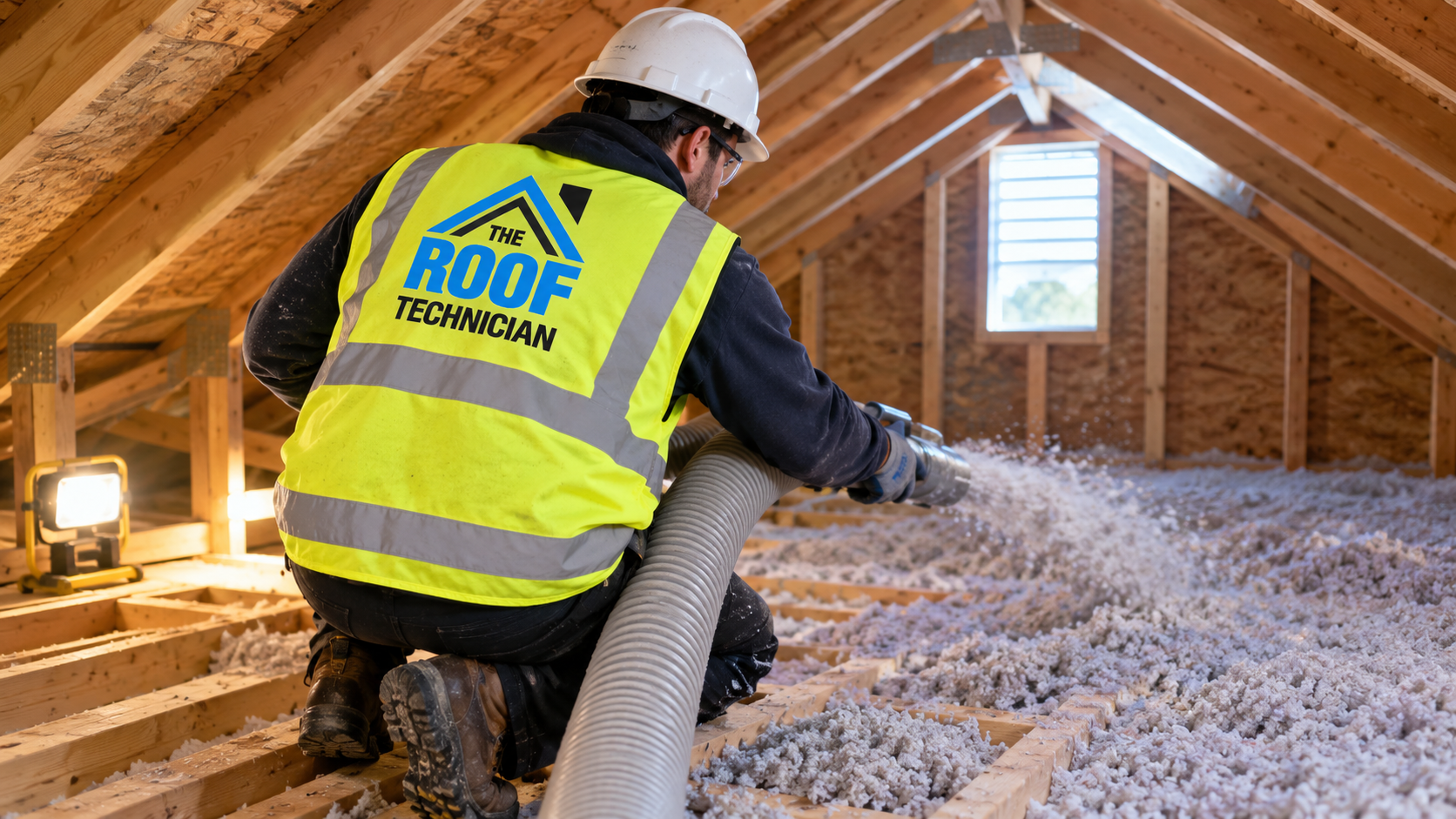
Most attics are finished in a single day. The crew protects the route from the entry door to the hatch, sets up the blowing hose, and begins with air sealing and baffles before any loose fill goes in. Depth markers are stapled to the framing so the finished level can be verified rather than estimated. Storage in the attic has to be relocated beforehand, which is the one piece of preparation that falls to you before the attic insulation Mississauga crew arrives.
Expect some noise from the blower and a brief period of dust near the hatch, both of which are managed with sheeting. At the end of the day you should receive photographs of the sealed penetrations, the installed baffles and the finished depth, plus a note of the target R value achieved. If you also have a roof approaching the end of its life, ask whether it makes sense to coordinate both, since the same visit can cover roofing work across Mississauga and leave the attic properly vented at the same time.
Frequently Asked Questions About Attic Insulation In Mississauga
How much attic insulation Mississauga homes should have?
Can new insulation go on top of the old?
Will more insulation cause condensation problems?
How long does the work take?
Does it really lower heating costs?
Should I do this at the same time as a new roof?
Book An Attic Insulation Assessment In Mississauga This Autumn
A proper attic upgrade is an assessment first and a blowing hose second. The Roof Technician is based in the Toronto area and inspects, air seals, vents and insulates attics throughout Mississauga, with photographs and a written scope before any work begins. Call us today at (416) 826-0040 or request a free consultation.
Serving Mississauga and the wider GTA with attic work that treats insulation, air sealing and ventilation as one system.