Roof repair in Downtown Toronto is not the same job as roof repair in a postwar subdivision an hour up the highway. The core is a dense grid of narrow Victorian and Edwardian row houses, semi-detached brick homes, converted warehouse lofts and infill townhouses, most of them sharing party walls and most of them carrying flat or low-slope roofs rather than the steep asphalt slopes you see in the suburbs. That combination changes everything about how a leak starts, how it travels and how it gets fixed. If you own a home in the downtown core, understanding how roof repair in Downtown Toronto differs from work anywhere else in the region will save you money and prevent the same leak from returning next spring.
This guide to roof repair in Downtown Toronto walks through the roof types that dominate the downtown core, the failure points that show up again and again on row house and flat roof assemblies, realistic 2026 pricing, the access and permit realities of working on a narrow lot, and how to decide between a targeted repair and a full replacement. Everything below is written for homeowners who want practical detail rather than sales copy.
Why Roof Repair Downtown Toronto Homes Need Is a Different Job
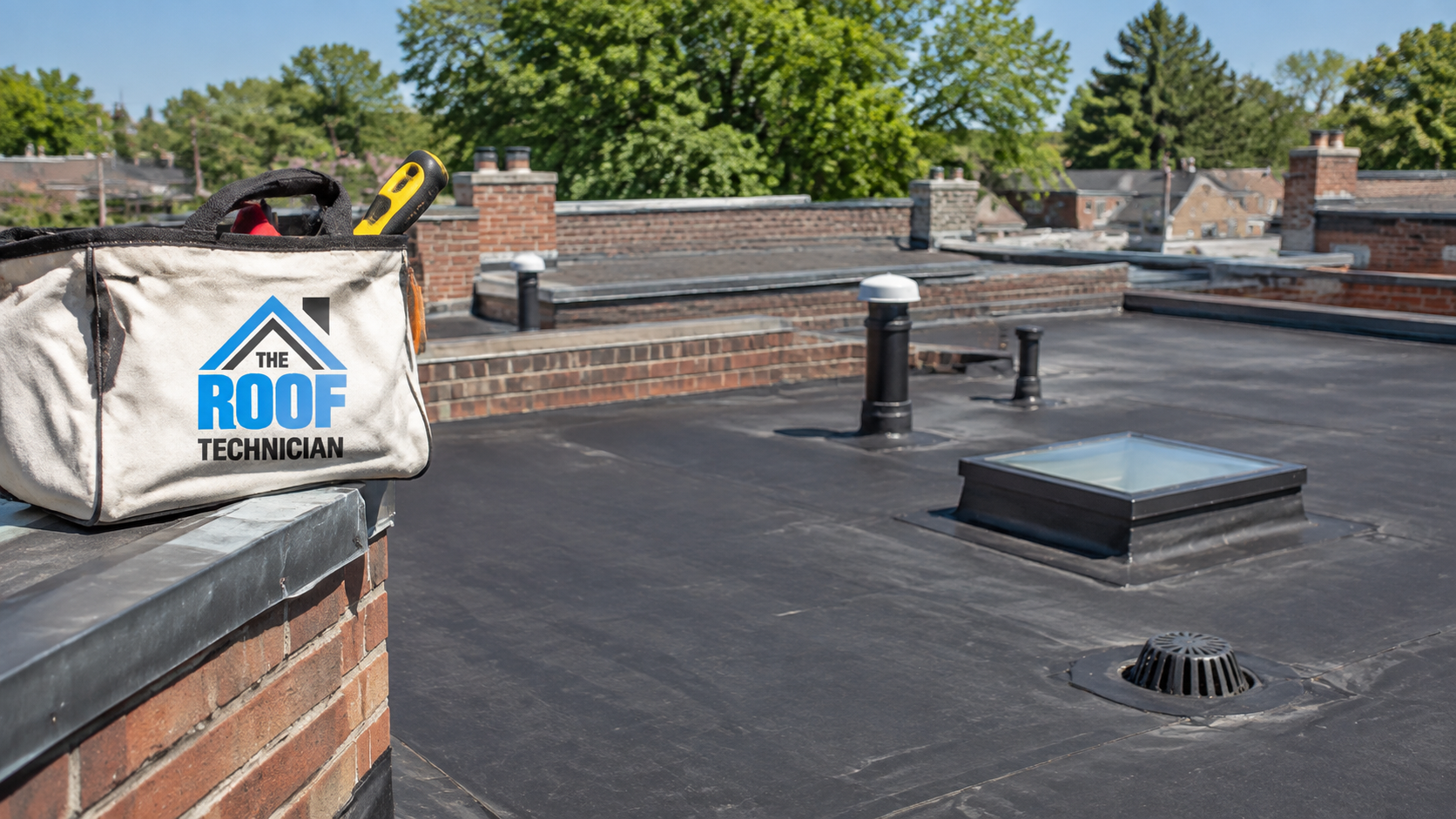
The single biggest difference is pitch. A suburban bungalow sheds water fast because gravity does most of the work. A downtown row house roof is often between flat and 2:12, which means water sits, ponds, freezes and finds every seam. On a low-slope roof there is no margin for a sloppy detail. A lap joint that would be forgiven on a 6:12 shingle roof becomes an active leak on a flat membrane within one winter.
The second difference is the party wall. Row houses and semis share structure with the homes beside them, and in most cases they share a parapet, a common drainage path, or both. When a neighbour’s roof drains onto yours, or when a shared parapet cap fails, the resulting damage does not respect the property line. Roof repair in Downtown Toronto frequently involves conversations with the house next door before a single tool comes out of the truck.
The third difference is age. Much of the core housing stock was built between the 1880s and the 1930s. Original roof structures were designed for materials that are no longer in use, and many of these roofs have been recovered two, three or four times since. Under a modern membrane there may be old built-up tar and gravel, layers of rolled roofing, and a plank deck with gaps between the boards. Any honest assessment of roof repair Downtown Toronto properties require has to start with finding out what is actually up there, layer by layer.
Finally, there is the working environment. Narrow lots, laneway-only rear access, streetcar tracks, permit parking, and neighbours three metres away all shape how a crew stages material and removes debris. A job that takes half a day in Etobicoke can take a full day downtown purely because of logistics.
Row House Roofs: Parapets, Party Walls and Shared Drainage
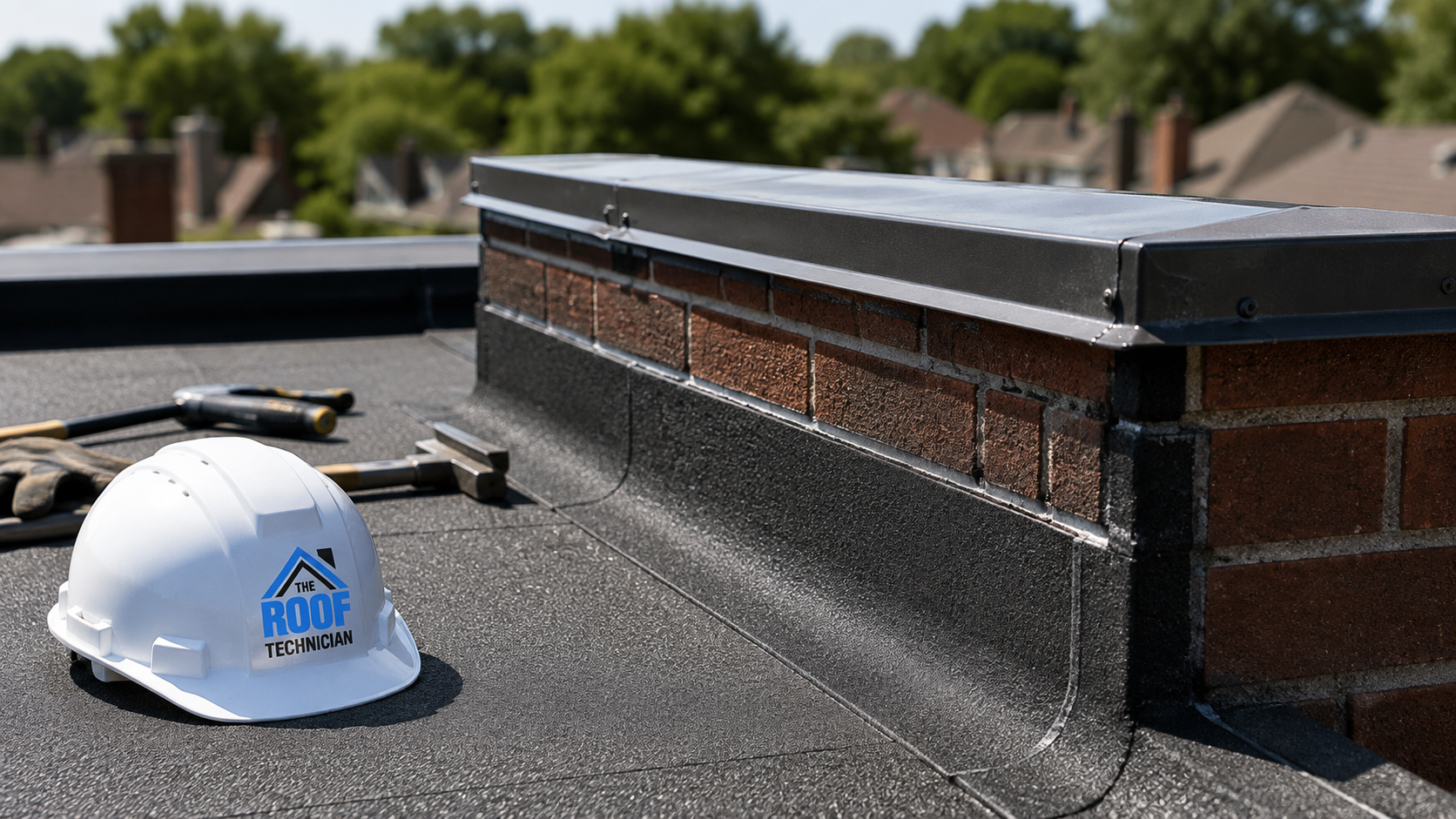
The classic downtown row house roof is a flat or low-slope deck bounded on two or three sides by a masonry parapet wall that rises above the roof surface. That parapet is the number one source of leaks we find. It is exposed on both faces, it takes wind-driven rain and freeze-thaw cycling, and its metal cap flashing is often the oldest component on the roof.
Typical parapet failures include open joints in the cap flashing, missing or loose counter-flashing where the membrane turns up the wall, deteriorated mortar joints that let water into the brick core, and cap flashing that was installed dead level instead of sloped back toward the roof. Water entering the top of a parapet travels down inside the wall and shows up on an interior ceiling well away from the actual entry point, which is why so many homeowners chase the wrong spot for years.
Shared drainage is the second recurring problem. Many row house blocks were built with a common scupper or a rear drainage path that carries water across multiple roofs. If one owner recovers their roof and changes the slope, water backs up on the neighbouring deck. If a scupper or internal drain plugs with leaves and grit, an entire row can pond. Part of any competent roof repair in Downtown Toronto job is confirming that water still has a clear path off the roof after the work is done.
Rear Additions and the Roof-to-Wall Joint
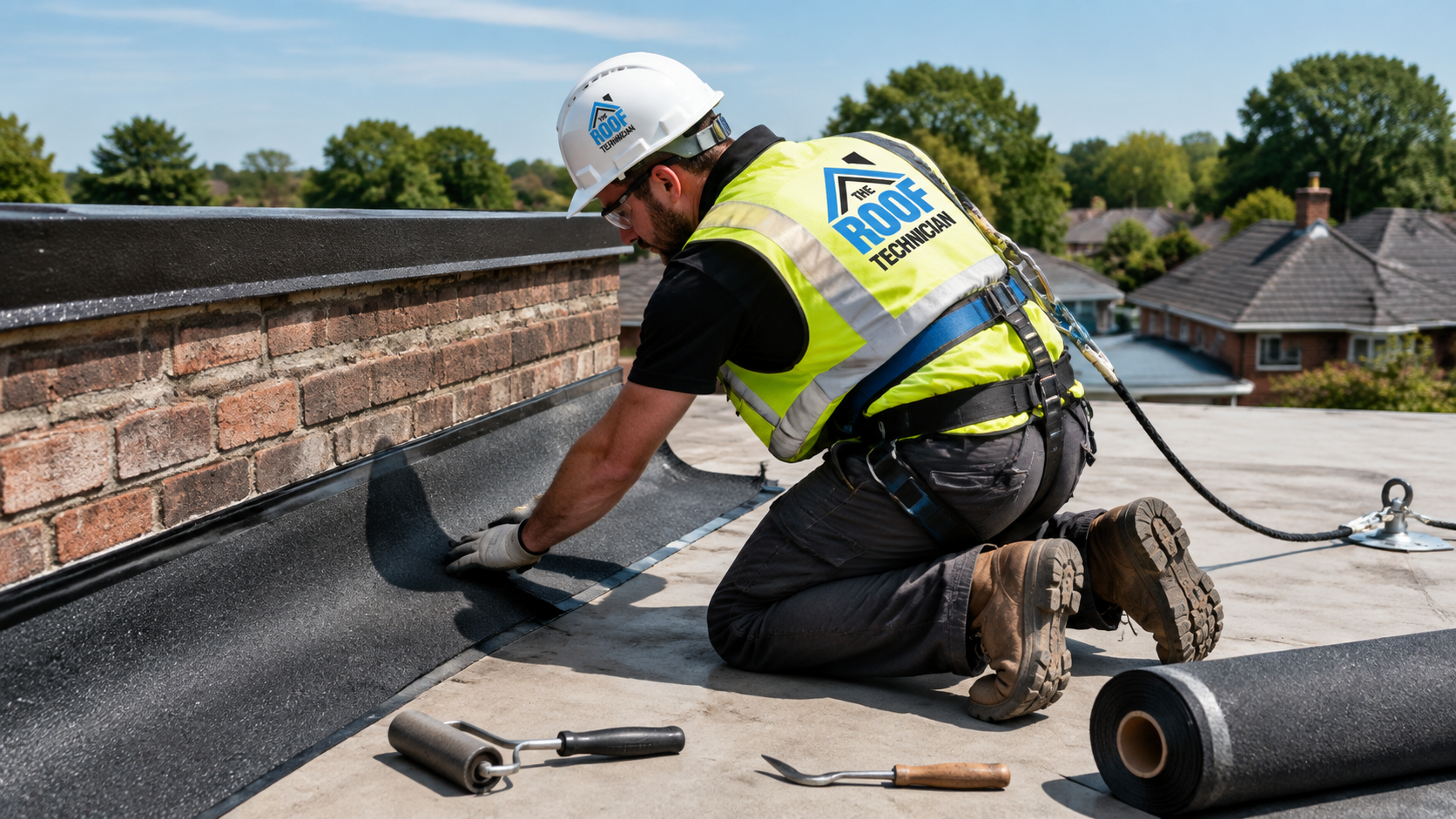
Almost every downtown row house has a rear addition, sometimes two, added at different times with different roof heights. Each addition creates a roof-to-wall transition where a low roof meets a taller brick wall. These joints need a proper base flashing carried up the wall and a counter-flashing let into the mortar. What we usually find instead is caulking smeared over the top edge of the membrane, which lasts a few seasons and then opens up. Reflashing these transitions correctly is one of the highest-value forms of roof repair Downtown Toronto homeowners can invest in.
Flat and Low-Slope Roofing Systems You Will Find Downtown
Knowing which system is on your roof determines what repairs are possible, and it is the first question any roof repair Downtown Toronto quote should answer. Patching an EPDM roof with modified bitumen, or torching a patch onto a single-ply membrane, guarantees a callback. These are the assemblies we encounter most often in the core.
Two-ply modified bitumen (SBS) is the current standard for residential flat roofs across Toronto. A base sheet is mechanically fastened or adhered, and a granulated cap sheet is torch-applied or self-adhered over it. It repairs well, tolerates foot traffic, and integrates cleanly with parapet details.
EPDM rubber shows up on additions and garages. It is durable but repairs require compatible primer and seam tape, and older EPDM shrinks over time, pulling away from perimeter details.
TPO and PVC single-ply membranes appear on newer infill builds and townhouse projects. They are heat-welded, so a proper repair needs a hot-air welder and a matching membrane, not adhesive patches.
Built-up tar and gravel still exists on older properties that have never been fully stripped. It can often be repaired, but once the felts are saturated the only reliable answer is removal.
Asphalt shingles remain on the sloped front-facing mansards, dormers and steep upper sections of Victorian homes. These sections need standard shingle work, and they almost always meet a flat section somewhere, which is where the leak usually is. Mixed assemblies like this are the norm for roof repair in Downtown Toronto rather than the exception.
The Failure Points We Find Most Often on Downtown Roofs
Leaks on flat and row house roofs are rarely in the open field of the membrane. They are almost always at a penetration, a transition or an edge. When we are called for roof repair in Downtown Toronto, these are the places we check first, roughly in order of frequency.
- Parapet cap flashing and counter-flashing, especially where two homes meet at a party wall.
- Roof-to-wall transitions at rear additions, third-storey walls and neighbouring buildings.
- Plumbing stacks and vent penetrations where the boot or the target patch has cracked.
- Skylight curbs and frames, common on downtown homes where owners added light to a dark centre hall. Poorly curbed units on flat roofs are a persistent leak source, and correcting them often overlaps with proper skylight installation and flashing work.
- Drains and scuppers that are undersized, plugged, or set above the low point of the roof.
- Ponding areas where the deck has sagged between joists and water stands more than 48 hours after rain.
- Chimney bases, particularly unused masonry chimneys that are no longer capped and are absorbing water directly.
- Seam and lap failures from an earlier repair done with the wrong material.
Interior symptoms mislead people constantly. On a flat roof, water can run along the top of the deck or between membrane layers for several metres before it finds an opening. A stain in the front bedroom may originate at a rear parapet. This is why an experienced crew traces the assembly rather than patching directly above the stain.
What Roof Repair Costs in Downtown Toronto in 2026
Pricing depends on access, roof height, the system in place and how much wet insulation or rotted decking is discovered once the work starts. The ranges below reflect typical 2026 Ontario residential pricing for downtown properties, including the access constraints of a narrow lot. Treat them as planning figures for roof repair Downtown Toronto budgets, not as quotes.
| Repair Type | Typical 2026 Price Range | Usual Time on Site |
|---|---|---|
| Leak investigation and diagnostic inspection | $0 to $350 | 1 to 2 hours |
| Emergency temporary seal or tarp | $400 to $1,000 | Same day, 1 to 3 hours |
| Membrane patch at a penetration or seam | $500 to $1,200 | Half day |
| Parapet cap and counter-flashing repair | $900 to $3,500 | 1 to 2 days |
| Roof-to-wall reflashing at a rear addition | $800 to $2,400 | 1 day |
| Skylight curb rebuild and reflash | $900 to $2,600 | 1 day |
| Drain or scupper rebuild | $700 to $2,000 | 1 day |
| Sloped section shingle and flashing repair | $450 to $1,400 | Half day to 1 day |
| Rotted deck sheathing replacement, per sheet | $120 to $250 | Added to base scope |
| Partial flat roof section replacement, per square foot | $13 to $20 | 2 to 4 days |
Two factors push downtown pricing above the regional average. The first is access: material has to be carried through a house, hoisted from a laneway, or craned from a permitted street position. The second is discovery. Older row house decks are plank rather than plywood, and once a saturated area is opened, the repair scope often grows. A reputable contractor handling roof repair in Downtown Toronto will price the visible work and give you a written unit rate for deck replacement rather than a vague allowance.
Comparing Flat Roof Systems for Repair and Recovery
If your repair turns into a recovery of one roof section, the system choice matters. This table compares the assemblies most commonly specified for downtown residential flat roofs.
| System | Typical Service Life | Installed Cost per Square Foot | Best Use Downtown |
|---|---|---|---|
| Two-ply SBS modified bitumen | 25 to 30 years | $14 to $20 | Main row house roofs and rear additions |
| Self-adhered SBS (no open flame) | 20 to 28 years | $15 to $22 | Tight lots and heritage adjacency where torching is restricted |
| EPDM rubber, fully adhered | 20 to 25 years | $12 to $18 | Garages, small additions, simple rectangles |
| TPO single ply, mechanically fastened | 20 to 25 years | $11 to $17 | Newer infill townhomes with existing TPO |
| Liquid-applied flashing systems | 10 to 20 years | Detail work, priced per joint | Complex parapets and irregular transitions |
Self-adhered SBS deserves a mention because of how tight downtown lots are. Open-flame torch work next to a wood-frame neighbour, a cedar fence or a heritage facade carries real risk, and many contractors now default to self-adhered systems in the core for that reason. If a quote for roof repair Downtown Toronto work specifies torch-applied membrane on a cramped lot, ask how the fire watch is handled.
For homes where the flat section has reached the end of its life rather than just failed at a detail, a planned flat roofing replacement is usually better value than a third round of patching. The crossover point is discussed below.
Access, Permits and Working in the Downtown Core
Roof repair in Downtown Toronto involves logistics that suburban jobs never face. Planning these in advance is what separates a two-day job from a two-week one, and they should be settled before any roof repair in Downtown Toronto is scheduled.
Permits. In most cases the City of Toronto does not require a building permit to re-roof a house when the work is a like-for-like replacement of the roof covering and no structural change is involved. A permit generally is required when roof structure, joists or the deck framing are altered, when a roof is being converted to a walkable terrace, or when the work affects a designated heritage property. Many downtown blocks fall within heritage conservation districts, and exterior work on a listed or designated property can require heritage approval even if the building permit does not apply. Confirm the status of your address before scheduling.
Street occupancy. Placing a disposal bin, a lift or a material hoist on a City street or in a permit-parking space requires a right-of-way occupancy permit. Lead time varies, so this is arranged before the crew is booked, not on the morning of the job.
Ontario Building Code details. Two requirements come up constantly on downtown work. Eave protection, meaning a self-adhered membrane at the lower edge of sloped sections, is required and must extend a set distance up from the roof edge past the inside face of the exterior wall. And a maximum of two layers of asphalt shingles is permitted before a full tear-off is required, which matters on the sloped mansard sections of Victorian homes that have been shingled repeatedly.
Ventilation. Low-slope assemblies over insulated ceilings need either a properly vented cavity or a correctly designed unvented assembly with the insulation above the deck. Downtown row houses converted from cold attics to finished third floors are a frequent source of condensation problems that look exactly like a roof leak. Correcting the ventilation path, or moving to a compact roof assembly, is sometimes the actual fix. Related guidance on attic ventilation applies to sloped sections as well.
Neighbour coordination. When a parapet is shared, both owners have an interest in the repair. Sorting out cost sharing, access over the neighbour’s roof, and scheduling before the crew arrives prevents the job from stalling halfway through.
Repair or Replace: Making the Call on an Older Downtown Roof
The most common question we get about roof repair in Downtown Toronto is whether a leak is worth repairing at all. The honest answer depends on the age of the membrane, how much of the assembly is wet, and how many previous repairs are already in place. This table sets out the signals we use.
| What You Are Seeing | Likely Cause | Usual Recommendation |
|---|---|---|
| One stain after heavy wind-driven rain, roof under 12 years old | Flashing or penetration detail | Targeted repair |
| Multiple stains in different rooms, roof 18 years or older | Widespread membrane fatigue | Section or full replacement |
| Soft, spongy spots underfoot on the flat area | Saturated insulation or rotted deck | Open up and replace affected area |
| Blisters, ridging and open laps across the field | Trapped moisture and adhesion loss | Replacement of that roof section |
| Water standing more than 48 hours after rain | Deck deflection or blocked drainage | Re-slope, add drainage, then re-roof |
| Recurring leak already patched two or more times | Wrong repair method or missed source | Full diagnostic, then rebuild the detail |
| Interior mould with no clear rain correlation | Condensation, not a roof leak | Ventilation or assembly correction |
A rule of thumb that holds up well downtown: if the cost of the proposed repair exceeds roughly 30 percent of the cost of replacing that roof section, and the membrane is past two thirds of its expected life, replacement is the better investment. Below that threshold, a properly executed repair buys real years. When replacement is the answer, a scoped roof replacement on a single section is often staged over two seasons to spread cost.
Seasonal Timing and Maintenance for Downtown Roofs
Toronto’s freeze-thaw cycling is hard on low-slope roofs. Water that ponds during a January thaw refreezes overnight and expands into every open lap. That is why so many calls for roof repair in Downtown Toronto arrive in late winter even though the defect formed the previous autumn.
Membrane work is best scheduled from late spring through early autumn, when adhesives and self-adhered sheets bond properly and surfaces are dry. Emergency repairs can be done in winter, but they should be treated as temporary measures with a permanent fix scheduled once temperatures allow. Any contractor promising a permanent flat roof repair at minus 10 degrees is overselling.
A simple maintenance routine prevents most of the situations that lead to roof repair in Downtown Toronto:
- Clear drains, scuppers and eavestroughs twice a year, in late spring and again after leaf fall.
- Walk or visually inspect the flat area each spring for blisters, open laps and standing water.
- Check parapet cap joints and any mortar deterioration from a window or from the roof each year.
- Inspect skylight perimeters and vent boots for cracking.
- Keep the third-floor or attic space ventilated and check for frost accumulation in midwinter.
- Photograph the roof annually so changes are easy to spot year over year.
Owners who keep up with this routine typically spend far less over a decade than owners who wait for the ceiling stain. The same logic applies across the region, which is why our broader roof repair services in Toronto lead with inspection and maintenance rather than reactive patching.
How to Choose a Contractor for Roof Repair Downtown Toronto Owners Can Rely On
Roof repair in Downtown Toronto rewards specialists. A crew that installs suburban shingle roofs all week may be excellent at what it does and still be the wrong choice for a parapet rebuild on a 130-year-old row house. Use these criteria when you compare roof repair Downtown Toronto quotes.
- Ask what system is on your roof. A contractor who cannot name the membrane after an inspection has not looked closely enough.
- Require a written scope. It should name the failure point, the repair method, the materials, and a unit rate for any deck or insulation replacement discovered during the work.
- Confirm WSIB coverage and liability insurance. Ask for current certificates, not verbal assurance.
- Ask about fall protection and fire watch. Parapet edges and torch work both carry specific obligations on a dense downtown lot.
- Clarify debris removal and access. Where does the bin go, and who arranges the occupancy permit?
- Check the warranty split. Manufacturer material warranties and contractor workmanship warranties are separate. Most flat roof failures are workmanship, so the workmanship term matters more.
Because so much of the core sits within heritage conservation areas and so many homes share walls with the property next door, roof repair in Downtown Toronto depends on judgement as much as on labour. Experience with these specific conditions matters more than the size of the company. Homeowners comparing options can review our full coverage of Downtown Toronto roofing services and surrounding service areas to see how we approach work in the core, and our customer reviews for feedback from homeowners who have been through the process.
How much does roof repair Downtown Toronto homeowners need typically cost?
Do I need a permit for roof repair in Downtown Toronto?
Why does my flat roof leak show up in a room far from the roof damage?
Can a row house roof be repaired without involving my neighbour?
What is the best time of year for roof repair Downtown Toronto properties require?
How long should a properly repaired flat roof last before it needs work again?
Book Your Roof Repair Downtown Toronto Inspection Today
The Roof Technician is a Toronto-area roofing contractor serving homeowners throughout Downtown Toronto, handling roof repair Downtown Toronto owners can count on, from row house parapet rebuilds and flat membrane repairs to full section replacements on heritage-era homes. Every job starts with a proper diagnostic so the repair addresses the actual source rather than the visible stain, and every quote comes with a written scope and clear unit pricing for anything found once the roof is opened. Answers to more common questions are available on our frequently asked questions page.
Call us today at (416) 826-0040 or request a free consultation.
The Roof Technician proudly serves Downtown Toronto and homeowners across the Greater Toronto Area, including Mississauga, Brampton, Vaughan, Markham, Scarborough, Etobicoke and North York.