Hiring a roofer should not feel like a gamble, but for a lot of homeowners it does. The Greater Toronto Area has hundreds of contractors operating under similar sounding names, and the distance between the best and the worst of them is measured in tens of thousands of dollars and years of hidden water damage. If you are comparing roofing companies in North York, the encouraging news is that the warning signs are consistent, they show up early, and almost all of them can be checked before you ever sign anything.
This guide is written for North York homeowners who want a practical filter rather than a sales pitch when they start calling roofing companies in North York. It covers the specific red flags that separate dependable contractors from the crews that disappear after the final payment clears, what a complete quote actually contains, realistic 2026 pricing, and the Ontario rules that a legitimate roofer already follows without being asked. Read it before you book your first estimate and you will be able to eliminate half the field in a single phone call.
Why Vetting Roofing Companies in North York Takes Local Knowledge
North York is a district of the City of Toronto, which means Toronto building permits, property standards enforcement and waste disposal rules all apply here. That matters when you are screening roofing companies in North York, because a contractor who works mostly outside the city sometimes treats Toronto permit and disposal requirements as an afterthought, then hands the homeowner the problem later.
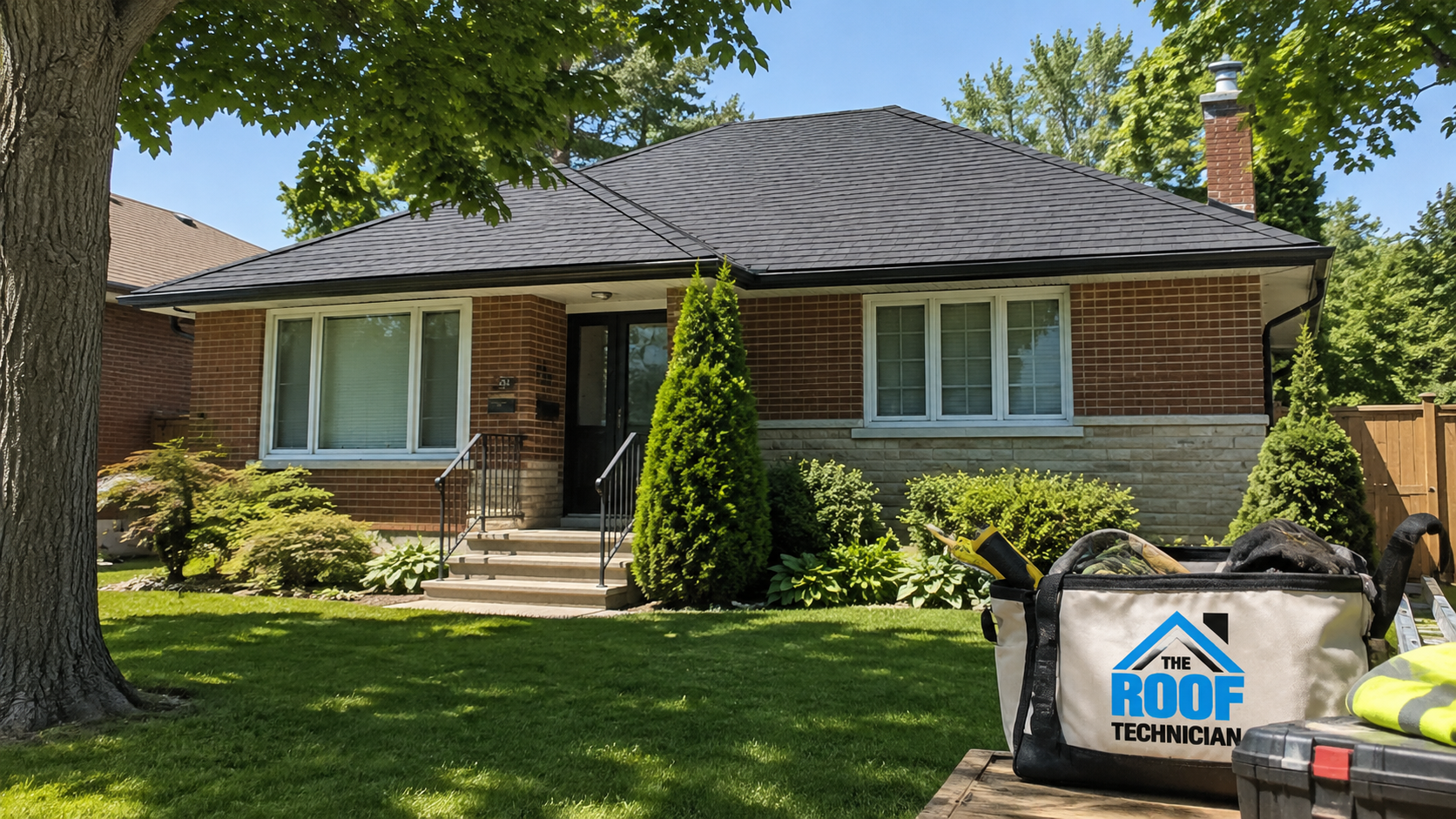
The housing stock adds a second layer. Large parts of North York were built out in the postwar decades, so you see a great many one storey bungalows and side splits with simple gable roofs, shallow attics and original soffit venting that was never sized for today’s insulation depths. Other pockets are newer subdivisions with steeper hip roofs, multiple valleys and dormers. There are older brick homes with tight eaves, generous estate lots carrying very large roof areas, and a steady stream of infill rebuilds that combine a steep slope main roof with a low slope section over an addition, a garage or a rear extension.
Each of those forms fails differently. Roofing companies in North York see these patterns constantly. A shallow bungalow attic tends to develop moisture problems when blown insulation buries the soffit vents. A complex hip and valley roof fails first at the valley metal and the step flashing. A low slope addition tied into a shingled roof leaks where the two assemblies meet, which is exactly the transition that inexperienced crews rush. Good roofing companies in North York will walk that transition, look in the attic and talk about it before quoting. Crews that only measure the ground footprint and email a number the same afternoon are guessing.
Mature tree canopy is the third factor. Shaded north facing slopes in older neighbourhoods hold moisture and grow moss, and overhanging limbs drop debris into valleys and eavestroughs year round. A contractor who understands the area will raise debris management and trimming as part of the conversation. If you want a sense of the full geographic footprint a contractor covers, see the roofing services offered across North York and the surrounding GTA before you shortlist anyone.
Red Flag One: Pressure Selling and the Same Day Discount
The single most reliable warning sign among roofing companies in North York is urgency that comes from the salesperson rather than from your roof. Genuine emergencies exist, and an active leak during a storm needs same week attention, but a twenty year old roof that has been quietly ageing does not require a signature tonight.
Watch for these patterns when you meet roofing companies in North York:
- Door knocking after a wind or hail event, particularly crews claiming to have “noticed damage from the street” on a roof they cannot see from the sidewalk.
- Price expiry. A quote that drops several thousand dollars if you sign before the estimator leaves your kitchen was never priced honestly to begin with.
- Free inspections that always find catastrophic damage, usually documented with photos that could have come from any roof.
- Large deposits. In Ontario a deposit between ten and thirty percent is normal for a residential re-roof. A demand for fifty percent or more before a single bundle arrives is a liquidity problem, and it becomes your problem.
- Cash only, no invoice, no HST number. A business with more than thirty thousand dollars in annual revenue must register for HST. No HST line on the quote means either an unregistered business or an off book transaction with no recourse for you.
One protection worth knowing: under Ontario’s Consumer Protection Act, a direct agreement signed in your home for more than fifty dollars generally carries a ten day cooling off period during which you can cancel in writing without reason. That right exists precisely because high pressure in home selling is a known problem in this trade. Reputable roofing companies in North York will tell you about it themselves.
Red Flag Two: Missing Insurance, WSIB Coverage and a Verifiable Business Identity
Roofing is high risk work at height. If an uninsured worker is injured on your property, or a falling bundle damages your neighbour’s car, the exposure can land on the homeowner. This is not a theoretical risk, and verifying it takes about fifteen minutes.
Ask every contractor for three documents before the quote conversation goes any further: a certificate of general liability insurance naming the current policy period, a WSIB clearance certificate, and proof that crew members hold valid Working at Heights training approved by Ontario’s Chief Prevention Officer. Any of the serious roofing companies in North York will send all three without hesitation, usually within a day.
| What to verify | How to check it | What a red flag looks like |
|---|---|---|
| General liability insurance | Request the certificate directly from the broker, not a photocopy from the contractor. Confirm the policy is current and the limit is at least $2 million | Expired dates, a limit under $1 million, or a certificate that names a different company than the one quoting you |
| WSIB clearance certificate | Request a clearance certificate through the WSIB online service using the contractor’s legal name and account number | “We are exempt”, “our guys are subcontractors so it does not apply”, or a certificate more than ninety days old |
| Working at Heights training | Ask for training records showing CPO approved certification and the completion date, valid for three years | No records available, or crews working without harnesses and anchors on a steep slope roof |
| Business legitimacy | Confirm the legal business name, a physical address, an HST registration number and how long the company has traded under that name | Residential address only, a company name registered weeks ago, or a business name that keeps changing between quotes |
| Written warranty capacity | Ask whether the manufacturer certifies the installer and what happens to the labour warranty if the company closes | Verbal assurances only, or a warranty promise with no written terms attached to the contract |
The name check deserves special attention. A pattern the industry sees repeatedly is a company that dissolves, leaves its warranties behind and reopens under a fresh name with the same phone number. Search the business name alongside the phone number and the principal’s name. When you are choosing among roofing companies in North York, a long unbroken trading history under one name is one of the strongest signals available to you.
Red Flag Three: A Quote That Does Not Say What You Are Buying
A one line quote reading “supply and install new roof, $11,500” is not a quote. It is a number with no defence, and it makes honest comparison between roofing companies in North York impossible because you cannot tell what any bidder actually included. This is where most disputes begin, and it is the easiest red flag to catch.
A complete residential quote from a professional roofer should name, in writing, every one of the following:
- Tear off scope: how many existing layers are being removed, and whether the price assumes one layer or more.
- Deck inspection and replacement: the per sheet price for replacing rotted plywood or board sheathing, so the change order is priced before it happens rather than after.
- Eave protection: the Ontario Building Code requires eave protection on shingle roofs, and quality installers extend self adhered membrane well past the minimum, plus into every valley and around every penetration.
- Underlayment type across the remaining field, synthetic or felt, and the coverage.
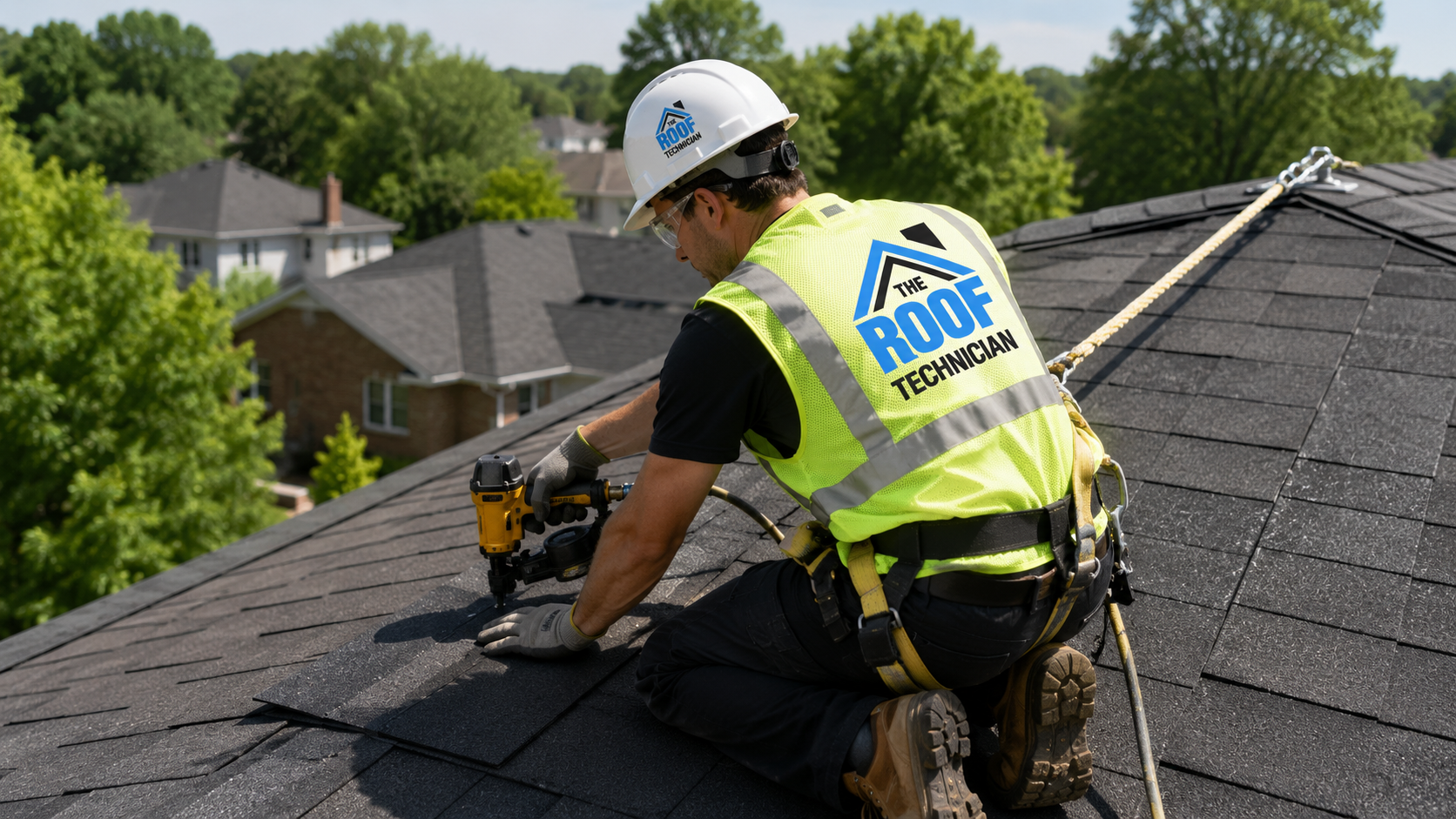
- Metal components: new drip edge at eaves and rakes, new valley metal, new step flashing and counter flashing at walls and chimneys. Reusing old step flashing to save a few hundred dollars is a leak waiting to happen.
- Shingle line and fastening: the exact product, colour, and the nail count per shingle. Six nails is the wind rated specification for most architectural shingles.
- Ventilation work included in the price, including any new intake or exhaust vents and baffles.
- Disposal, cleanup and magnetic nail sweep, plus who is responsible for permits if any are required.
- Payment schedule tied to milestones, not dates.
If a quote is missing four of those nine items, the contractor is either not planning to do them or is planning to charge for them later. When you compare roofing companies in North York, insist on the same scope from every bidder, otherwise you are comparing a full replacement against a cosmetic overlay.
Pricing itself is the other half of the picture. Bids that sit thirty percent below the pack are usually cutting the invisible items: the flashing, the ventilation, the deck repairs and the disposal. Bids far above the pack should be justified by materials, access difficulty or roof complexity, not by brand marketing. The ranges below reflect typical 2026 installed pricing in the Toronto market and are meant for orientation, not as a substitute for a site specific estimate. If you want detail on process and materials, review the options for a full asphalt shingle roof replacement before your first appointment.
| Home type | Typical roof area | Architectural asphalt, installed (2026) | Notes on cost drivers |
|---|---|---|---|
| Postwar bungalow, simple gable | 1,300 to 1,800 sq ft | $8,500 to $14,000 | Easiest access and simplest layout; deck condition is the main variable |
| Side split or back split | 1,600 to 2,200 sq ft | $11,000 to $18,000 | Multiple roof planes and transitions raise flashing and labour time |
| Two storey detached, hip and valley | 1,800 to 2,600 sq ft | $14,000 to $24,000 | Height, staging and valley count; steep pitch adds roughly 10 to 20 percent |
| Larger estate style home | 3,000 sq ft and up | $25,000 to $50,000 and up | Dormers, turrets, premium shingles and extended flashing work |
| Low slope addition or garage section | 300 to 800 sq ft | $4,000 to $11,000 | Modified bitumen or single ply membrane, priced separately from the shingle field |
| Common add on: plywood deck replacement | Per 4×8 sheet | $95 to $160 per sheet installed | Should be quoted as a unit rate up front, never discovered mid project |
Red Flag Four: Warranty Language That Falls Apart Under Scrutiny
“Lifetime warranty” is the most abused phrase in the trade. In practice a roof carries two separate warranties that fail in completely different ways, and homeowners routinely discover the difference only when they have a leak.
The manufacturer warranty covers the shingle itself against manufacturing defects. It is usually prorated after an initial non prorated period, and it does not cover labour, tear off or disposal unless the installer is certified under an enhanced system warranty program. The workmanship warranty covers installation errors, and it is only as good as the company standing behind it. That is the one that evaporates when a contractor closes, which is why business longevity matters so much when you evaluate roofing companies in North York.
| Warranty type | Typical term | What it actually covers | Common exclusions to read for |
|---|---|---|---|
| Standard manufacturer shingle warranty | Limited lifetime, prorated after 10 to 15 years | Material defects in the shingle only | Labour, disposal, and any failure attributed to installation or ventilation |
| Enhanced system warranty | 25 to 50 years, non prorated portion extended | Full system including accessories and some labour, when installed by a certified contractor | Requires certified installer plus complete system components; substitutions void coverage |
| Contractor workmanship warranty | 2 to 10 years, occasionally longer | Installation errors such as flashing, fastening and sealing failures | Storm damage, foot traffic, satellite dish and equipment installs by others |
| Flat and low slope membrane warranty | 10 to 20 years | Membrane and seam integrity on the low slope section | Ponding water beyond a stated period, and unrepaired drain blockages |
| Repair specific warranty | 1 to 2 years typical | The specific repair area only | Adjacent areas, and any pre existing deterioration noted at the time of the repair |
Three questions cut through the noise. Is the warranty registered with the manufacturer in my name? Is it transferable if I sell, and does a transfer fee apply? What documented conditions void it? Inadequate attic ventilation is the most common voiding condition of all, which leads directly to the next red flag.
Red Flag Five: Ignoring Attic Ventilation, Insulation and Code Details
If an estimator never asks to see your attic, that is a serious omission. The attic is where you find the evidence: darkened sheathing from chronic condensation, rusted nail tips, compressed or missing insulation, bathroom fans discharging into the attic space instead of outdoors, and soffit vents buried under blown insulation.
Ontario’s Building Code sets a minimum unobstructed vent area of roughly one three hundredth of the insulated ceiling area for most attics, with a more demanding ratio for low slope roofs, and it expects that venting to be reasonably split between intake at the eaves and exhaust near the ridge. Real world performance depends on both halves working. Adding more ridge vent while the soffits remain blocked can make things worse by drawing conditioned air up out of the house.
This is one of the clearest ways to separate roofing companies in North York into serious and superficial. In older bungalows with shallow attics and narrow soffits, correcting intake requires baffles at every rafter bay and sometimes additional intake venting. That work is not glamorous and it does not photograph well, so contractors competing purely on price leave it out. The result is ice damming in winter, premature shingle ageing in summer and a manufacturer warranty claim that gets denied. A contractor who talks seriously about balanced attic ventilation is telling you something about how they work.
The same principle applies to skylights and low slope tie ins. Curb heights, flashing kits and membrane terminations at a wall are all detail work where shortcuts stay invisible for a season or two. If your home has a rear addition or a garage with a flat section, ask specifically how the low slope membrane will terminate against the shingled field, and if you have overhead glazing ask how the skylight flashing will be integrated rather than simply caulked.
Red Flag Six: No Paper Trail, No References and No Local Track Record
Reputation among roofing companies in North York is verifiable if you are willing to spend twenty minutes on it. Look past the star rating and read the substance of the reviews, particularly the ones describing what happened after the crew left. Anyone can deliver a good week. The question is what a company does when a leak shows up in year three.
Signals worth checking on any shortlist of roofing companies in North York:
- Review depth and pattern. Dozens of reviews accumulated steadily over years beats a burst of glowing five star entries posted in a single month.
- Named responses to criticism. How a company answers a complaint in public tells you more than any testimonial.
- Recent local work. Ask for addresses of comparable homes done in the past year, not a generic gallery.
- Consistency of contact details. A stable phone number, address and business name across the website, invoices and review profiles.
- Written answers. A company that publishes clear technical answers, such as a substantive roofing FAQ section, is generally the one that explains things properly on site too. It is also worth reading through published customer reviews for patterns rather than headlines.
How to Compare Roofing Companies in North York Side by Side
Once you have three quotes in hand from roofing companies in North York, the comparison work is straightforward if you normalise the scope. Put the quotes beside each other and check the same nine line items in each. Where one bidder is silent on a line, phone and ask whether it is included. Half the price gap between the cheapest and the most expensive bid usually explains itself in that single call.
A practical sequence that works well:
- Book three site visits and require each estimator to enter the attic and photograph the roof, not measure from the driveway.
- Collect insurance, WSIB and training documentation before quotes arrive, so an unqualified bidder never enters the comparison.
- Ask every bidder the same three technical questions: how much eave protection, what happens at the wall and chimney flashings, and what ventilation changes are included.
- Require a unit rate for deck replacement in writing.
- Confirm the payment schedule is milestone based, with a meaningful holdback until final inspection and cleanup.
- Read the workmanship warranty terms in full, not the number on the front page.
If a bid is dramatically low, do not simply reject it. Ask the contractor to explain the difference against the specific line items. Occasionally there is a legitimate reason such as a simpler tear off assumption or a lower grade shingle. More often the conversation reveals what has been quietly omitted, and that answer is the most useful information you will gather during the whole process.
Permits, Timelines and What a Normal North York Roofing Project Looks Like
For a straightforward like for like shingle replacement on a house, a City of Toronto building permit is generally not required. Permits do come into play when structural framing is altered, when new openings such as skylights are cut, when the roof assembly is changed, or where other work is bundled in. A contractor who tells you permits are never needed for anything, or who suggests you pull the permit yourself to keep their name off it, is telling you something important.
Waste disposal is a Toronto specific detail as well. Construction debris cannot go out with residential collection, so the bin, the haul and the tipping fees belong in the quote. Bin placement on a narrow driveway or a shared lane also needs to be discussed in advance, and in some cases a street occupation permit applies if the bin sits on the road allowance.
Timelines quoted by experienced roofing companies in North York are usually shorter than homeowners expect. A simple bungalow is commonly a single day of tear off and installation with a crew of five or six. A two storey home with valleys and dormers typically runs two to three days. A larger or more complex roof, or one requiring significant deck replacement, can run three to five days. Weather resets the clock, and a professional crew will not open more roof than they can dry in before the end of the day.
Season matters too. Asphalt shingles seal thermally, so installations in cold weather require hand sealing of tabs and careful handling of brittle material. Work from spring through late autumn is easier to schedule and seals faster, which is also why the best crews book out weeks ahead in peak season. If you have an active leak in the meantime, an interim roof repair in Toronto can hold the line safely until a full replacement is scheduled.
How many quotes should I get from roofing companies in North York?
What deposit is reasonable for a residential roof replacement?
Do I need a permit to replace my roof in North York?
How can I check whether a contractor’s insurance and WSIB coverage are real?
Why do quotes from roofing companies in North York vary so widely?
What voids a roofing warranty most often?
Talk to One of the Trusted Roofing Companies in North York
Choosing among roofing companies in North York is mostly about asking better questions early. The Roof Technician is a Toronto based roofing contractor serving North York homeowners with detailed written scopes, verified insurance and WSIB coverage, manufacturer certified installation and workmanship warranties in writing. Every estimate includes an attic assessment and a line by line breakdown you can compare against any other bid you receive.
Call us today at (416) 826-0040 or request a free consultation. We will walk your roof, look in your attic and give you a scope you can actually evaluate.
The Roof Technician proudly serves North York and communities across the Greater Toronto Area with residential and commercial roofing services.