The Greater Toronto Area occupies a uniquely volatile meteorological zone. Sandwiched between the immense thermal mass of Lake Ontario and the aggressive polar air sweeping down from Northern Ontario, the city is subjected to a terrifying winter phenomenon: freezing rain. Unlike light, fluffy powder snow that easily blows off a steep pitch, a severe Toronto ice storm coats the entire architectural envelope of your home in solid, unyielding, immensely heavy glacial ice. The destruction inflicted during these events is not merely cosmetic; it is violently structural. The Roof Technician has served as the premier emergency responder for catastrophic roof failures across the GTA following every major winter weather event over the last two decades. This exhaustive 2026 guide forensically dissects the precise mechanics of ice storm roof damage Toronto homeowners face, the critical preventative measures you must take before December, and the highly complex process of securing a massive insurance payout when the storm shatters your shingles.
The Devastating Physics of Freezing Rain on Asphalt
To understand the damage, you must comprehend the brutal physics of a multi-day freezing rain event. It begins when rain falls through a shallow layer of sub-freezing air directly above the ground. The water remains liquid until it physically impacts your freezing roof deck, instantly crystallizing into solid ice.
1. The Crushing Weight of Ice Accumulation
Standard architectural asphalt shingles are engineered to effortlessly shed thousands of gallons of rainwater. However, they are not designed to support hundreds of pounds of solid ice clinging to their granular surface. A mere half-inch accumulation of solid ice adds roughly 500 to 700 pounds of dead weight to a standard residential roof plane. As the ice thickens to an inch or more during a multi-day storm, the massive, unbalanced structural load can aggressively bow the plywood roof decking inward. In older bungalows with compromised rafters, this extreme weight can cause a terrifying structural collapse.
2. The Micro-Fracturing of Shingles
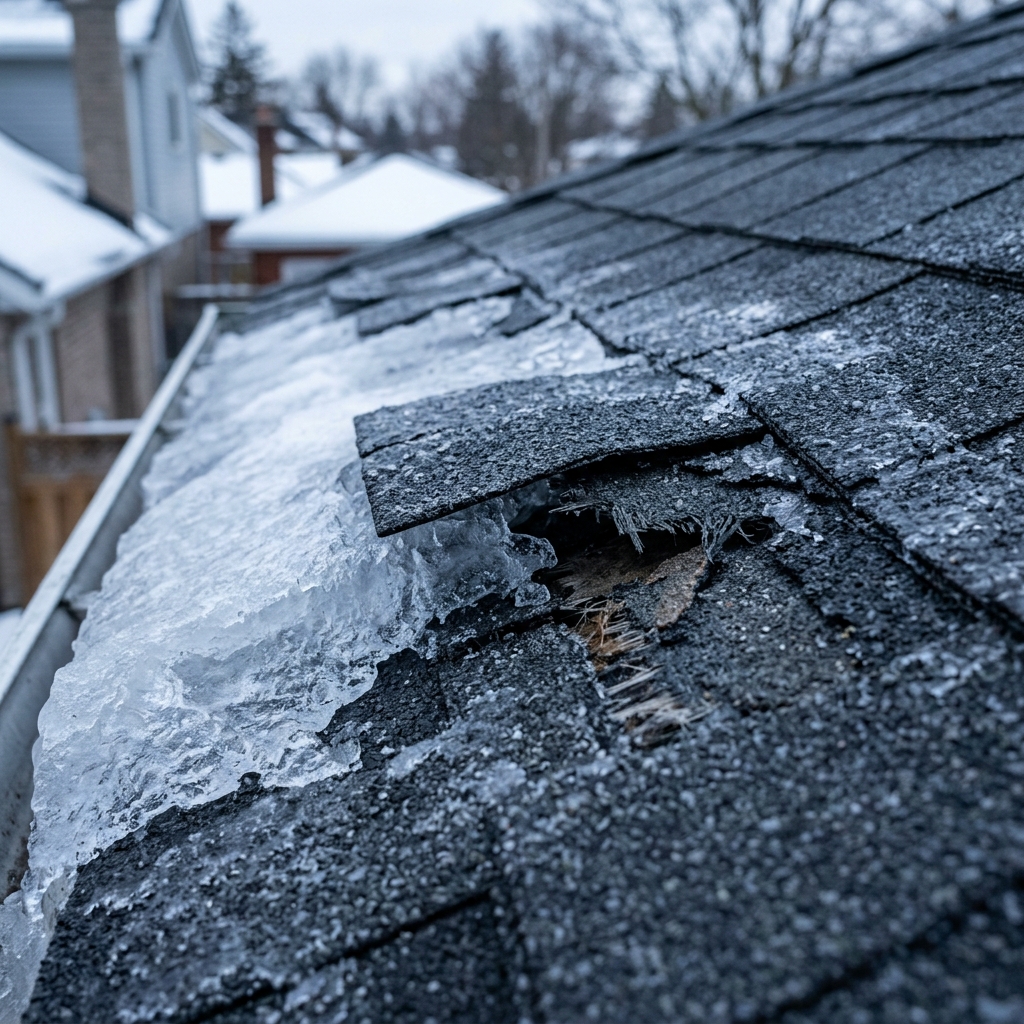
Asphalt shingles become highly brittle and inflexible in -15°C temperatures. When freezing rain hits the brittle asphalt and expands by 9% as it turns into solid ice, it exerts immense microscopic pressure on the fiberglass matting inside the shingle. The ice literally pries the protective ceramic granules off the surface. If high wind accompanies the ice storm, the frozen, totally inflexible shingles are violently bent backward, instantly snapping them completely in half and exposing the vulnerable underlayment directly to the elements.
The Ice Dam: The Apex Predator of Winter Roofs
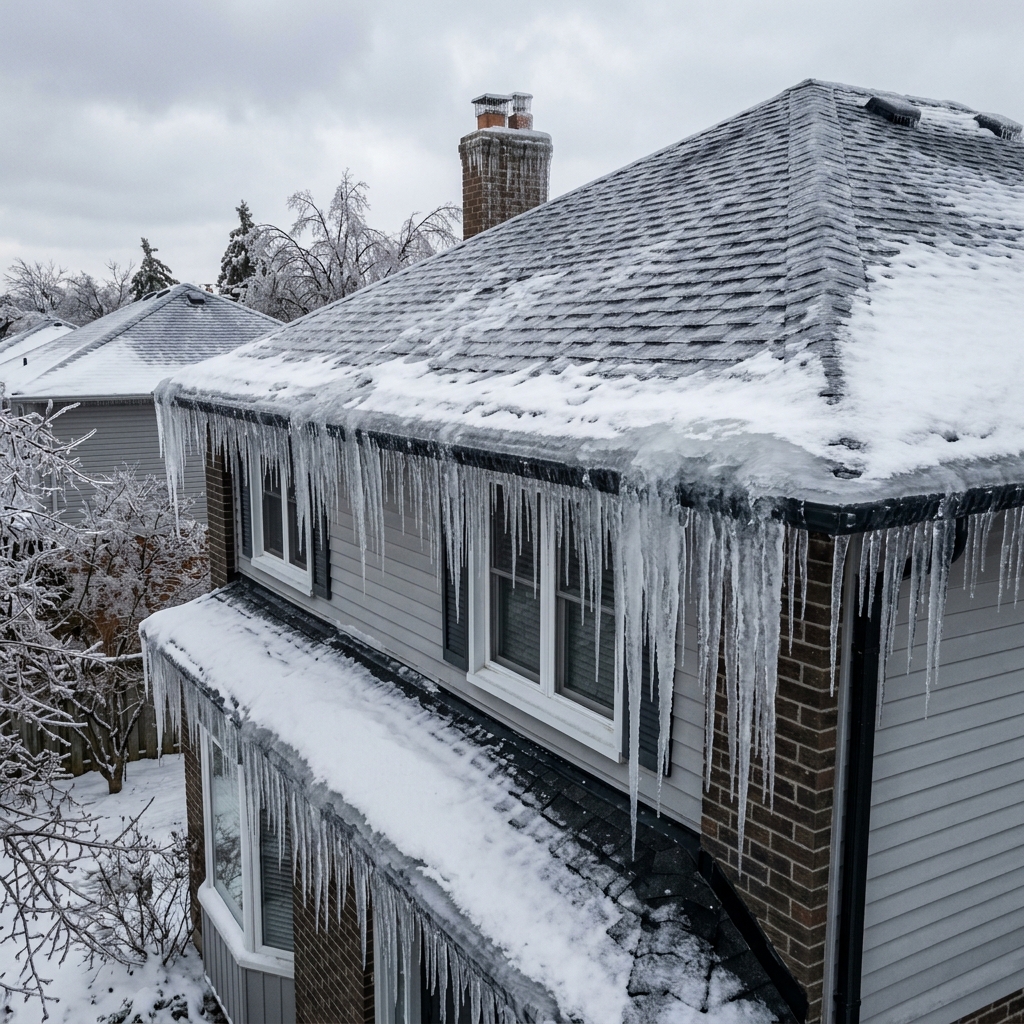
The most expensive consequence of an ice storm is the aggressive formation of massive ice dams at the roof’s edge. An ice dam is a thick, solid wall of ice that builds up along the eaves (the lowest overhang of the roof). It is the absolute worst enemy of your home’s interior.
Ice dams are formed by the interaction of the exterior storm and your home’s internal thermal failures. If your attic lacks sufficient R-60 insulation and proper attic ventilation, expensive heat from your living room violently escapes into the attic. This heat warms the underside of the roof deck, melting the snow and ice resting on the upper sections of the roof. The meltwater trickles down the roof until it hits the overhanging eaves. Because the eaves extend past the exterior walls, they remain freezing cold. The water hits the eaves, instantly refreezes, and forms a massive ice wall.
As the cycle continues, the dam grows, eventually trapping hundreds of gallons of meltwater in a deep, freezing pool directly on your roof. Because shingles are designed to shed water downward—not hold standing water like a bathtub—the pool violently backs up underneath the shingles, destroys the waterproofing underlayment, and pours thousands of dollars of water damage directly into your drywall ceilings, insulation, and expensive hardwood floors.
| Type of Winter Damage | The Physical Mechanics | Immediate Professional Action Required | Financial Risk of Delay |
|---|---|---|---|
| Shattered / Snapped Shingles | Brittle, frozen asphalt is bent backward by high-velocity wind, breaking the fiberglass core. | Surgical extraction and replacement of the broken units once the ice thaws. | Water infiltration rotting the plywood deck. |
| Massive Ice Dams | Trapped heat melts snow; water refreezes at the freezing eaves, creating a wall that pools water backward. | Emergency steam removal of the ice dam; long-term insulation and ventilation upgrade. | Catastrophic ceiling collapse and black mold. |
| Ripped Gutter / Eavestrough | Gutters fill with solid ice expanding outward, tearing the heavy aluminum brackets away from the wooden fascia. | Complete fascia repair and replacement of the seamless aluminum eavestrough system. | Flooded basement foundations from uncontrolled water. |
| Cracked Plumbing Boots | The rubber gasket sealing the vent pipe freezes solid and cracks under the intense expansion pressure of the ice. | Complete removal and replacement of the polyurethane flashing boot with a specialized cold-weather gasket. | Stealthy leaks slowly rotting interior bathroom walls. |
| Tree Branch Impact | Overhanging branches become coated in heavy ice, snap violently under the weight, and spear directly through the roof deck. | Immediate emergency tarping to secure the building envelope against the storm. | Massive interior flooding and structural rafter damage. |
Emergency Triage: What to Do Immediately After the Storm
The morning after a devastating freezing rain event, the city is chaotic. If you suspect your roof has sustained critical damage, you must act with aggressive precision to protect your property and your family.
- The Interior Audit: Do not go outside yet. Walk through your entire upper floor looking aggressively at the ceilings, especially near the exterior walls where the eaves meet the house. Look for dark brown stains, bubbling paint, or drywall that is actively sagging or dripping water. If water is entering, immediately punch a small hole in the blister with a screwdriver to let the water drain cleanly into a bucket, preventing the entire heavy ceiling from collapsing.
- The Exterior Binocular Survey: Safely stand across the street from your home with binoculars. Scan for tree branches that have impaled the roof, sections of shingles that have been ripped away exposing bare wood, or gutters that are visibly hanging off the house at an aggressive angle.
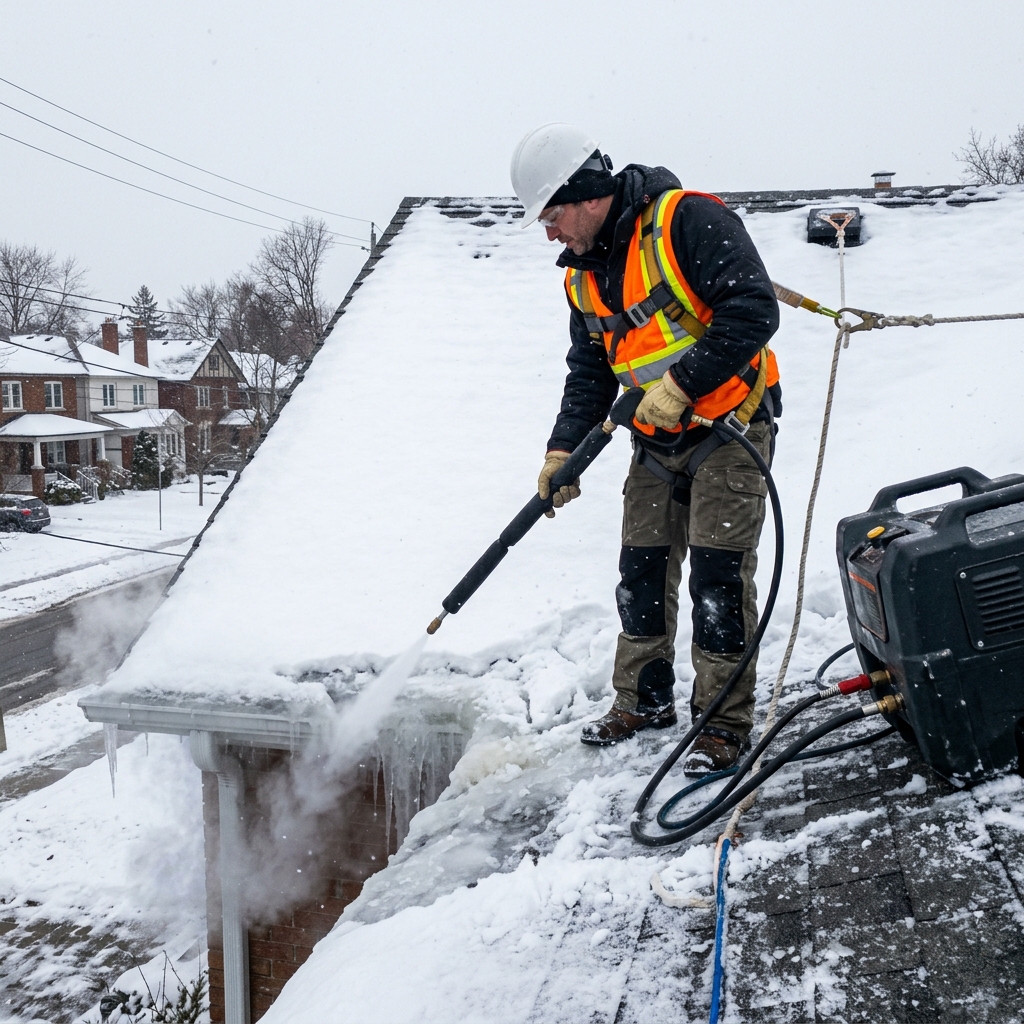
- Do NOT Climb the Roof: This is a critical safety warning. A roof coated in solid ice is a friction-less death trap. Do not attempt to climb a ladder with a hammer to chip away the ice. You will shatter the brittle shingles beneath, instantly destroying your roof, and you face a massive risk of a lethal fall. Professional contractors utilize specialized steam machines and safety harnesses to melt the ice harmlessly.
Navigating the Ontario Home Insurance Labyrinth
Filing a massive claim for ice storm roof damage Toronto insurers will accept requires aggressive documentation and strategic execution. Insurance companies deploy highly trained adjusters to minimize payouts; you must counter with empirical evidence.
1. Document the Devastation Immediately
Before any repairs begin, aggressively photograph all damage. Take wide-angle shots of the entire roof showing the massive ice accumulation, close-ups of fallen tree branches, and highly detailed photos of the interior water damage ruining your ceilings and floors. Keep all physical debris (like broken shingles blown onto your lawn) as physical evidence.
2. Demand an Emergency Tarping Invoice
Your insurance policy legally mandates that you “mitigate further damage.” If a tree branch has pierced the roof, you must hire a professional firm like The Roof Technician to execute an emergency tarping operation immediately. Save the invoice; the insurance company must fully reimburse you for this emergency stabilization effort as part of the overall claim.
3. Beware of “Act of God” Clauses and Maintenance Exclusions
This is where claims die. If the insurance adjuster discovers that your roof was already 25 years old, severely degraded, missing shingles prior to the storm, and completely unmaintained, they will aggressively deny the claim, stating the damage was caused by your “failure to maintain” the property, not the ice storm. To combat this, provide the adjuster with receipts proving you have had annual professional roof inspections and maintenance performed. A pristine maintenance record forces the insurer to accept full liability for the storm damage.
| Insurance Claim Strategy | The Tactical Execution | The Expected Outcome |
|---|---|---|
| Emergency Stabilization | Hire professionals immediately to tarp the roof and steam-remove ice dams before the adjuster arrives. | Proves you fulfilled your legal duty to mitigate further damage; highly favored by adjusters. |
| Detailed Photographic Evidence | Provide 50+ timestamped, high-resolution photos of the roof, the ice, and every square inch of interior water damage. | Removes the adjuster’s ability to deny the severity or scope of the catastrophic event. |
| Independent Contractor Quote | Do not rely solely on the insurance company’s “preferred” estimator. Secure a highly detailed, line-item quote from an elite local roofing firm. | Ensures you receive a payout massive enough to fund a premium roof replacement, not a cheap patch job. |
| Proof of Prior Maintenance | Submit invoices showing professional gutter cleaning, caulking, and minor repairs conducted over the past 3 years. | Defeats the dreaded “failure to maintain” denial clause instantly. |
| Demand “Like Kind and Quality” | If the storm destroyed premium architectural shingles, ensure the settlement pays for premium architectural shingles, not cheap 3-tab variants. | Preserves the aesthetic and financial value of your property’s exterior. |
Preventative Architecture: Defending the Envelope
The ultimate goal is to engineer a roof system so robust that a catastrophic ice storm simply bounces off. For Toronto homeowners, this involves aggressive preventative measures executed during the summer and fall.
- Ice and Water Shield Membrane: During a complete roof replacement, the Ontario Building Code mandates the installation of a rubberized peel-and-stick “Ice and Water Shield” extending 3 feet up from the eaves. At The Roof Technician, we strongly advise extending this impenetrable rubber membrane a massive 6 feet up the roof line on all Toronto homes, providing a completely bulletproof secondary barrier against massive ice dam backups.
- Advanced Attic Ventilation Upgrades: The root cause of ice dams is heat escaping the living space. You must aggressively upgrade your attic insulation to a massive R-60 rating, perfectly seal all pot-light and bathroom fan penetrations through the drywall, and ensure a continuous, high-volume flow of freezing outside air from your soffit vents directly to your ridge vents. A cold roof cannot melt snow; therefore, a cold roof cannot form ice dams.
| Preventative Measure | The Engineering Action | The Damage It Prevents |
|---|---|---|
| Extended Ice & Water Shield (6 ft.) | Rubberized peel-and-stick membrane installed 6 feet up from the eaves. | Completely stops ice dam meltwater from entering the ceiling and walls. |
| R-60 Attic Insulation Upgrade | Blowing 20+ inches of cellulose over the entire attic floor to R-60. | Seals heat inside the home, preventing snow from melting on the roof deck. |
| Aggressive Canopy Trimming | Pruning all overhanging branches back a minimum of 6 feet from the roof edge. | Eliminates the risk of ice-loaded branches snapping and spearing through the deck. |
| Continuous Soffit-to-Ridge Airflow | Installing baffles in every rafter bay and ensuring the ridge vent is fully open. | Maintains a uniformly cold roof deck, making ice dam formation physically impossible. |
Immediate Response Capabilities
When the storm breaks and the ice begins to rip your property apart, you do not have time to interview inexperienced handymen. You require a massive, highly mobilized tactical response from an elite firm carrying millions in liability insurance. The Roof Technician deploys specialized emergency crews equipped with high-powered steam machines and extreme-weather safety gear across Markham, Richmond Hill, Vaughan, and the entire GTA. Contact our emergency dispatch immediately if your roof has sustained critical winter damage.
What is the absolute safest way to remove a massive ice dam from my roof in Toronto?
Will my standard Ontario home insurance automatically cover all ice storm roof damage?
How does freezing rain actually physically destroy a heavy architectural asphalt shingle?
What is the dreaded “Ice and Water Shield,” and why is it so critical?
Can I use chemical rock salt directly on my roof to aggressively melt the ice dam?
How do I permanently stop devastating ice dams from forming every single winter?
Schedule Your Emergency Post-Storm Inspection Today
Do not wait for the spring thaw to discover that a massive winter storm has silently shattered your roof’s waterproofing integrity. An immediate, professional evaluation is the only way to secure an insurance claim and prevent devastating mold growth inside your walls.
Call us immediately at (416) 826-0040 or request an emergency consultation to deploy our rapid-response inspection team.
The Roof Technician has been defending Toronto, Ajax, Pickering, and the surrounding GTA from brutal winter weather for decades. From massive roof replacements to precision structural repair, our master technicians deliver unmatched durability backed by industry-leading warranties.