If you have searched for a spray on roof coating for asphalt shingles in the hope of squeezing a few more years out of a tired roof without paying for a full replacement, you are asking exactly the right question. Across Toronto and the wider GTA, homeowners are increasingly drawn to the idea of a spray on roof coating for asphalt shingles because it promises a lower price tag, a faster turnaround, and less disruption than tearing everything off. But does it actually work in our climate, and is it a smart investment or a short-term patch? At The Roof Technician, we install, repair, and replace hundreds of roofs a year across the region, and we get asked about spray coatings almost weekly. This guide gives you the honest, contractor-level answer.
The short version is this: a spray on roof coating for asphalt shingles can extend the life of a serviceable roof and improve its energy performance, but it is not a miracle cure, it is not right for every roof, and the results depend heavily on the condition of your shingles, the product chosen, and the quality of the application. Below we break down how these coatings behave in Toronto’s demanding weather, what they cost, when they make sense, and when you are better off spending your money on a repair or replacement instead.
What Is a Spray-On Roof Coating for Asphalt Shingles?
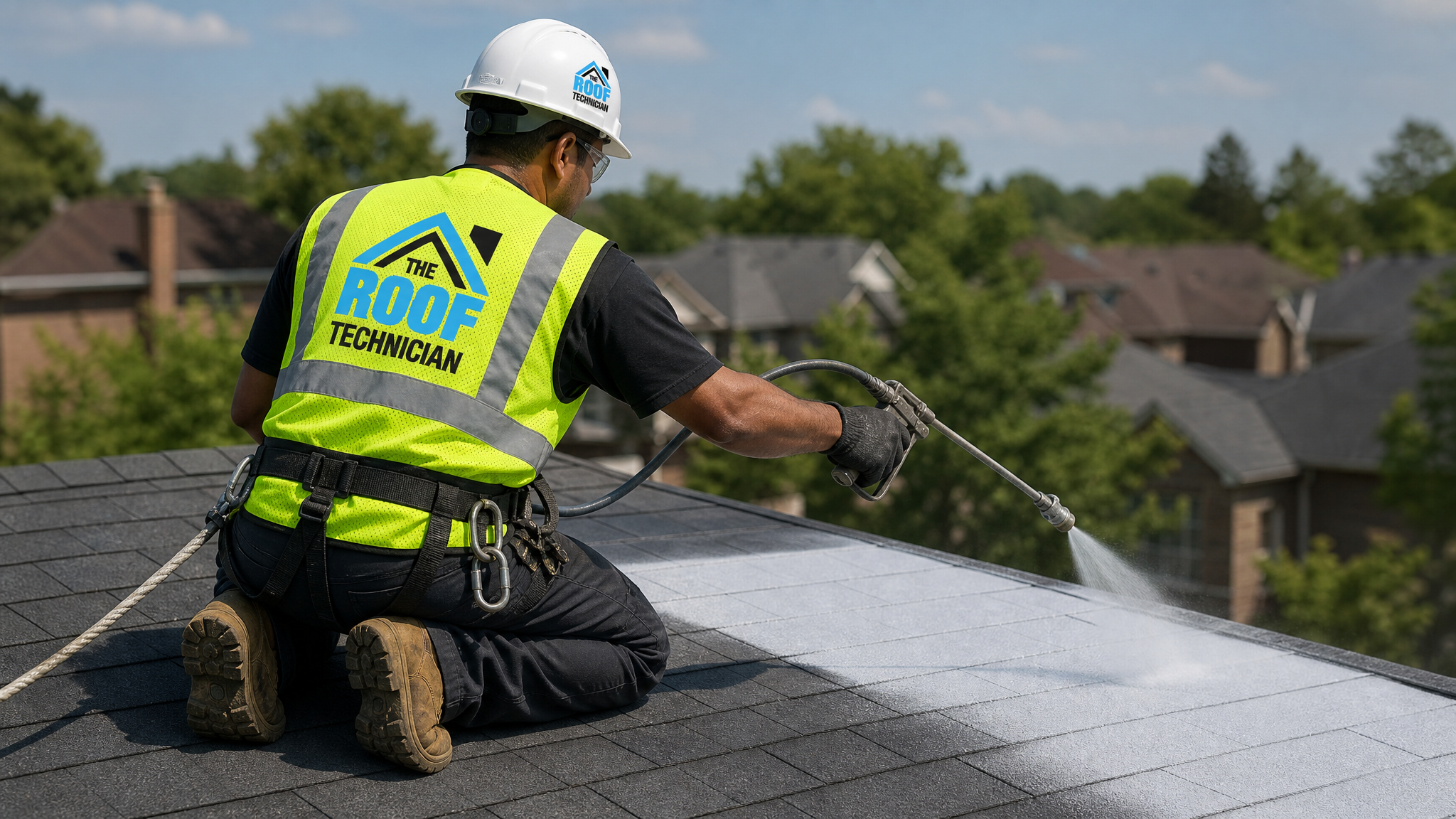
A spray on roof coating for asphalt shingles is a liquid-applied membrane, usually acrylic, silicone, or elastomeric, that is sprayed or rolled over existing shingles to form a continuous protective film once it cures. Rather than replacing the roof, the coating adds a fresh weatherproof layer on top of the granular surface you already have. The goal is to seal minor gaps, restore surface protection lost to years of ultraviolet exposure, reflect solar heat, and slow the aging of the underlying asphalt.
These coatings originated in the flat and low-slope commercial roofing world, where liquid membranes have a long, proven track record. Applying that same technology to sloped residential asphalt shingles is a newer and more debated practice. The physics are different: shingles are designed to shed water through overlapping layers and rely on their granule surface and flexibility to survive freeze-thaw movement and thermal cycling. A coating changes how that surface breathes, sheds water, and expands, which is why the condition of the shingle underneath matters enormously.
It helps to understand what a spray on roof coating for asphalt shingles is genuinely good at. A quality reflective coating can lower attic and surface temperatures during Toronto’s hot, humid summers, reduce granule loss, and add a uniform waterproof skin to a roof that is aged but still structurally sound. What it cannot do is rebuild shingles that are already curling, cracked, brittle, or lifting. Coating a failing roof simply hides the problem for a season or two while the deterioration continues underneath.
How Spray-On Roof Coatings Perform in Toronto’s Climate
Toronto’s climate is unusually hard on roofing materials. Even setting winter aside, our summers bring intense ultraviolet radiation, high humidity, sudden thunderstorms, driving rain, and daily temperature swings that force shingles to expand and contract repeatedly. Any spray on roof coating for asphalt shingles installed here has to tolerate that thermal movement without cracking, peeling, or losing adhesion.
Reflective acrylic and silicone coatings do offer a real advantage during our hottest months. A dark asphalt roof can reach surface temperatures well above 60 degrees Celsius under midsummer sun, radiating that heat into the attic and living space. A light-coloured reflective coating can cut that surface temperature substantially, easing the load on air conditioning and improving comfort on the upper floor. For homeowners without much shade or attic insulation, that benefit is tangible.
The durability picture is more nuanced. Silicone coatings resist ponding water and ultraviolet degradation well but can hold dirt and become slippery. Acrylics are affordable and reflective but wear faster and are sensitive to moisture during curing, which matters given how often GTA summer afternoons turn to rain. Proper attic ventilation also plays a role: a roof that runs cooler and drier from below puts less stress on any surface coating. If you are considering a coating, it is worth having your attic ventilation assessed at the same time, because trapped heat and moisture will shorten the life of the coating and the shingles alike.
Types of Spray-On Coatings Available
Not all coatings are created equal, and choosing the wrong chemistry for your roof and climate is one of the most common ways homeowners waste money. The table below compares the main types of spray on roof coating for asphalt shingles that a GTA contractor might recommend, along with their realistic strengths and weaknesses in our conditions.
| Coating Type | Key Strength | Main Weakness | Typical Lifespan |
|---|---|---|---|
| Acrylic (water-based) | Affordable, highly reflective, easy to apply | Wears faster, sensitive to rain while curing | 5 to 8 years |
| Silicone | Excellent UV and moisture resistance | Attracts dirt, can be slippery, higher cost | 10 to 15 years |
| Elastomeric | Flexes with thermal movement, seals hairline gaps | Needs a sound surface, thickness-dependent | 7 to 12 years |
| Asphalt-based emulsion | Compatible with shingle chemistry, low cost | Less reflective, shorter service life | 3 to 6 years |
For most Toronto homes, a high-quality silicone or elastomeric product delivers the best balance of longevity and weather resistance, though acrylic remains popular for its price and reflectivity. Whatever the chemistry, a spray on roof coating for asphalt shingles is only as good as the surface it bonds to. That is why any reputable installer will inspect, clean, and prime the roof before a single litre of coating is applied. If you want a straightforward opinion on which product suits your specific roof, our team is happy to take a look during a roof repair assessment.
What a Spray-On Coating Costs in the GTA
Cost is usually the reason homeowners look at coatings in the first place, so let us be candid about the numbers. A spray on roof coating for asphalt shingles typically runs a fraction of a full replacement per square foot, but the total depends on roof size, slope, accessibility, the number of coats, and how much preparation and repair the roof needs before coating can begin. The figures below reflect realistic ranges we see across Toronto, Mississauga, and Markham.
| Service | Typical GTA Price Range | Relative to Replacement | Best For |
|---|---|---|---|
| Acrylic coating (single coat) | $1.50 to $2.75 per sq ft | Roughly 20 to 30 percent | Budget-conscious, aged but sound roofs |
| Silicone coating system | $2.75 to $4.50 per sq ft | Roughly 35 to 45 percent | Longer-term protection and reflectivity |
| Coating plus prep and minor repair | $3.50 to $6.00 per sq ft | Roughly 45 to 60 percent | Roofs needing sealing and touch-up |
| Full shingle replacement | $6.00 to $9.00 per sq ft | Baseline | Failing, leaking, or end-of-life roofs |
The important takeaway is the crossover point. Once you add up thorough cleaning, priming, repairs, and two coats of a premium product, a spray on roof coating for asphalt shingles can approach half the cost of simply replacing the roof, while delivering only a fraction of the lifespan. That math is what makes coatings attractive on a genuinely serviceable roof and a poor value on a roof that is nearing the end of its life. When the numbers get close, a new roof is almost always the wiser long-term spend, and you can compare options directly with our roof replacement service.
When a Spray-On Coating Makes Sense, and When It Does Not
The single most important factor in whether a spray on roof coating for asphalt shingles is worth it is the current condition of your shingles. Coating buys time and adds protection on a roof that still has life in it. It cannot reverse structural failure. Here is how we frame the decision for our clients.
A coating is a reasonable choice when your shingles are aged and sun-faded but still lie flat and intact, when granule loss is moderate rather than severe, when there are no active leaks, and when the roof deck and flashing are sound. In those cases a quality coating can add several years of reflective protection and delay the cost of replacement. It is also a sensible option for a low-slope section of an otherwise steep roof, where the technology closely mirrors proven flat roofing systems.
A coating is the wrong choice when shingles are curling, cracking, or lifting, when large areas of granule are gone and the asphalt mat is exposed, when there is any sign of an active leak or rot in the decking, or when the roof is already past twenty years of age. Spraying a coating over these conditions traps the problem, voids most shingle manufacturer warranties, and can complicate the eventual replacement because the coated shingles are messier and heavier to remove. If your roof shows any of these red flags, invest in repair or replacement rather than a coating, and read genuine homeowner experiences on our reviews page to see how we guide people through that decision.
The Application Process Done Right
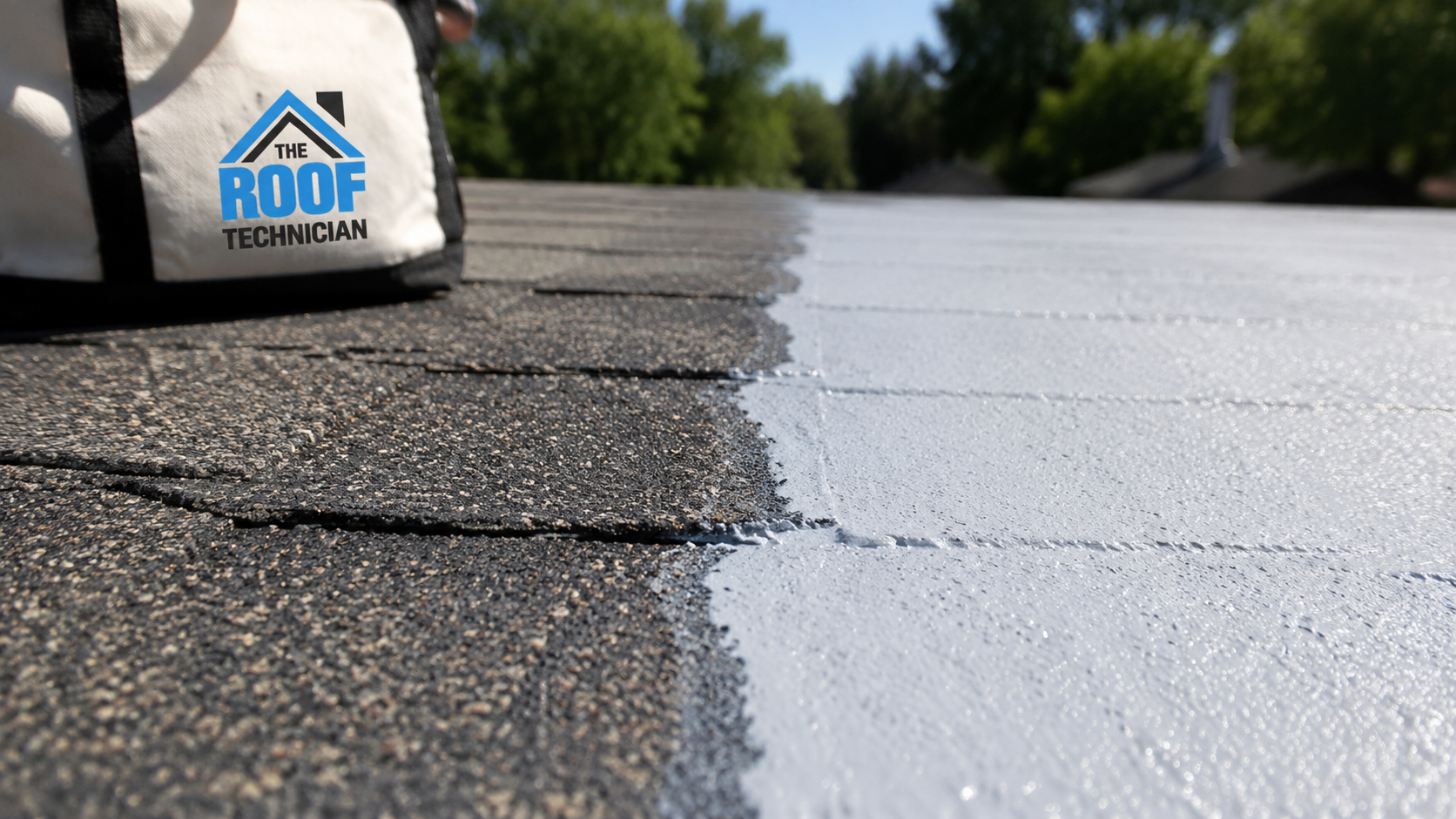
A durable result comes far more from workmanship than from the product on the label. A rushed or poorly prepared spray on roof coating for asphalt shingles will peel, blister, or wash away, while a carefully installed one can perform for a decade or more. When our crews coat a roof, the process follows several non-negotiable stages.
First comes a thorough inspection to confirm the roof is a suitable candidate and to catalogue any repairs needed before coating. Next, the entire surface is cleaned to remove moss, dirt, loose granules, and biological growth, because coatings will not bond to a contaminated surface. Damaged shingles are repaired or replaced, and flashing, vents, and penetrations are sealed. A compatible primer is then applied where the product requires it. Only after all of that does the coating go on, typically in two coats applied at the manufacturer’s specified thickness, with adequate cure time between them and, critically, a clear stretch of dry summer weather.
Timing is everything in our climate. Because most coatings must cure without rain for a set window, our teams watch the forecast closely and schedule application during stable dry spells, which is one reason summer is the ideal season for this work in the GTA. Cutting corners on preparation or applying a coating just before a thunderstorm is the fastest way to a failed job. We serve homeowners across the region, and you can confirm we cover your neighbourhood on our service areas page or reach out through our contact page to book an inspection.
Coating Versus Repair Versus Replacement
To pull the decision together, it helps to see coating side by side with the two alternatives. The table below summarizes how a spray on roof coating for asphalt shingles compares with a targeted repair and a full replacement across the factors that matter most to GTA homeowners.
| Factor | Spray-On Coating | Targeted Repair | Full Replacement |
|---|---|---|---|
| Upfront cost | Low to moderate | Lowest | Highest |
| Added lifespan | 5 to 12 years | Fixes one issue only | 25 to 40 years |
| Energy benefit | Significant if reflective | None | Moderate to high |
| Ideal roof condition | Aged but sound | Mostly sound, one problem | Failing or end-of-life |
| Warranty impact | May void shingle warranty | Neutral | New full warranty |
Seen this way, a coating occupies a specific middle ground. It is not a repair, because it protects the whole roof rather than fixing one flaw, and it is not a replacement, because it cannot reset the clock on a worn-out roof. For the right roof, at the right stage of its life, it is a sensible and cost-effective step. For the wrong roof, it is money spent delaying an unavoidable replacement. An honest inspection is the only way to know which category yours falls into, and our full range of services is outlined on our homepage.
Does a spray on roof coating for asphalt shingles actually stop leaks?
How long does a spray-on coating last on a Toronto roof?
Will a spray on roof coating for asphalt shingles void my warranty?
Is coating cheaper than replacing my roof?
Can I apply a coating myself, or should I hire a professional?
When is the best time to coat a roof in the GTA?
Get an Honest Answer on a Spray on Roof Coating for Asphalt Shingles
Deciding whether a spray on roof coating for asphalt shingles is the right move for your home should never come down to a sales pitch. It should come down to the real condition of your roof, your budget, and how many more years you plan to stay in the house. The team at The Roof Technician will inspect your roof, tell you honestly whether a coating, a repair, or a replacement gives you the best value, and never push a solution your roof does not need. You can also browse common questions on our FAQ page before you book.
Call us today at (416) 826-0040 or request a free inspection to get started.
The Roof Technician proudly serves Toronto, Mississauga, Markham, Vaughan, Brampton, and Oakville.