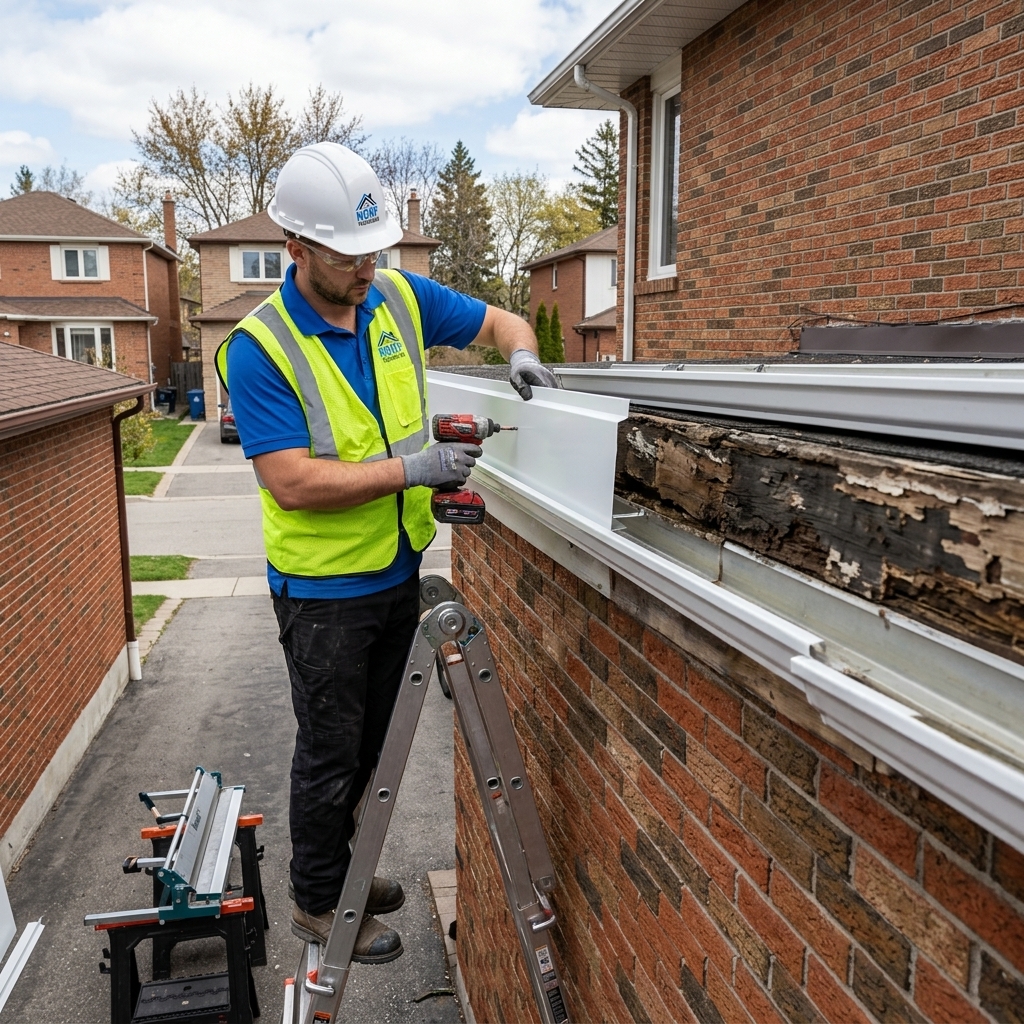
The soffit and fascia on your Toronto home serve as the critical bridge between your roof system and the rest of the building envelope. While they may not attract as much attention as the shingles or interior finishes, damaged or deteriorating soffit and fascia can lead to cascading problems that affect the entire roof structure — from compromised attic ventilation and ice dam formation to animal intrusion, wood rot that spreads to rafters and sheathing, and water damage to interior walls and ceilings. Understanding the role of soffit and fascia, recognizing the signs of damage, and knowing the costs and options for repair and replacement helps Toronto homeowners protect their roofing investment and prevent small problems from becoming major structural issues.
What Are Soffit and Fascia and Why Do They Matter?
Soffit is the material covering the underside of the roof overhang (the area between the exterior wall and the roofline). Fascia is the vertical board running along the edge of the roof where the gutters are attached. Together, they perform essential functions for your Toronto home’s roof system.
| Component | Location | Primary Functions | What Happens When It Fails |
|---|---|---|---|
| Soffit | Underside of roof overhang | Attic ventilation (intake air), weather protection, pest barrier, aesthetic finish | Attic overheats, ice dams form, animals enter attic, moisture damage |
| Fascia | Vertical board at roof edge | Supports gutter system, protects rafter tails, weather seal, aesthetic finish | Gutters sag/detach, rafter tails rot, water intrusion behind wall |
| Drip edge | Metal strip over fascia under shingles | Directs water into gutter, protects fascia from water contact | Water runs behind fascia, rot accelerates dramatically |
Signs of Soffit and Fascia Damage in Toronto
Toronto’s climate is particularly harsh on soffit and fascia — freeze-thaw cycles, ice buildup, heavy rain, and temperature extremes all accelerate deterioration, especially on wood soffit and fascia components common on older Toronto homes.
- Peeling or flaking paint on fascia: The earliest sign of moisture penetration — paint fails because the underlying wood is absorbing water and swelling. If caught early, sanding, priming, and repainting can buy several more years before replacement is needed
- Soft or spongy wood: If you press the fascia board and it feels soft, the wood rot has progressed beyond surface damage. Soft fascia must be replaced — it cannot hold gutter fasteners and will spread rot to adjacent components
- Visible holes or gaps in soffit: Holes in soffit panels are entry points for raccoons, squirrels, birds, and insects. Toronto’s raccoon population is particularly aggressive about exploiting soffit damage to access warm attics
- Sagging or detached gutters: Gutters are fastened to the fascia board. When fascia rots, gutter fasteners lose holding power and the gutter system begins to pull away from the roofline
- Water stains on interior walls near exterior walls: Water penetrating behind damaged fascia travels down the wall cavity, showing up as stains or bulging on interior drywall near the ceiling-wall junction
- Ice dams concentrated at specific locations: If ice dams form in specific areas but not others, the soffit ventilation in those areas may be blocked or damaged — preventing proper attic air circulation that keeps the roof surface cold
- Animal activity in attic: Scratching sounds, droppings, or damaged insulation in the attic often trace back to entry points through damaged soffit panels
Soffit and Fascia Material Options
| Material | Cost per Lin Ft | Lifespan | Maintenance | Best For |
|---|---|---|---|---|
| Aluminum | $8-$15 | 30-50 years | Very low — no painting needed | Most Toronto homes — best overall value |
| Vinyl | $6-$12 | 20-30 years | Low — no painting, may fade/crack | Budget-friendly applications |
| Wood (cedar/pine) | $10-$20 | 15-25 years | High — painting every 3-5 years | Heritage/character homes requiring wood |
| Fibre cement (HardieSoffit) | $12-$20 | 30-50 years | Low — occasional painting | Premium durability with paintable finish |
| Composite/engineered wood | $12-$22 | 25-40 years | Low-moderate | Wood appearance without wood maintenance |
The Roof Technician recommends aluminum soffit and fascia for most Toronto homes — it delivers the best combination of durability, weather resistance, ventilation performance (perforated soffit panels provide continuous air intake), low maintenance, and aesthetic quality. Aluminum does not rot, does not attract insects or animals, does not require painting, and maintains its appearance for 30-50 years in Toronto’s climate.
Soffit and Fascia Repair vs. Replacement
| Condition | Recommended Action | Cost Range |
|---|---|---|
| Surface paint failure only (wood solid) | Scrape, prime, repaint | $3-$6 per linear foot |
| Localized rot (1-2 boards) | Replace damaged boards only | $15-$30 per linear foot |
| Widespread rot or damage (30%+ of perimeter) | Full replacement with aluminum | $10-$20 per linear foot |
| Full perimeter soffit and fascia replacement | Remove all, install new aluminum | $3,000-$10,000 (average Toronto home) |
| Soffit and fascia + gutter replacement | Full system upgrade | $5,000-$15,000 |
The Connection Between Soffit, Ventilation, and Ice Dams
Soffit ventilation is a critical component of Toronto’s ice dam prevention strategy. Properly functioning vented soffit panels provide the intake air that flows through the attic and exits through ridge vents or roof vents — maintaining a cold roof surface that prevents snow from melting unevenly and refreezing at the eaves. When soffit vents are blocked by insulation, damaged panels, or paint buildup, attic ventilation is compromised and ice dam risk increases dramatically. The Roof Technician always inspects soffit ventilation as part of every roof assessment and recommends attic ventilation improvements when soffit intake is inadequate.
The Soffit and Fascia Replacement Process
Understanding the process for soffit and fascia replacement helps Toronto homeowners plan the project and evaluate contractor quotes accurately. The Roof Technician follows a systematic process for every soffit and fascia replacement project in Toronto.
- Inspection and assessment: Thorough inspection of all existing soffit and fascia around the home’s perimeter, identifying areas of rot, damage, pest entry, and ventilation deficiencies. Assessment of underlying rafter tails and sheathing for secondary damage
- Gutter removal (temporary): Gutters are carefully removed and set aside for reinstallation after new fascia is installed. If gutters are also due for replacement, new gutters are included in the project scope
- Old material removal: Deteriorated wood soffit and fascia boards are removed. All rotted wood is taken back to solid material. If rafter tails show rot, they are sistered with new treated lumber
- Substrate preparation: New treated lumber sub-fascia boards are installed where needed to provide a solid, flat nailing surface for the new aluminum fascia wrap
- Aluminum fascia installation: Custom-bent aluminum fascia (typically .019 gauge or heavier) is wrapped around the sub-fascia board, providing a maintenance-free, waterproof exterior finish. Colour-matched aluminum nails provide a clean, professional appearance
- Vented soffit panel installation: Perforated aluminum soffit panels are installed in the soffit channels, providing continuous intake ventilation while preventing pest entry. The Roof Technician uses fully vented soffit panels (rather than solid panels) to maximize attic intake airflow
- F-channel and J-channel trim: Aluminum trim channels provide clean, finished edges where soffit meets the wall and where soffit meets the fascia
- Gutter reinstallation: Existing gutters (or new gutters) are reinstalled on the new fascia with proper slope for drainage
Common Questions About Soffit and Fascia Materials
Toronto homeowners frequently ask about the differences between aluminum and vinyl soffit and fascia materials. While both are maintenance-free alternatives to wood, aluminum is the superior choice for Toronto’s climate for several reasons. Aluminum maintains its structural integrity across Toronto’s full temperature range (-30°C to +35°C) — vinyl becomes brittle in extreme cold and can crack from impact or wind pressure during winter storms. Aluminum does not expand and contract as much as vinyl with temperature changes, resulting in tighter joints and fewer gaps that can admit water or pests. Aluminum is available in a wider range of colours and can be painted if a colour change is desired in the future — vinyl cannot be painted and its colour options are limited. Aluminum has higher fire resistance than vinyl, which melts and burns when exposed to flame. And aluminum soffit and fascia has a longer lifespan (30-50 years vs. 20-30 years for vinyl) and retains its appearance better over time without the fading, chalking, and warping that vinyl can exhibit after 15-20 years of UV exposure. The Roof Technician exclusively installs aluminum soffit and fascia for Toronto residential projects because the performance advantages justify the modest cost premium over vinyl.
Seasonal Soffit and Fascia Maintenance for Toronto
Proactive seasonal maintenance extends the life of both wood and aluminum soffit and fascia in Toronto. In spring, inspect all soffit panels for ice dam damage, lifted panels, and winter condensation staining. Check fascia for frost heave damage where gutters were loaded with ice. In summer, look for wasp and bee nests building in soffit channels — these pests are attracted to the sheltered, warm environment under the soffit. In fall, clear all debris from soffit vent openings — leaves, seeds, and pine needles can block the perforated ventilation openings, reducing attic intake airflow and increasing ice dam risk through the winter. Also inspect fascia for carpenter ant and woodpecker damage — both are common in Toronto and target deteriorating wood fascia. In winter, monitor for ice dam formation at the eaves — ice dams indicate inadequate soffit ventilation or insulation problems that should be addressed in spring. The Roof Technician includes soffit and fascia inspection as part of every comprehensive roof inspection — ensuring that these critical edge components receive the same attention as the primary roof surface.
For Toronto homeowners planning a roof replacement, bundling soffit and fascia replacement with the re-roofing project is the most cost-effective approach. The labour savings from having the same crew handle both components, combined with the scaffolding already being in place, typically reduces the soffit and fascia portion of the project by 20-30% compared to a standalone replacement. The Roof Technician provides integrated quotes for roof replacement with soffit and fascia as a standard part of every roofing proposal.
How much does soffit and fascia replacement cost in Toronto?
What is the best material for soffit and fascia in Toronto?
How do I know if my soffit and fascia need replacing?
Can damaged soffit cause ice dams?
Should soffit and fascia be replaced when re-roofing?
Do raccoons damage soffit in Toronto?
Protect Your Roof Edge — Call The Roof Technician
The Roof Technician provides expert soffit and fascia repair and replacement services across Toronto, Mississauga, Brampton, Oakville, Burlington, Vaughan, Markham, and the full GTA. We replace deteriorated wood with maintenance-free aluminum, restore proper attic ventilation, and protect your home from water damage and pest intrusion.
Call (416) 826-0040 or request a free soffit and fascia inspection.
The Roof Technician — Toronto’s trusted roofing contractor for roof replacement, roof repair, soffit and fascia, and attic ventilation across the GTA.