If you have been putting off dealing with a damaged, leaking, or ageing garage or shed roof, summer 2026 is the ideal window to act. Garage roof replacement in Toronto is a project that benefits enormously from warm, dry weather — adhesives bond properly, shingles seal firmly, and contractors are not battling ice or frozen decking. At The Roof Technician, we complete dozens of garage and outbuilding roof replacements across the GTA every summer, and this guide covers everything Toronto homeowners need to know: realistic costs, the best materials for our climate, when a City of Toronto building permit is required, and how to choose a contractor you can trust.
Garages and sheds are easy to overlook when budgeting for home maintenance. Because these structures rarely show interior water damage as dramatically as a house roof, problems can quietly worsen for months. By the time you notice sagging, rot, or daylight through the decking, a straightforward garage roof replacement in Toronto can turn into a more expensive structural repair. Acting proactively this summer — while the weather is ideal for roof work — is always the smarter, more cost-effective choice.
This guide is specifically written for Toronto-area homeowners in 2026. Whether your garage is a single-car detached structure in Markham, a two-car garage in Mississauga, a large workshop in Vaughan, or a modest garden shed in Oakville, you will find current pricing, material comparisons, and practical guidance below.
Why Garage Roof Replacement in Toronto Is a Summer Priority
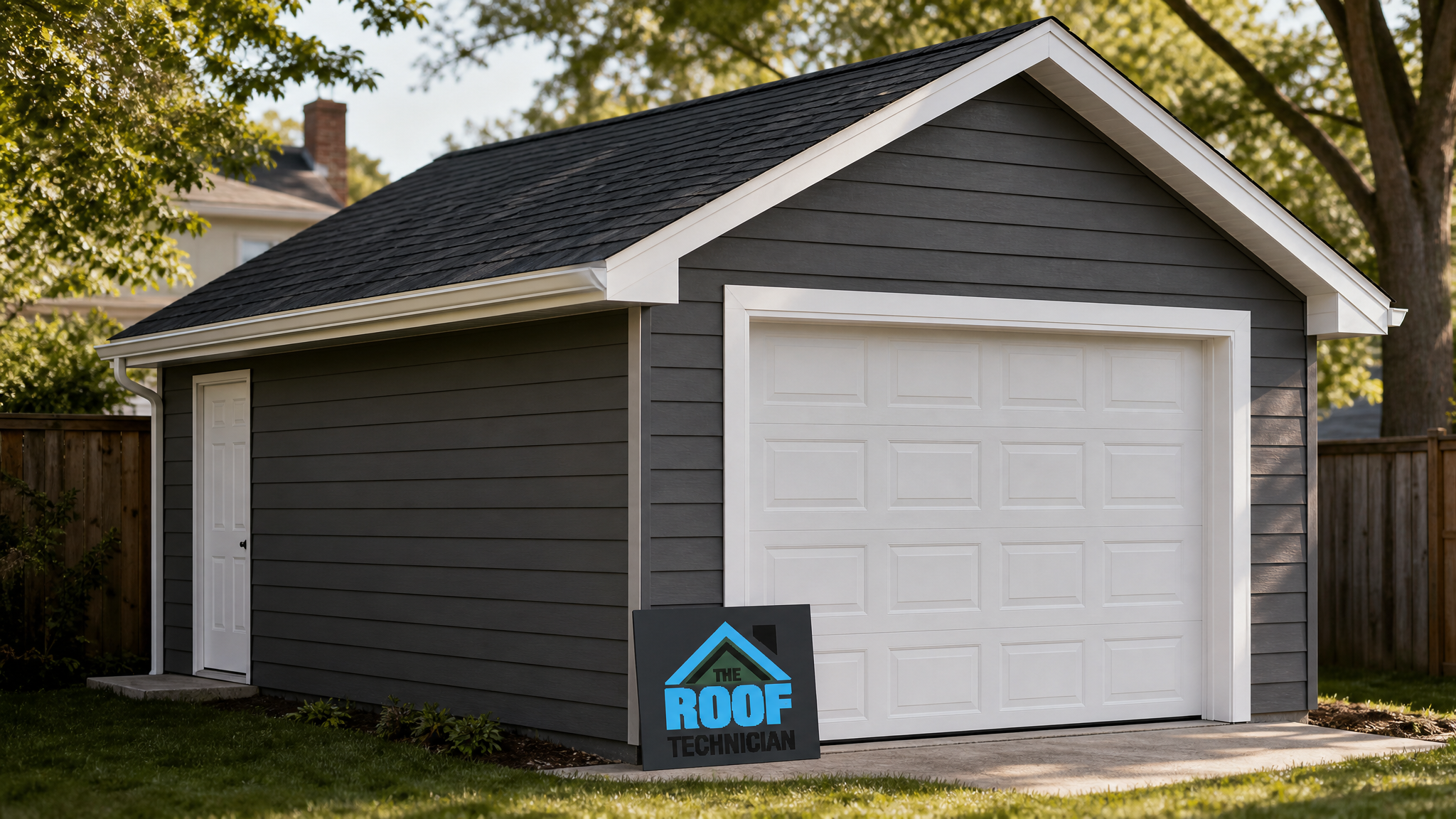
The summer months — June through September — represent the best roofing window in the GTA. Daytime temperatures between 18°C and 32°C are ideal for asphalt shingle installation. The self-sealing strips on shingles activate properly in heat, creating a watertight bond that resists wind uplift. In contrast, shingles installed below 10°C must be hand-sealed, adding labour cost and increasing the risk of improper adhesion.
For garage roof replacement in Toronto specifically, summer scheduling means faster project completion (dry days allow uninterrupted work), lower risk of moisture being trapped under new materials, and the ability to leave a garage open during work without concern about interior temperature. Most single-car garage roof replacements can be completed in a single day during summer. A two-car or tandem garage typically takes one to two days. Compare that to shoulder-season projects, which often stretch longer due to early morning frost delays or unexpected rain days.
Beyond installation quality, summer is also when you can most easily identify problems. Walk around your garage and shed this month and look for: curled, cracked, or missing shingles; granules accumulating in gutters or on the garage floor; visible sagging or soft spots when you press on fascia boards; dark staining or water rings on interior ceiling joists; and daylight visible between the roof decking and ridge. Any of these signs suggest it is time to schedule an inspection and likely proceed with a full garage roof replacement in Toronto rather than patching.
UV exposure is also a factor specific to summer in Ontario. Flat or low-slope garage roofs that use modified bitumen or torch-on membranes can blister and delaminate under prolonged UV bombardment. If your garage has a flat roof showing bubbling or open seams, summer is the season to address it before autumn rains exploit those weaknesses. Our flat roofing services cover these membrane systems for garages and outbuildings across the GTA.
2026 Cost Breakdown for Garage and Shed Roof Replacement in Toronto
Pricing for garage roof replacement in Toronto varies based on structure size, roof pitch, material choice, decking condition, and accessibility. The tables below provide realistic 2026 ranges based on our current project pricing across the GTA. All figures are in Canadian dollars and include labour, materials, disposal of old roofing, and standard fasteners. They exclude permit fees (covered in the permit section below).
| Structure Type | Typical Footprint | Asphalt Shingles (3-tab) | Architectural Shingles | Metal Roofing |
|---|---|---|---|---|
| Single-car detached garage | 14 ft x 22 ft (308 sq ft) | $1,400 – $1,900 | $1,900 – $2,600 | $3,200 – $4,500 |
| Double-car detached garage | 22 ft x 24 ft (528 sq ft) | $2,200 – $3,000 | $3,000 – $4,200 | $5,000 – $7,500 |
| Large garage / workshop | 24 ft x 30 ft (720 sq ft) | $2,900 – $3,900 | $4,000 – $5,500 | $6,800 – $10,000 |
| Small garden shed | 8 ft x 10 ft (80 sq ft) | $650 – $950 | $850 – $1,200 | $1,400 – $2,200 |
| Large shed / storage building | 12 ft x 20 ft (240 sq ft) | $1,100 – $1,600 | $1,500 – $2,200 | $2,800 – $4,200 |
These prices assume the existing decking (typically 5/8″ OSB or plywood) is in sound condition. If decking replacement is required, add approximately $3.00 – $5.00 per square foot for materials and labour. On a single-car garage, expect an additional $400 – $900 if all decking must be replaced. Full decking replacement is more common on older garages (pre-1990) and on structures that have had multiple shingle layers installed over the years.
The following table breaks down cost components for a mid-range double-car garage roof replacement in Toronto using architectural shingles, to give you a sense of how the total invoice is composed.
| Cost Component | Description | Estimated Cost (CAD) |
|---|---|---|
| Tear-off and disposal | Removal of existing shingles, underlayment, and debris; bin rental and tipping fees | $400 – $650 |
| Decking inspection and repair | Spot replacement of damaged OSB/plywood sections (assumes 10–20% replacement) | $150 – $350 |
| Ice and water shield | 1.5-metre peel-and-stick membrane along eaves and valleys | $120 – $200 |
| Synthetic underlayment | Full-coverage breathable underlayment over remaining field area | $100 – $175 |
| Architectural shingles (materials) | Approx. 6 squares at $120–$160/square installed | $720 – $960 |
| Ridge cap and starter strip | Pre-formed ridge cap shingles and starter course | $80 – $130 |
| Drip edge and flashing | Galvanised or aluminium drip edge; step flashing where applicable | $100 – $200 |
| Labour | Installation crew (2–3 workers, 1 day) | $800 – $1,200 |
Labour represents the single largest variable. Garages with steep-pitch roofs (above 6:12) require additional safety equipment and slower work pace, adding 15–25% to labour costs. Garages with complex roof geometry — hips, dormers, or multiple valleys — also carry premium labour rates. For flat-roof garages, pricing follows a different model; visit our flat roofing page for membrane-specific pricing and options.
Material Options for Garage Roof Replacement in Toronto
Choosing the right material for your garage roof replacement in Toronto depends on your budget, the roof pitch, how long you plan to stay in the home, and the visual compatibility with your house roof. Here are the main options available in 2026:
3-Tab Asphalt Shingles remain the lowest-cost option and are entirely adequate for a basic detached garage or garden shed. They carry a 20–25 year manufacturer warranty but typically perform for 15–18 years in Toronto’s climate due to freeze-thaw cycling. They are lightweight, easy to install, and widely available. If your garage roof is simple (low pitch, no complex geometry) and you are not planning to match the house roof aesthetics, 3-tab is a practical choice.
Architectural (Laminate) Shingles are the most popular choice for garage roofs that need to visually complement the house. They are thicker, more impact-resistant, and carry warranties of 30–50 years. Their dimensional texture mimics cedar shake and adds curb appeal. In Toronto’s market, architectural shingles account for the majority of residential roofing installations, and we recommend them as the default for any garage that is visible from the street or adjacent to the home. Our roof replacement page covers architectural shingle options in detail.
Metal Roofing (standing seam or steel shingles) is the premium option for garages, offering a 40–70 year lifespan with minimal maintenance. Metal reflects UV radiation effectively — a meaningful benefit for garages used as workshops where interior temperature matters. It is also the best choice for flat or very low-slope roofs that drain toward a central scupper. The higher upfront cost is offset by the near-elimination of future replacement costs during your ownership.
Modified Bitumen / Torch-On Membrane is the standard solution for truly flat garage roofs. A two-ply torch-applied system with a granulated cap sheet provides 20–25 years of service and handles Toronto’s temperature extremes well. It is compatible with rooftop patios or green roof assemblies if you ever plan to convert the garage roof into usable space.
Toronto Building Permit Requirements for Garage Roof Replacement
One of the most common questions we receive from homeowners planning garage roof replacement in Toronto is whether a building permit is required. The answer depends on the scope of work and the municipality where the garage is located.
Under the City of Toronto’s Building Code requirements, a permit is generally not required for a like-for-like roof covering replacement — meaning you are replacing shingles with shingles of the same type, without altering the roof structure, pitch, or drainage system. This is the most common garage roof replacement scenario and can proceed without a permit.
A permit is required in the following situations:
- You are changing the roof structure (raising the pitch, adding a dormer, or altering the framing)
- You are adding a new skylight or roof opening where none existed
- The garage is being converted from a flat to a pitched roof, or vice versa
- More than 50% of the structural roof framing is being replaced at once
- The garage is a heritage property or is within a heritage conservation district
For homeowners in Mississauga, Brampton, Markham, Vaughan, Oakville, and Burlington, the local municipal standards apply rather than the City of Toronto’s. While these are broadly similar, there can be minor differences in the thresholds for structural work requiring permits. Our team handles permit applications for clients across the GTA when required — just let us know during your consultation if your project falls into a permit-required category.
One important caution: even when a permit is not required for the roofing work itself, you must ensure the garage structure meets current zoning setback requirements. If the garage was built closer to the property line than today’s zoning allows, triggering a permit for roof work could require you to bring the entire structure into compliance. For most standard detached garages in established Toronto neighbourhoods, this is not an issue, but it is worth confirming with your local planning department before starting work if you have any doubt about your garage’s zoning compliance. Our team is familiar with the permit landscape across all our service areas and can help you navigate these questions.
What to Expect During the Garage Roof Replacement Process
Understanding the sequence of work helps homeowners prepare their property and set realistic expectations. A standard garage roof replacement in Toronto follows this process:
Pre-work preparation: Move vehicles out of the garage and clear the immediate perimeter. Roofing debris — old shingles, nails, and underlayment — will be dropped from the roof edge into a bin or onto a tarp. Keep children and pets indoors during the tearoff phase. If the garage is attached to the house, close interior doors and windows to limit dust infiltration.
Tearoff: The existing shingles, underlayment, and any deteriorated ice-and-water shield are removed down to the bare decking. On a single-car garage, tearoff typically takes 1–2 hours. Our crew inspects every square foot of decking as it is exposed, probing for soft spots, rot, or delamination. Damaged sections are replaced with new OSB or plywood before any new materials are applied.
Decking repair and preparation: New decking panels are fastened with ring-shank nails at 6-inch centres. All nail heads are counter-sunk to prevent bumps in the finished surface. The deck surface is swept clean before underlayment is applied.
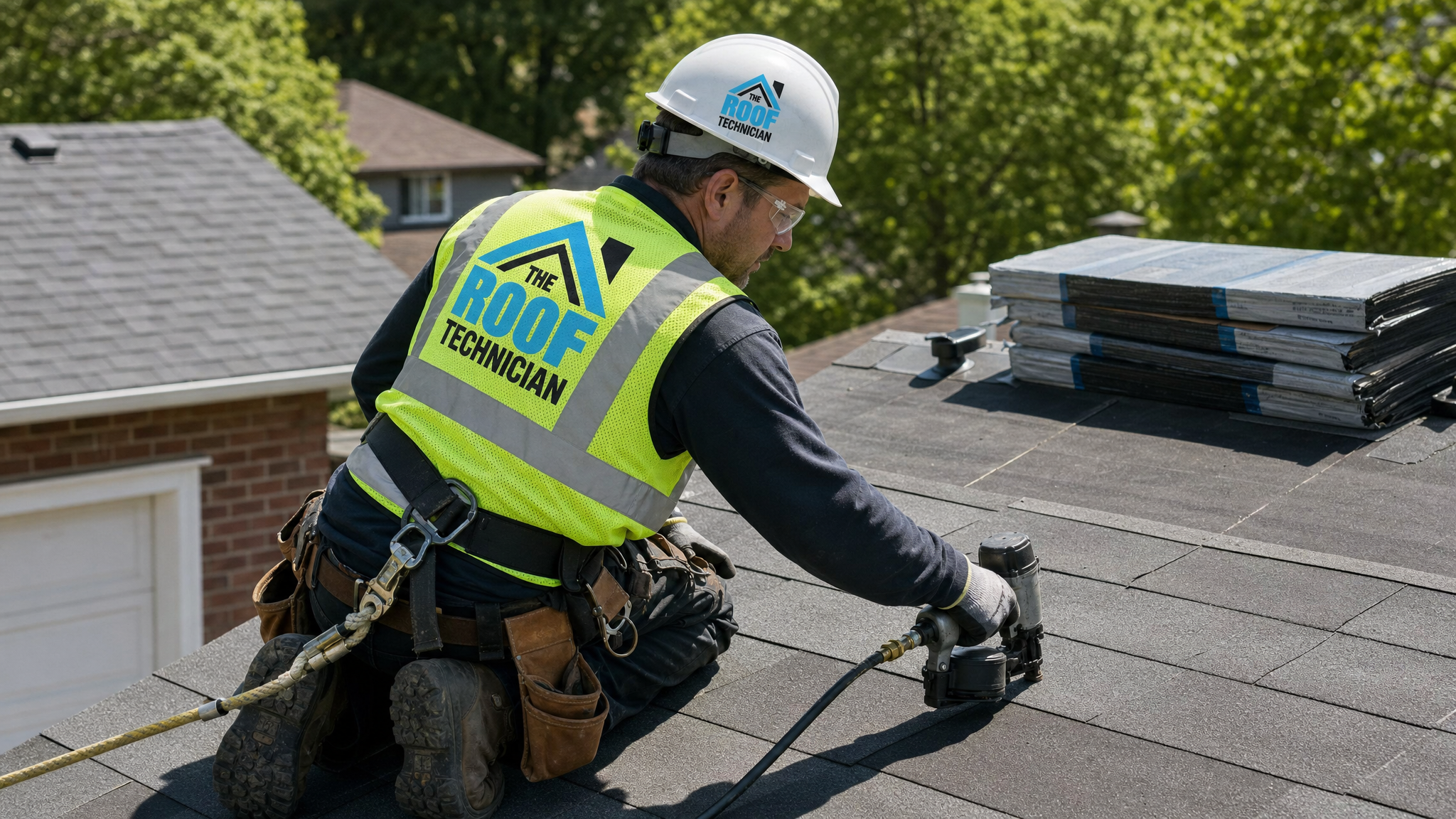
Underlayment and ice-and-water shield: Along the eaves and in valleys, we install a self-adhering ice-and-water shield — a critical layer for Toronto’s climate even in the summer installation season. This membrane protects against any future ice dam formation and provides a waterproof backup if shingles are ever lifted by high winds. Synthetic underlayment covers the remaining field area.
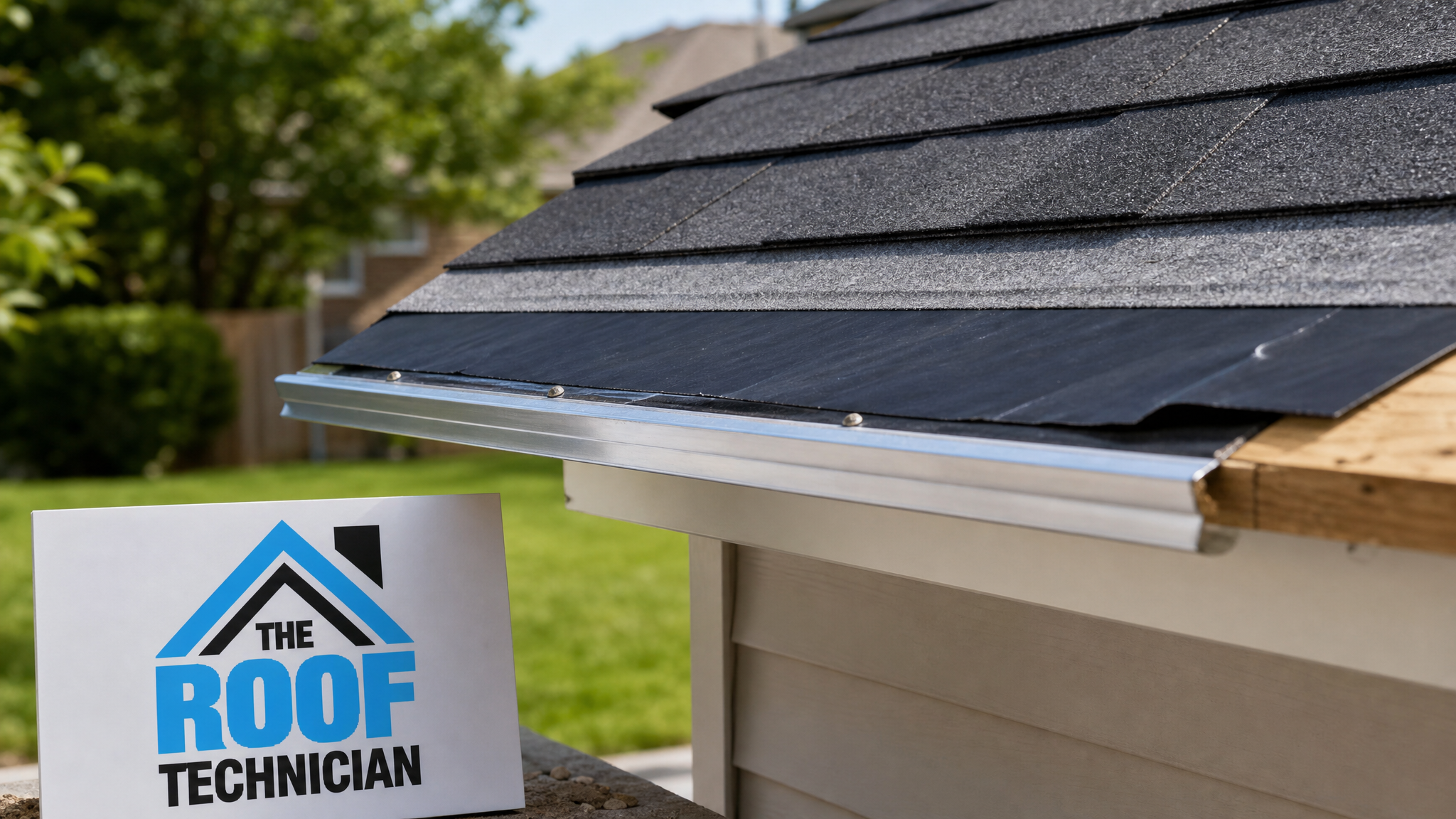
Drip edge and flashing: Galvanised or aluminium drip edge is installed along all eaves and rakes. Step flashing is applied wherever the roof meets a wall (common on attached garages or garages with lean-to additions). Proper flashing is the most commonly skipped step by low-bid contractors, and it is the most frequent cause of chronic leaks at walls and valleys. For proper ventilation context on closed garages, see our attic ventilation guide.
Shingle installation: Starter strips are applied at eaves and rakes. Field shingles are installed with a staggered 5-inch exposure from bottom to top. Ridge cap shingles complete the peak. The total installation time for a single-car garage is typically 3–5 hours.
Cleanup and inspection: Our crew uses magnetic sweepers to collect nails from the driveway and surrounding area. All debris is bagged and removed from site. A final walkthrough with the homeowner covers the finished work, the warranty documentation, and any items noted for future attention.
Choosing a Contractor for Garage Roof Replacement in Toronto
The garage roof replacement market in Toronto includes a wide spectrum of contractors — from fully licensed, insured roofing companies to unlicensed weekend crews operating without proper insurance or WSIB coverage. The low price offered by the latter can be tempting, but the risks are significant: no recourse if work is defective, no liability coverage if a worker is injured on your property, and no manufacturer warranty because the shingles were not installed by a certified contractor.
When evaluating contractors for your garage roof replacement in Toronto, look for the following:
- WSIB clearance certificate: Confirms the contractor’s workers are covered under Ontario’s Workplace Safety and Insurance Board. Without this, a worker injured on your property could potentially make a claim against your homeowner’s policy.
- Commercial general liability insurance: Minimum $2 million coverage. Ask for a certificate of insurance naming you as additionally insured.
- Manufacturer certification: Preferred contractors certified by manufacturers like IKO, GAF, or BP can offer enhanced labour warranties beyond the standard offering.
- Written quote with line-item detail: Avoid verbal quotes or single-line invoices. You should see separate line items for tearoff, decking, underlayment, shingles, flashing, labour, and disposal.
- References and reviews: Look for contractors with a verifiable local track record. You can read feedback from our past clients on our reviews page and on Google.
If you have questions about what a legitimate roofing proposal should include, our FAQ page covers common contractor selection questions in detail.
Beware of door-to-door solicitations after summer storms. Storm-chasing contractors — often from out of province — arrive in Toronto after hail events or heavy wind damage, offer quick estimates, and disappear after collecting a deposit. Always verify that a contractor has a permanent local address and a history of completed projects in the GTA before signing anything.
Roof Repair vs. Full Replacement: How to Decide
Not every damaged garage roof requires full replacement. In some cases, a targeted roof repair in Toronto is the more sensible choice — particularly if the existing roof is relatively new (under 10 years), only a small section is affected, and the overall shingle condition is sound.
The rule of thumb we use: if repairs would address more than 30% of the roof surface, a full replacement is more cost-effective. Layering new shingles over damaged or ageing ones (a practice called re-roofing) is permitted once in most municipalities but is not a practice we recommend for garages. The added weight can stress an already marginal structure, and it prevents proper inspection of the decking.
The following comparison table helps clarify the decision:
| Scenario | Repair | Full Replacement |
|---|---|---|
| Roof age under 10 years, isolated leak at flashing | Best option — targeted flashing repair at low cost | Unnecessary — most shingles have life remaining |
| Roof age 15–20 years, granule loss across entire surface | Temporary fix only — underlying ageing not addressed | Best option — approaching end of useful life |
| Visible rot or soft spots in decking under 20% of area | Spot decking repair + re-flash affected zone | Consider if shingles are also near end of life |
| Multiple leak points across different areas of roof | Ineffective — leaks will continue to multiply | Best option — systemic shingle failure |
| Existing second shingle layer present | Limited options — adding more layers not recommended | Required — strip to deck and start fresh |
| Structural framing damage (rafters, ridge board) | Structural repair required first in either case | Combine structural repair with full replacement |
When in doubt, request an inspection before committing to either path. A reputable contractor will give you an honest assessment rather than automatically recommending the higher-cost option.
How much does garage roof replacement in Toronto cost in 2026?
Do I need a permit for garage roof replacement in Toronto?
How long does a garage roof replacement take?
What is the best roofing material for a Toronto garage?
Can I replace the garage roof myself to save money?
How do I know if my garage roof needs replacement or just repair?
Schedule Your Garage Roof Replacement Consultation Today
Summer 2026 is the ideal season to address your garage or shed roof before small problems become expensive structural repairs. The Roof Technician brings years of experience completing garage and outbuilding roof replacements across the Greater Toronto Area, with a track record of clean installations, honest quotes, and warranties that actually stand behind the work.
Call us today at (416) 826-0040 or request a free consultation to get started.
The Roof Technician proudly serves Toronto, Mississauga, Markham, Vaughan, Brampton, Oakville, and Burlington with professional roofing services for homes, garages, and commercial properties.