Flat roof waterproofing in Toronto costs between $4,000 and $25,000+ depending on roof size, the membrane system used, and how much repair or replacement is needed. If you own a Toronto home with a flat roof — and thousands of homes, townhouses, and low-rise buildings across the city have them — waterproofing is not optional. It is the only thing standing between your home and serious water damage. This guide covers the main waterproofing methods, what each costs, how long they last, and how to know when your flat roof needs attention.
Flat Roof Waterproofing Methods Compared
There are five primary waterproofing systems used on flat roofs in Toronto. Each has different strengths, costs, and ideal use cases:
| Method | Cost per Sq Ft | Lifespan | Best For |
|---|---|---|---|
| Modified Bitumen (Mod-bit) | $4.00 – $7.00 | 15 – 25 years | Residential flat roofs, most Toronto homes |
| EPDM (Rubber Membrane) | $4.50 – $7.50 | 20 – 30 years | Large flat areas, commercial buildings |
| TPO (Thermoplastic) | $5.00 – $8.00 | 20 – 30 years | Energy efficiency, white reflective roofs |
| PVC Membrane | $6.00 – $10.00 | 25 – 35 years | Chemical resistance, restaurants, grease exposure |
| Built-Up Roofing (BUR / Tar & Gravel) | $5.00 – $9.00 | 20 – 30 years | Heavy-duty commercial, multi-layer protection |
Modified Bitumen: The Toronto Residential Standard
Modified bitumen (mod-bit) is the most common flat roof waterproofing system on Toronto homes. It consists of asphalt-based sheets reinforced with fiberglass or polyester and modified with SBS (rubber) or APP (plastic) polymers for flexibility and durability.
How It Works
Mod-bit comes in rolls that are applied to the roof deck in layers. The seams are sealed using one of three methods:
- Torch-applied: An open flame melts the underside of the membrane to bond it to the substrate. The most common method in Toronto.
- Cold-applied: Adhesive is used instead of flame. Safer option for occupied buildings and wood-frame construction.
- Self-adhered: Peel-and-stick sheets with factory-applied adhesive. Fastest installation, no flame or adhesive required.
Cost for a Typical Toronto Home
| Flat Roof Size | Mod-Bit Replacement Cost |
|---|---|
| 150 sq ft (small section) | $2,500 – $4,000 |
| 400 sq ft (single storey flat) | $4,000 – $7,000 |
| 800 sq ft (large flat roof) | $6,500 – $12,000 |
| 1,500 sq ft (townhouse) | $10,000 – $18,000 |
Why it is popular in Toronto: SBS-modified bitumen stays flexible in extreme cold (critical for Toronto winters where temperatures drop below -20C) and handles thermal expansion/contraction through daily and seasonal temperature swings. It is proven, affordable, and every flat roof contractor in the GTA knows how to install it properly.
EPDM (Rubber Membrane)
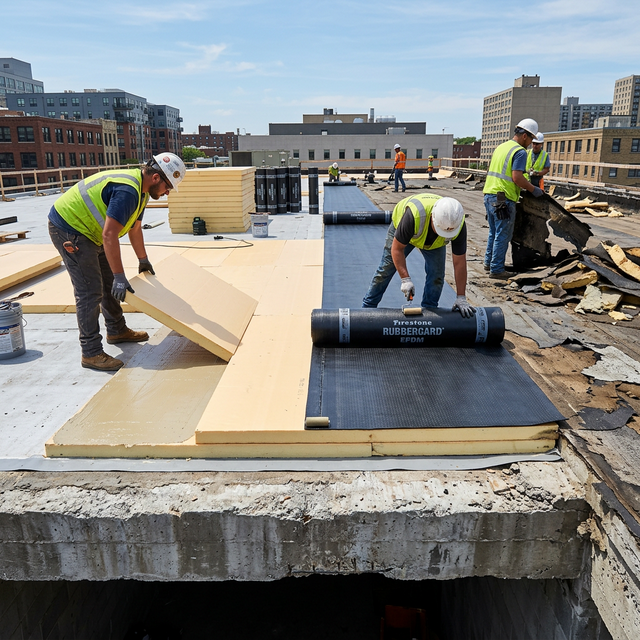
EPDM (ethylene propylene diene monomer) is a synthetic rubber membrane that comes in large sheets. It is one of the most durable flat roof systems available.
Pros
- Extremely flexible — handles Toronto’s freeze-thaw cycles without cracking
- Excellent UV resistance with a long track record (50+ years of use globally)
- Available in large sheets that minimize seams (the most common failure point)
- Can be fully adhered, mechanically attached, or ballasted
- 20-30 year lifespan with minimal maintenance
Cons
- Black colour absorbs heat (higher cooling costs in summer)
- Seams are glued rather than heat-welded (weaker than TPO/PVC seams)
- Puncture risk from foot traffic or falling branches
Best for: Large flat roof areas on commercial buildings, multi-unit residential, and homeowners who want maximum lifespan.
TPO (Thermoplastic Polyolefin)
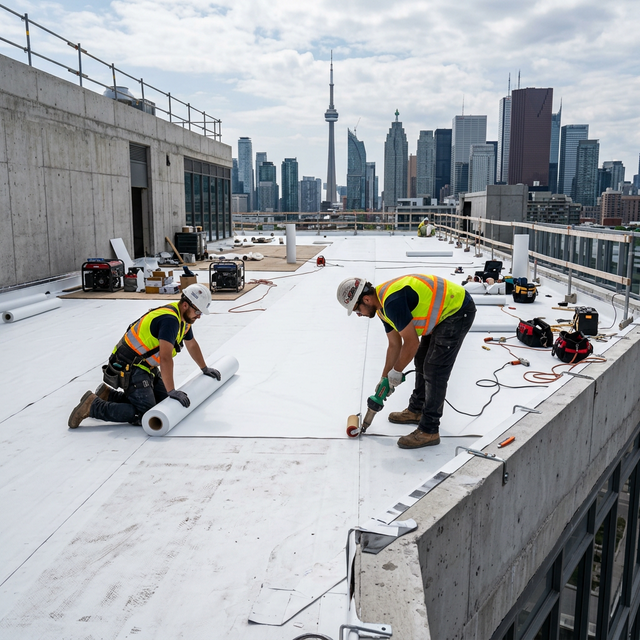
TPO has become increasingly popular in Toronto over the past decade. It is a single-ply white reflective membrane that is heat-welded at the seams, creating a strong, watertight bond.
Pros
- White reflective surface reduces cooling costs by 10-30% in summer
- Heat-welded seams are stronger than glued seams (EPDM) or torched seams (mod-bit)
- Excellent resistance to UV, ozone, and chemical exposure
- Lightweight — no structural concerns
- Growing track record in cold climates
Cons
- Higher cost than mod-bit ($5-$8/sq ft vs $4-$7/sq ft)
- Requires specialized equipment (hot-air welding machine) and trained installers
- Thinner membranes (45 mil) can be puncture-prone; specify 60 mil or thicker for Toronto
- Shorter track record than EPDM in Canadian climates
Best for: Energy-conscious building owners, green roof preparations, and buildings where heat-reflective roofing earns rebates or LEED credits.
PVC Membrane
PVC (polyvinyl chloride) is the premium single-ply option. It shares many characteristics with TPO but has a longer proven track record and better chemical resistance.
When PVC Makes Sense
- Roofs exposed to grease, oils, or chemical exhaust (restaurants, industrial)
- Projects where maximum lifespan (25-35 years) justifies the higher upfront cost
- Rooftop patios or accessible roof areas that see foot traffic
PVC is overkill for most residential flat roofs in Toronto. Unless you have specific chemical exposure concerns, TPO or mod-bit will serve you well at a lower price.
Signs Your Flat Roof Needs Waterproofing
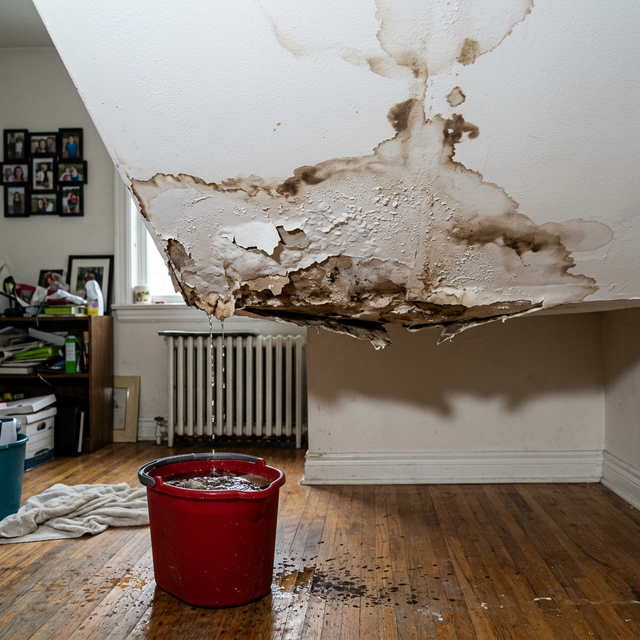
Do not wait for a leak to appear inside your home. By the time water reaches your ceiling, the damage to your roof deck, insulation, and structure can be extensive. Here are the warning signs to watch for:
On the Roof Surface
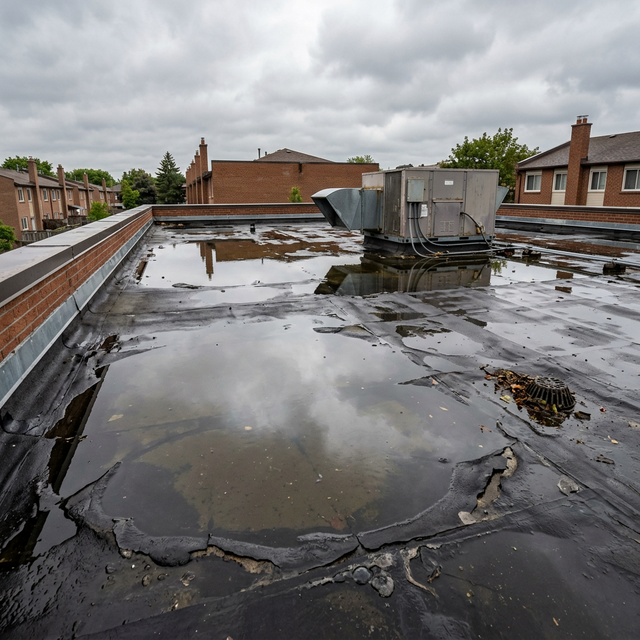
- Ponding water — standing water 48+ hours after rain indicates drainage problems or membrane sagging
- Blistering or bubbling — trapped moisture under the membrane that will eventually crack open
- Cracking or alligatoring — surface pattern that looks like alligator skin, indicates the membrane has dried out and lost flexibility
- Open seams — visible gaps where membrane sheets meet
- Flashing separation — membrane pulling away from walls, parapets, or pipe penetrations
- Granule loss — on modified bitumen roofs, bare asphalt showing through where protective granules have worn away
Inside Your Home
- Water stains on ceilings below the flat roof
- Peeling paint or bubbling drywall
- Musty smell indicating mould growth in the roof assembly
- Increased heating/cooling costs from saturated, ineffective insulation
If you notice any of these signs, schedule a roof inspection immediately. Early detection can mean the difference between a $500 repair and a $15,000 replacement.
Repair vs Replace: When Is Each the Right Move?
| Scenario | Repair | Replace |
|---|---|---|
| Small puncture or tear | Yes ($300-$800) | No |
| Single open seam | Yes ($400-$1,200) | No |
| Isolated blistering | Yes ($500-$1,500) | No |
| Multiple areas of damage | Maybe (temporary fix) | Yes |
| Widespread cracking/alligatoring | No | Yes |
| Roof is 15+ years old with issues | No (diminishing returns) | Yes |
| Active interior leaks from multiple sources | No | Yes |
| Ponding water across large areas | No | Yes (with slope correction) |
Our approach: We always inspect first and give you an honest assessment. If a flat roof repair will buy you 5-10 more years, we will tell you. If patching is just throwing money at a failing roof, we will recommend replacement and explain why.
The Flat Roof Waterproofing Process
Here is what to expect when we waterproof or replace a flat roof on a Toronto home:
Step 1: Inspection and Assessment
- Full roof surface inspection including all seams, flashings, drains, and penetrations
- Moisture scan to identify wet insulation (using infrared or core sampling)
- Assessment of the deck condition underneath
- Photo documentation of all findings
Step 2: Tear-Off (if replacing)
- Remove existing membrane, insulation, and any saturated components
- Inspect and repair the roof deck (replace rotted plywood sections)
- Clean the surface for new membrane installation
Step 3: Insulation and Slope
- Install rigid insulation boards (minimum R-31 for flat roofs per Ontario Building Code)
- Create tapered insulation slopes to eliminate ponding water and direct drainage
Step 4: Membrane Installation
- Apply the selected membrane system (mod-bit, EPDM, TPO, or PVC)
- Seal all seams using the appropriate method (torch, heat-weld, or adhesive)
- Flash all penetrations (vents, pipes, skylights, drains)
- Install new edge metal and drip edges
Step 5: Final Inspection and Clean-Up
- Water test all seams and flashings
- Verify proper drainage (no ponding)
- Full site clean-up including debris removal
- Provide warranty documentation
Maintenance Tips to Extend Your Flat Roof’s Life
A flat roof that gets regular attention lasts significantly longer than one that is ignored:
- Inspect twice a year — spring and fall. Look for debris, ponding, open seams, and flashing issues.
- Clear drains and scuppers — blocked drainage is the most common cause of flat roof failure. Remove leaves, dirt, and debris from all drain openings.
- Remove snow loads — after heavy snowfalls (12+ inches), consider having excess snow carefully removed. Do not use metal shovels on the membrane.
- Trim overhanging branches — falling branches puncture membranes. Keep trees trimmed back from the roof edge.
- Schedule professional inspections — have a professional roof inspection every 2-3 years, especially after severe storms.
- Act on small issues immediately. A $300 repair today prevents a $10,000 problem next year.
Frequently Asked Questions
How much does flat roof waterproofing cost in Toronto?
How long does a flat roof last in Toronto?
What is the best flat roof material for Toronto’s climate?
Can a flat roof be repaired instead of replaced?
How do I know if my flat roof is leaking?
Do you offer free flat roof inspections?
Need Flat Roof Waterproofing in Toronto?
Whether you need a quick repair or a full membrane replacement, our team will inspect your flat roof, give you an honest assessment, and provide a detailed written quote.
Call us: (416) 826-0040
Or: Request a free inspection online
The Roof Technician specializes in flat roof waterproofing across the Greater Toronto Area. From modified bitumen to TPO and EPDM, we install and repair every major membrane system with manufacturer-backed warranties.