If you have ever stood in the driveway comparing a freshly patched section of shingles against the rest of the roofline, you already understand why roof shingle colour matching partial repairs Toronto homeowners deal with can be so tricky. A single missing shingle or a small wind-damaged section rarely means the whole roof needs replacing, but getting the new material to blend in visually is its own specialized skill. At The Roof Technician, roof shingle colour matching partial repairs Toronto crews handle every week involves comparing dye lots, accounting for sun fade, and choosing where on the slope to place the repair so the seam disappears rather than standing out like a patchwork quilt.
This guide walks through why shingle colours drift over time, how professional crews approach roof shingle colour matching partial repairs Toronto projects, and what homeowners can realistically expect when only part of a roof needs attention. We will also cover when a partial repair no longer makes visual or financial sense, and when a full roof replacement becomes the smarter long-term choice.
Why Roof Shingle Colour Matching Partial Repairs Toronto Projects Get Complicated
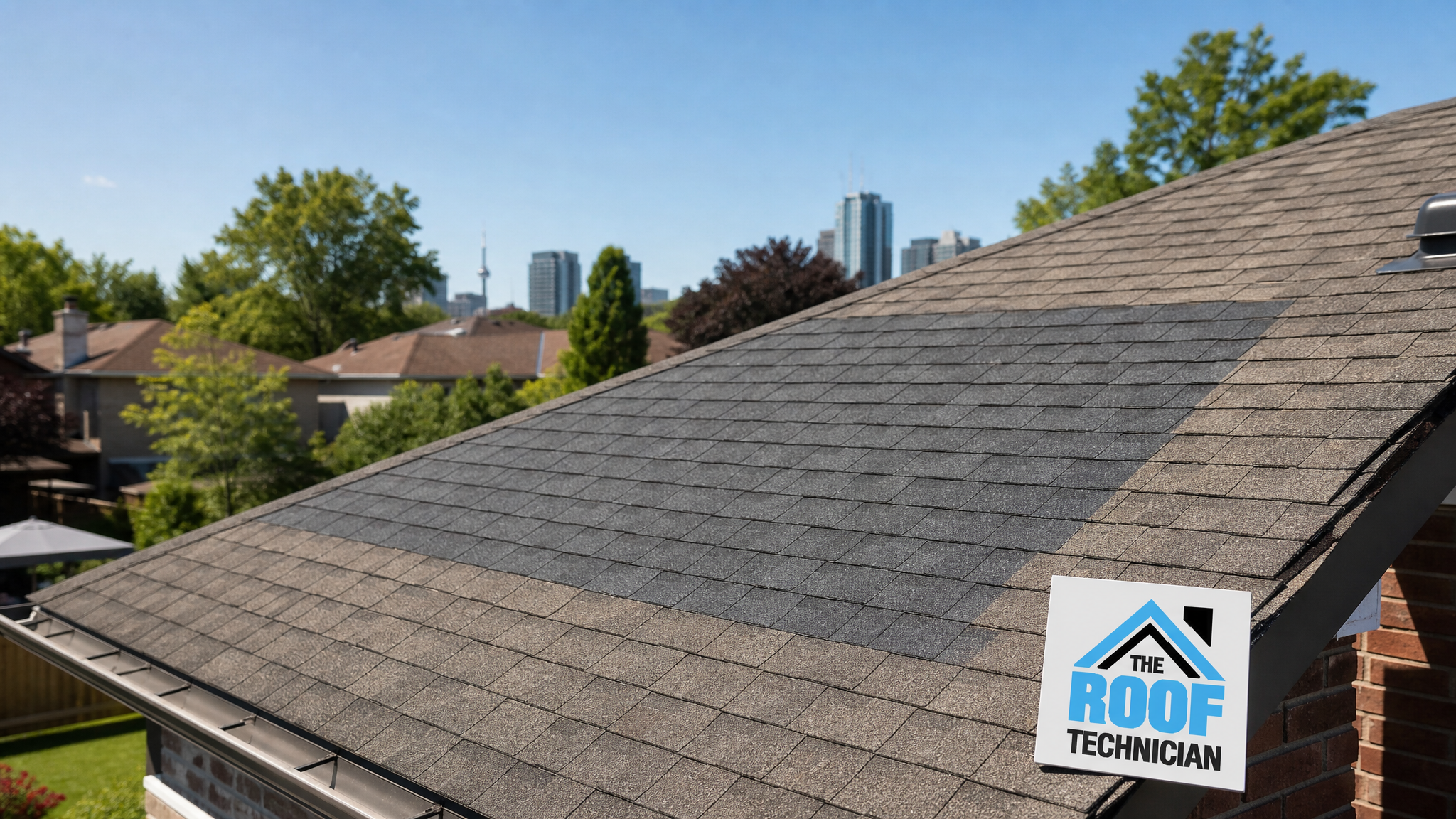
The fundamental problem behind roof shingle colour matching partial repairs Toronto contractors face is that asphalt shingles are not static products. From the day they are installed, granules begin shedding, UV rays begin bleaching pigment, and algae or lichen can subtly shift the surface tone. A roof that was installed five years ago has already faded noticeably compared to a brand-new bundle of the same product line pulled off a shelf today. Manufacturers also periodically adjust their granule blends, meaning even the exact same shingle name and colour code purchased two or three years apart can look slightly different once nailed down side by side.
This is why roof shingle colour matching partial repairs Toronto homeowners request is never as simple as walking into a supply yard and grabbing the closest-looking bundle. Our crews start by identifying the original manufacturer, product line, and colour blend from any leftover shingles in the attic, garage, or from photos of the original invoice. When no leftover material exists, we physically examine granule colour, shingle profile, and laminate thickness to narrow down the closest match available from current suppliers serving the Greater Toronto Area.
Sun exposure plays an outsized role too. A south-facing slope that receives direct sun for most of the day will fade faster and more dramatically than a shaded north slope. That means roof shingle colour matching partial repairs Toronto teams perform on a sunny slope require more aggressive blending techniques than the same repair on a shaded elevation, since the contrast between old and new material will be more pronounced.
How Sun Exposure and Weathering Change Shingle Appearance Over Time
Understanding the weathering timeline helps set realistic expectations for any roof shingle colour matching partial repairs Toronto project. In the first year after installation, shingles undergo what manufacturers call a settling period, where loose granules wash away and the surface colour actually becomes slightly more saturated and uniform. After that initial settling, gradual fading begins, accelerating through years three to eight depending on slope orientation, tree cover, and local air quality.
By the time a roof reaches ten to fifteen years old, colour variance between original shingles and any brand-new replacement shingles can be significant enough that a small patch will visibly stand out unless the repair is handled carefully. This is precisely the scenario where experienced roof shingle colour matching partial repairs Toronto specialists add real value: rather than simply nailing down new shingles in the damaged spot, we often pull matching shingles from a less visible slope, such as a rear elevation facing a fence line, and move those toward the front where appearance matters most, then install the closest available new match on the hidden slope instead.
Weathering also affects shingle texture, not just colour. Granule loss over a decade can leave older shingles with a slightly duller, flatter sheen compared to the more reflective surface of new laminate shingles. Skilled crews performing roof shingle colour matching partial repairs Toronto homeowners rely on will factor texture and sheen into the blend, not colour alone, because a technically correct colour match can still look wrong if the surface finish contrasts too sharply.
| Roof Age | Typical Fade Level | Colour Match Difficulty | Recommended Approach |
|---|---|---|---|
| 0-3 years | Minimal | Low | Direct patch with new shingles of the same product line |
| 4-7 years | Moderate | Medium | Closest current match plus reactive granule blending |
| 8-12 years | Significant | High | Shingle relocation from a hidden slope, plus new material at the rear |
| 13-20 years | Severe | Very High | Full slope replacement rather than a spot patch |
| 20+ years | Extreme, brittle material | Not viable | Full roof replacement recommended |
When a Partial Patch Still Makes Sense
Not every damaged section requires a full replacement, and this is where thoughtful roof shingle colour matching partial repairs Toronto contractors bring genuine cost savings to homeowners. If storm damage, a fallen branch, or a single failed shingle affects a small area on a roof that is otherwise structurally sound and under roughly ten years old, a targeted roof repair is almost always the more sensible option. The key question is whether the colour and texture difference will be noticeable from the street or from a neighbour’s second-storey window, since that visibility threshold is often what determines homeowner satisfaction more than the repair itself.
Our estimators walk the roof, check the slope orientation relative to the sun, and photograph the damaged section next to a sample of new shingle material in natural daylight before recommending a course of action. This upfront diligence is central to good roof shingle colour matching partial repairs Toronto work, because it prevents the frustrating scenario where a homeowner pays for a repair only to be unhappy with a visible seam six months later once the new shingles have had time to settle.
For larger sections, particularly on complex rooflines common throughout Mississauga and Markham subdivisions with multiple dormers and hip sections, we sometimes recommend replacing an entire face or slope rather than just the damaged square footage. This gives a cleaner, more uniform result and avoids the checkerboard look that can happen when patches are scattered across a single visible plane.
The Professional Colour-Matching Process, Step by Step
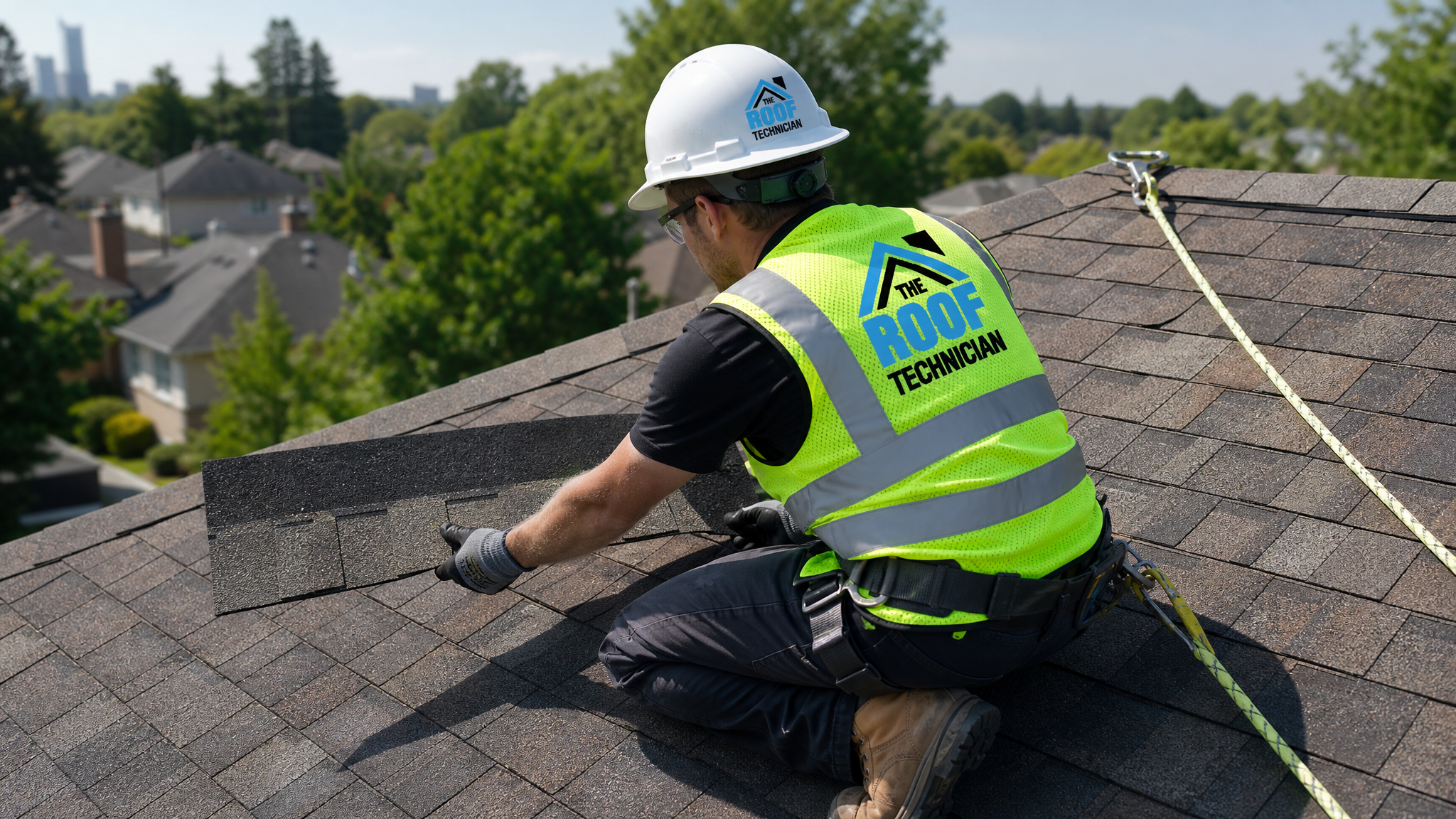
A methodical process is what separates a professional roof shingle colour matching partial repairs Toronto approach from a rushed patch job. The first step is always documentation: our team records the manufacturer, product name, and colour blend printed on any leftover shingle wrappers stored in the garage or attic. If nothing is available, we photograph the existing shingles under neutral daylight, away from direct glare, to capture the truest possible colour reference.
Next comes sourcing. Since manufacturers regularly discontinue and refresh colour blends, we cross-reference current supplier catalogues against older colour charts to identify the closest available match, sometimes ordering from multiple suppliers to compare bundle samples side by side before committing. This sourcing step is frequently the most time-consuming part of roof shingle colour matching partial repairs Toronto jobs, particularly for roofs installed more than a decade ago using discontinued shingle lines.
Once material arrives, we lay sample shingles directly on the roof next to the damaged area in full daylight, checking the match from ground level as well as from the roof itself, since colour perception changes with viewing angle and distance. Only after this on-site verification do we proceed with the actual installation, using proper nailing patterns, flashing integration, and sealant application consistent with manufacturer specifications.
Finally, we photograph the completed repair from the street and walk the homeowner through the result before considering the job finished. This final verification step is non-negotiable for any roof shingle colour matching partial repairs Toronto project, because a repair that looks perfect from the ladder can sometimes look quite different from forty feet away at street level.
| Step | What Happens | Why It Matters |
|---|---|---|
| 1. Documentation | Record manufacturer, product name, colour blend | Establishes the baseline for accurate matching |
| 2. Sourcing | Compare current supplier stock against older colour charts | Finds the closest realistic match for discontinued blends |
| 3. Sample Placement | Lay new shingles beside damage in daylight | Confirms visual match before committing material |
| 4. Installation | Nail, flash, and seal per manufacturer spec | Ensures durability alongside appearance |
| 5. Street-Level Review | Photograph and walk through with homeowner | Confirms the repair reads well from ground level, not just up close |
Common Mistakes That Undermine a Partial Repair’s Appearance
Several recurring mistakes can derail even a well-intentioned roof shingle colour matching partial repairs Toronto attempt. The most common is skipping the sample placement step entirely and ordering shingles based on a paint-chip style colour name alone, which almost never accounts for real-world fading. A shingle labelled the same colour name as the original roof can still look noticeably different once installed, because colour names are marketing labels, not precise measurements.
Another frequent error is patching directly into a highly visible slope without considering whether shingles could be relocated from a hidden elevation first. Skilled roof shingle colour matching partial repairs Toronto crews will often move less-faded shingles from a rear or side slope to the front, then install the closest new match on the less visible rear slope, producing a far better overall result than a straightforward front-facing patch.
Poor workmanship around the seam itself is another culprit. Sloppy nailing patterns, mismatched shingle exposure lines, or ignoring the staggered offset of the surrounding courses can make even a perfectly colour-matched shingle look wrong because the lines simply do not align. Proper attention to attic ventilation and underlying deck condition also matters, since trapped moisture or poor airflow can accelerate localized granule loss around a repaired section, causing it to fade unevenly compared to the rest of the roof within just a year or two.
Finally, rushing the job in poor lighting conditions, such as late afternoon glare or overcast weather, can lead to colour decisions that look fine in the moment but read as mismatched once the sun angle changes. Every reliable roof shingle colour matching partial repairs Toronto crew should insist on daylight verification before finalizing any material order.
| Common Mistake | Result | Better Practice |
|---|---|---|
| Ordering by colour name only | Visible mismatch after installation | Physical sample comparison in daylight |
| Patching only the visible slope | Obvious contrast against faded original shingles | Relocate shingles from a hidden slope first |
| Ignoring exposure line alignment | Uneven, choppy appearance even with correct colour | Match staggered pattern and exposure of surrounding courses |
| Skipping ventilation checks | Uneven granule loss around the new patch within a year | Inspect attic airflow before and after the repair |
| Working in poor lighting | Colour decisions that look wrong once sun angle shifts | Verify matches only in full daylight conditions |
Materials and Detail Work Behind a Seamless Repair
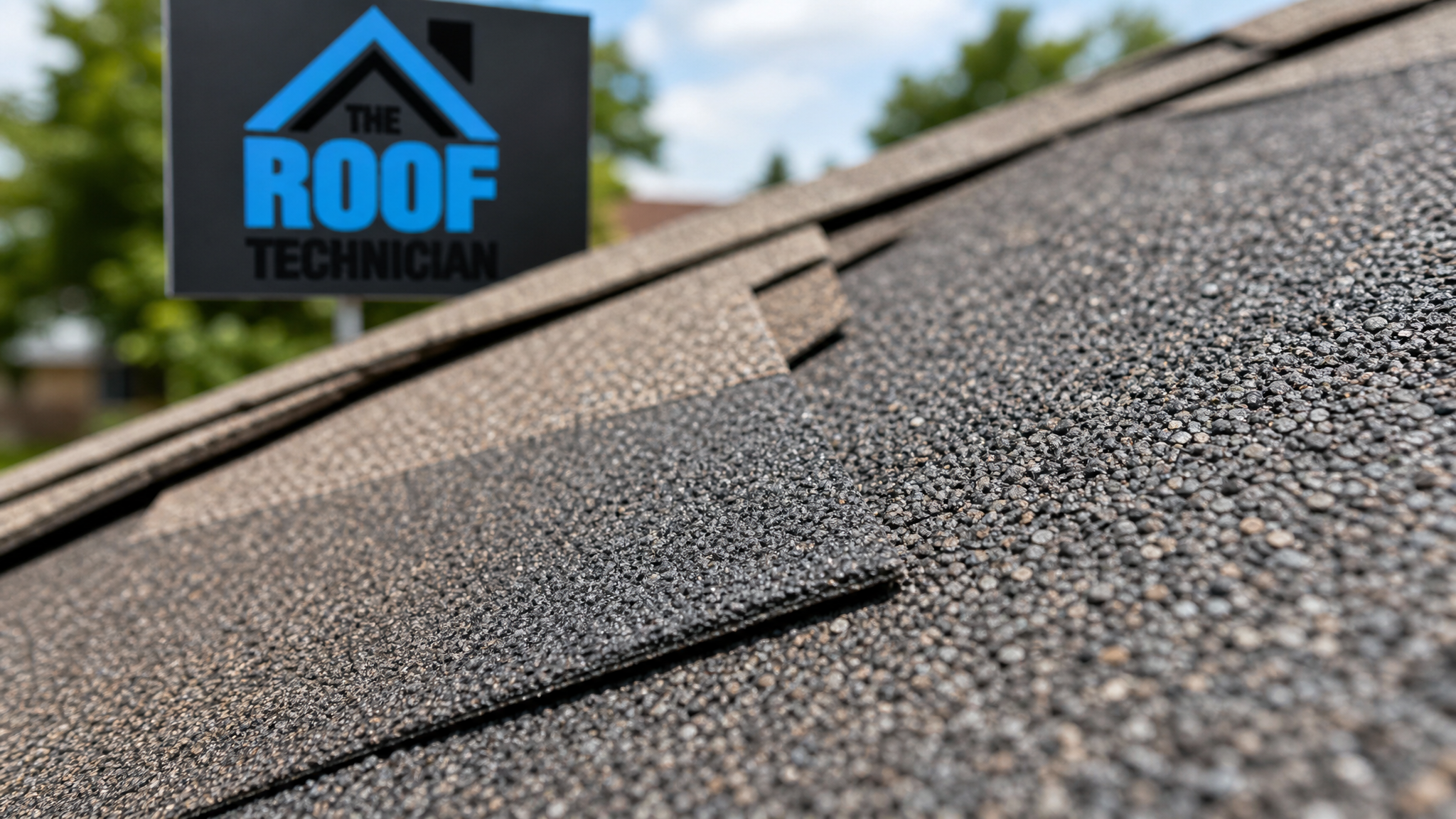
Beyond colour, the physical details of shingle installation determine whether a repair truly disappears. Laminate architectural shingles have a dimensional profile with layered tabs that create shadow lines; matching that profile is just as important as matching pigment for effective roof shingle colour matching partial repairs Toronto work. Mixing a flat three-tab shingle into a section of dimensional laminate shingles, for example, will look wrong regardless of how close the colour blend happens to be, because the shadow pattern and thickness will differ.
Flashing details around the repair also deserve close attention, particularly near valleys, vent stacks, or flat roofing transitions where a pitched section meets a low-slope area. Reusing old, corroded flashing rather than installing new step flashing or counter-flashing can lead to leaks that eventually cause staining, which undermines even a perfectly colour-matched shingle repair within a season or two.
Homeowners considering a partial repair should also ask to see recent examples of the contractor’s work, ideally on homes with a similar shingle age and style. Reading reviews from other Toronto-area homeowners who have had partial repairs completed can offer a realistic sense of what to expect, since roof shingle colour matching partial repairs Toronto outcomes vary considerably based on the skill and patience of the crew performing the work.
Choosing Between a Repair and a Full Replacement
Sometimes the honest answer to a colour-matching question is that a patch simply will not look right, no matter how skilled the crew. Roofs older than fifteen to twenty years, roofs with widespread granule loss across the entire surface, or roofs where the original shingle line has been fully discontinued with no reasonably close substitute are all situations where roof shingle colour matching partial repairs Toronto homeowners request may not be the right long-term solution.
In these cases, a full roof replacement often ends up being the more cost-effective choice over a five to ten year horizon, since repeated small patches on an aging roof can accumulate in cost while still leaving a visually inconsistent surface. Our estimators are upfront about this trade-off during every inspection, because recommending an unnecessary full replacement is just as much a disservice as attempting a doomed colour match on a roof that has simply reached the end of its usable life.
For homeowners across our service areas, including Toronto, Mississauga, and Markham, the decision usually comes down to roof age, the extent of the damage, and how visible the affected slope is from the street or from neighbouring properties. A brief on-site consultation is typically enough to give a clear, honest recommendation either way. For more general questions, our FAQ page covers many of the common concerns homeowners raise before booking an inspection.
What is roof shingle colour matching for partial repairs in Toronto?
Can new shingles ever perfectly match an older, faded roof?
How much does a partial shingle repair typically cost compared to full replacement?
What happens if the original shingle colour is discontinued?
Does the direction my roof faces affect colour matching?
How do I know if I need a patch or a full roof replacement?
Get a Professional Roof Shingle Colour Matching Assessment in Toronto Today
Whether you are dealing with a single storm-damaged section or a larger patch of aging shingles, getting roof shingle colour matching partial repairs Toronto right the first time saves money and frustration down the road. The Roof Technician has spent years refining a careful, daylight-verified matching process so that repairs blend in rather than stand out, and our team is happy to walk any homeowner through the options honestly, including when a full replacement makes more sense than a patch.
Call us today at (416) 826-0040 or request a free inspection to get started.
The Roof Technician proudly serves Toronto, Mississauga, Markham, Vaughan, Brampton, and Oakville.